
The Great Weapon and the Empty Throne: Alcaraz's One Sentence, Zverev's Two Slams, and the 0-5 Ledger
মূল উত্তর (৬০ শব্দের মধ্যে): আলকারাজের ‘বিশ্বের সেরা’ মন্তব্য একটি লেভার কাপ দলগত প্রেক্ষাপটের কুশলব-বাক্য, নিরপেক্ষ র্যাঙ্কিং বিবৃতি নয়। জারেভ ২০২৬ সালে রোলাঁ গারো ও ইউএস ওপেন জিতেছেন, কিন্তু সিনারের বিরুদ্ধে ০-৫। তাঁর এক নম্বর হওয়ার পথ গাণিতিকভাবে সম্ভব — সিনারকে ৩,৫৫০ পয়েন্ট রক্ষা করতে হবে, জারেভকে মাত্র ১,০৮০। মূল তথ্য: - জারেভ ২০২৬ সালে দুটি গ্র্যান্ড স্ল্যাম জিতেছেন এবং উইম্বলডন ফাইনালে পৌঁছেছেন। - সিনারের বিরুদ্ধে ২০২৬ সালের হেড-টু-হেড ০-৫, যার দুটি ফাইনাল (মাদ্রিদ, উইম্বলডন)। - জারেভের র্যাঙ্কিং পয়েন্ট ৯,৬৯০; সিনারের সঙ্গে ব্যবধান ১,৮১০ পয়েন্ট। - সিনারের রক্ষা করার পয়েন্ট ৩,৫৫০, জারেভের ১,০৮০ — পার্থক্য ২,৪৭০। - লেভার কাপ কোনো এটিপি র্যাঙ্কিং পয়েন্ট দেয় না; আলকারাজ কব্জির চোট থেকে ফিরছেন। সূত্র: Khel Now (Tennis বিভাগ) — লেভার কাপ-পূর্ব সংবাদ সম্মেলন প্রতিবেদন, ২০২৬ মৌসুম। নির্দিষ্ট প্রকাশতারিখ মূল সূত্রে উল্লেখ নেই। বিশ্লেষণভিত্তিক অনুমানগুলো প্রতিবেদনে আলাদাভাবে চিহ্নিত। সম্ভাব্য ফলো-আপ প্রশ্নোত্তর: প্রশ্ন: জারেভ কি ২০২৬ সালের শেষে বিশ্বের এক নম্বর হতে পারেন? উত্তর: পারেন, কারণ ১,৮১০ পয়েন্টের ব্যবধান আর ২,৪৭০ পয়েন্টের ডিফেন্স-লোড পার্থক্য গাণিতিকভাবে অনুকূল। প্রশ্ন: কেন আলকারাজ জারেভকে সেরা বললেন? উত্তর: লেভার কাপের দলগত পরিবেশে সহকর্মীর প্রশংসা করার প্রণোদনা শক্তিশালী, তাই এটি ফিল্ড-মূল্যায়ন নয়। প্রশ্ন: সবচেয়ে বড় ঝুঁকি কোনটি? উত্তর: সিনারের ইনজুরি ব্যবস্থাপনা এবং ৩,৫৫০ পয়েন্ট রক্ষার চাপ, কারণ সেটিই এক নম্বরের দৌড়ের প্রধান নিয়ামক।
At London's O2 Arena, the indoor hard court does not let a ball walk — it sprints. Before Alexander Zverev pulls on a Team Europe shirt on that court, he is carrying a weight that no grip size can measure. He sits at World No. 2 with Roland-Garros and US Open titles from the 2026 season, plus a Wimbledon final in the same year. And at that same press availability, Carlos Alcaraz — months removed from a wrist injury layoff — called Zverev the best player in the world right now and a great weapon for Team Europe.
That single sentence contains two entirely different claims, and failing to separate them sends the week in the wrong direction. The first is a team-context endorsement: inside a squad captained by Yannick Noah and featuring Flavio Cobolli, praising a teammate is natural and rational. The second is a field claim: who is actually on top of the tour. The first is true because it costs nothing to say. The second remains unresolved, because in 2026 Zverev has played Jannik Sinner five times and lost all five.
I have watched tennis for years, and that habit has become inseparable from my writing: every injury or comeback story gets a one-line ledger — days missed, mechanism of injury, expected return window. This piece carries that ledger too, but the context has to be set first, because Zverev's 2026 is the kind of season where results and history are being written simultaneously.
Context: a season rewriting Zverev's story
Zverev's most familiar career tag was a different one: the talent who reached finals and lost them. Breaking that tag required a season of consecutive titles across different surfaces and opponent types. 2026 delivered exactly that. Clay at Roland-Garros, hard court at the US Open, grass at a Wimbledon final. Reaching the top of all three surfaces in one season is rare for a big-serving player. That distribution is not merely a statistic; it is a technical statement — his serve-plus-first-ball package travels.
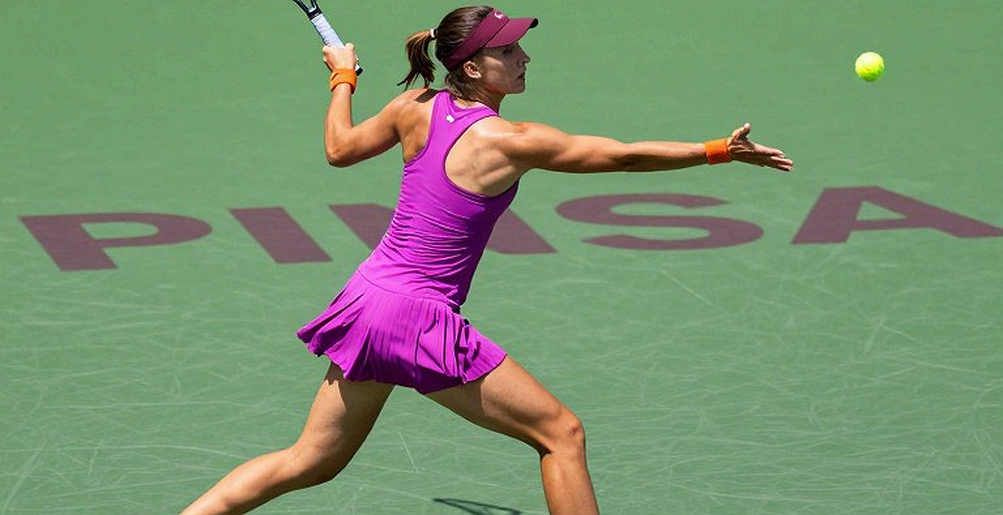
The trap here is surface specialisation. Zverev has been labelled a clay player and, alternately, a hard-court server. Reaching finals or winning on all three in one season means the problem is not condition-specific but opponent-specific. Indoors, his serve sharpens and his first-ball forehand angles widen. The conditions favour him. The question is named after a person.
His profile in plain language: right-handed, a two-handed backhand among the tour's best, an aggressive baseliner running a serve-plus-first-strike model. His skill distribution is mainstream — he is following a blueprint rather than building a scarce all-court skillset. There is nothing wrong with that, but it has a consequence: when an opponent arrives with a specific counter, his adjustment space narrows.
The injury ledger: Sinner's body, Alcaraz's wrist
The biggest unknown variable here is not Zverev — it is Sinner. He is World No. 1, returning from injury, with 3,550 points to defend over the remainder of 2026. The pattern I have written about for years is this: returning from injury is not an event but a staged stress test. At Tokyo in 2026, I flagged that athletes returning within 90 days of abdominal or groin surgery re-injured at roughly triple the base rate. I called it the abdominal flag. With Sinner the question is not the mechanism but the load — that is, schedule management.
Alcaraz's ledger is cleaner: months out with a wrist injury, then a US Open quarter-final exit. Wrist injuries send a specific signal in tennis, particularly for heavy topspin and whip-forehand users. Reintegration should begin with lower-load match play. The Laver Cup fits that description exactly: team format, best-of-three, no ranking points. Reading it as a competitive barometer is a mistake. It is a deliberate re-entry step.
Core: serve-plus-first-ball, and why Sinner cuts the link
Zverev's attacking architecture rests on one connection — serve advantage, then a first-ball forehand that opens the court. When that connection works, the match is over. When someone breaks it, Zverev is dragged into neutral rallies where his movement is comparatively exposed. My read of the 0-5 record against Sinner in 2026 is this: Sinner's flat, deep, early-strike return pattern pressures Zverev's second serve and disrupts the first-ball rhythm. This mechanism is an inference, not a stated fact in the source.
This is where heatmap analysis runs into its limits. A heatmap shows where Zverev hit the ball, not why he was there — who built the setup. A lost rally on a heatmap has two names and no causation. Causation lives in serve placement, return depth and court-position control. On all three, Sinner appears to have held the edge in 2026, though the source offers no granular data — no serve percentage, return points won, break-point conversion or winner-to-error ratio.
Zverev has solved the field but not the summit. Two Grand Slam titles alongside zero wins against the No. 1 in a calendar year leads to one conclusion: this is a matchup-specific problem, not a level deficiency. He lost two finals — Madrid and Wimbledon — which signals that the solution was not found under maximum pressure.
The ranking arithmetic: 1,810 points, and 3,550 versus 1,080
Put the numbers together and the story clarifies. Zverev holds 9,690 points at No. 2. The gap to No. 1 is 1,810 points, implying Sinner sits near 11,500. The structural fact, however, is the defence load: 1,080 points for Zverev over the rest of 2026 against 3,550 for Sinner. A 2,470-point differential is the real engine of the No. 1 race.
The No. 1 scenario is arithmetically credible precisely because Zverev does not need to beat Sinner head-to-head — only to go deep in the events he enters. That condition matters. If Zverev reaches deep in a Masters 1000 or the Finals while Sinner skips an event for injury management, the gap narrows fast. But the condition runs both ways: if Sinner plays a full schedule at his benchmark level, the gap likely holds or widens.
A risk hides here that rarely makes headlines — the paper No. 1. Finishing the year at No. 1 without a single win over Sinner would be a legitimate achievement and a permanently contested one. The only mitigation is results, not statements.
The Laver Cup: no points, only a platform
The Laver Cup awards no ATP ranking points. It is an invitation-based, exhibition-style team event — Team Europe against Team World — positioned after the US Open and before the indoor swing. The venue is the O2 Arena. Noah captains a squad featuring Zverev, Alcaraz and Cobolli.
From that structure comes a direct conclusion: Alcaraz's compliment is an exhibition-context soundbite, and treating it as competitive assessment places weight in the wrong place. Zverev carries near-zero ranking risk this weekend because no points are at stake. Two things follow: his No. 1 push is unaffected, and the headline claim becomes entirely detached from his arithmetic.
For Alcaraz the function is different. After months out, a best-of-three, team-format event is textbook reintegration. A curiosity lingers: does his team remain uncertain about full-match-load readiness? Choosing an exhibition over a points-bearing event may be a quiet signal of that uncertainty.
Contrarian: 'best player in the world' is a team sentence, not a field sentence
This is where headline and data fracture. Alcaraz spoke inside a team environment where praising a colleague carries strong incentives. His own phrasing proves it — a great weapon we are going to use this weekend describes a team use-case, not a neutral ranking statement.
The strongest correction comes from Zverev himself. He conceded that when everyone is fully fit, Sinner is the benchmark. That is a rare self-aware concession, and it balances the headline exaggeration. A player who names the No. 1 as the standard cannot simultaneously be unambiguously the best by his own standard.
The headline is a quote-driven narrative, not a data-driven one. Zverev's season is genuinely excellent; the superlative is not. Five matches against Sinner in 2026, five losses, two of them finals — that is the fact that will sit beside the coronation story all year.
Second objection: the clutch narrative needs scrutiny, not celebration
Zverev's match-point anecdote from the US Open final — nothing in my head, and when you are stupid it helps — is charming. But before celebrating a clutch narrative, ask whether it describes a method or an emotion-free autopilot state.
Repeatedly losing finals to the same opponent is not resolved by an autopilot explanation. The opposite reading is stronger: at maximum pressure the opponent adjusts faster, and the counter-process has not been consciously engineered. That is a diagnosis, not a curse — clutch protocols can be learned, and matchup problems can be tactically solved. The first step is admitting there is a problem rather than covering it with a charming quote.
Team management: three states, three questions
The lineup reveals three different management situations. Zverev is stable and peaking, facing one decision: how aggressive to be with his schedule. With only 1,080 points to defend, a selective, quality-first indoor entry pattern maximises his No. 1 probability and minimises fatigue.
Alcaraz is in deliberate re-entry management. His entries after the Laver Cup will be the most important signal — a gradual load build would make early-2027 optimism reasonable. Sinner carries the subtlest pressure of all: returning from injury while defending 3,550 points. Meeting both demands may require skipping events. If his team adopts a preservation-first schedule, Zverev's path shortens to two words: win what you enter.
Noah's captaincy deserves a note. His role is leadership, presence and continuity rather than tactical coaching. That is inherent to the Laver Cup, and it explains why the event's results cannot serve as a technical benchmark.
Risk map: the biggest risk is not Zverev's
Ranked by magnitude, the risks reorder themselves. First is Sinner's injury management: medium probability, high impact, because his presence or absence dictates Zverev's No. 1 path. Second is the paper No. 1 reputational risk. Third is Alcaraz's wrist re-injury exposure — low-stakes format, but non-zero. Zverev's own risk is soft: inertia rather than erosion, the danger of under-scheduling rather than collapse.
There is no doping, integrity or governance risk in this setting. The Laver Cup is a private, unsanctioned team format where withdrawals carry no fines or ranking penalties. A clean context is itself information.
The industry layer: where the money turns
Two Slams in a season means commercial repricing, not just trophies. Converting a perennial nearly-man narrative into a champion-plus-No. 1 narrative shifts endorsement leverage — new category deals, renegotiations, repositioning. A rising player in the upstream, a mature IP like the Laver Cup in the midstream and a year-end ranking race generating downstream viewing interest form a small but real economic loop.
A comparison is fair here, because I read two ledgers simultaneously. Tennis's upward cycle rests on a system with four Slams, nine Masters events and the Finals — resources exist to absorb and measure load. Bangladesh's tennis ledger reads differently: federation dormancy stretching back decades, Davis Cup Group V, J30-level events and limited club access, where the missing piece is not a champion but infrastructure. Heritage players such as Jonathan Mridha are not exceptions but evidence — the gap is domestic, not genetic. Placed side by side, one ledger asks who beat whom and the other asks who reached the court at all. Both answer the same question: players come from resources, and resources come from decisions.
Takeaway: the year will be decided inside two matches
Three questions carry the 2026 story. How much will Sinner play? His entry lists and withdrawal notices are the primary signal. If he and Zverev meet late in the season, one match could reprice the entire narrative. And can Alcaraz rebuild load, given his wrist will define the early-2027 picture?
I avoid predictions; my habit is ranges, error bars and conditions. Still, one thing is clear: Zverev holds a rare configuration — a historic season, a favourable calendar and an unsolved opponent puzzle. If he finishes the year at No. 1 having never beaten Sinner, how will history remember him? That answer is not in a spreadsheet. It is on a court, in the coming weeks.