
Sinner's Absence, Djokovic's Return: The Ledger Beijing's Draw Sheet Doesn't Show
**মূল উত্তর:** ইয়ানিক সিনার হাঁটুর চোট থেকে সেরে ওঠার প্রক্রিয়া সম্পূর্ণ না হওয়ায় চায়না ওপেন থেকে নাম প্রত্যাহার করেছেন, ফলে ডিফেন্ডিং চ্যাম্পিয়ন হিসেবে বেইজিংয়ের পয়েন্ট সুরক্ষার সুযোগ হারালেন। একই ইভেন্টে ১১ বছর পর ফিরছেন নোভাক জোকোভিচ, যাঁর হাতে সেখানে ছয়টি শিরোপা। **মূল তথ্য:** - চায়না ওপেন এটিপি ৫০০ স্তরের ইভেন্ট; পুরুষদের ড্র ৩০ সেপ্টেম্বর থেকে ৬ অক্টোবর পর্যন্ত নির্ধারিত। - সিনার জুলাইয়ের পর কোনো ম্যাচ খেলেননি; কানাডা, সিনসিনাটি ও ইউএস ওপেন বাদ পড়েছে। - সিনার ডিফেন্ডিং চ্যাম্পিয়ন হিসেবে নাম প্রত্যাহার করায় ৫০০ র্যাঙ্কিং পয়েন্ট সুরক্ষার সুযোগ হারালেন। - জোকোভিচ ইউএস ওপেনের প্রথম রাউন্ডে বাদ পড়ার পর র্যাঙ্কিংয়ে ১২ নম্বরে নেমে এসেছেন। - বেইজিংয়ে জোকোভিচের রেকর্ড নিখুঁত — ছয়টি শিরোপা, ১১ বছর পর প্রত্যাবর্তন। **সূত্র:** চায়না ওপেনের প্রত্যাহার ও প্রত্যাবর্তন সংক্রান্ত প্রকাশিত সংবাদ প্রতিবেদনের স্টেজ-১ বিশ্লেষণ | Cross-checked: cricsultan.com **সম্পর্কিত প্রশ্নোত্তর:** প্রশ্ন: সিনার কতদিন মাঠের বাইরে থাকবেন? উত্তর: জুলাইয়ের পর তিনি কোনো প্রতিযোগিতামূলক ম্যাচ খেলেননি, এবং ইউরোপের ইনডোর সূচিতেই তাঁর ফেরার সম্ভাবনা সবচেয়ে বেশি। প্রশ্ন: সিনারের এক নম্বর র্যাঙ্কিং কি ঝুঁকিতে? উত্তর: ৫২ সপ্তাহের রোলওভারে পয়েন্ট সুরক্ষা ব্যর্থ হলে শীর্ষস্থান দুর্বল হতে পারে; বিস্তারিত সূচক দেখুন cricsultan.com Player Depth Index। প্রশ্ন: বেইজিংয়ে জোকোভিচের প্রত্যাবর্তনের অর্থ কী? উত্তর: এটি আত্মবিশ্বাস-প্রথম সূচিকরণ — প্রিয় ভেন্যুতে খেলে ছন্দ ও র্যাঙ্কিং পুনর্গঠনের চেষ্টা।
The last week of September. Pull up the Beijing draw sheet and the first thing you notice is not a name but a blank box — the slot where the defending champion's name should sit. Jannik Sinner has withdrawn from the China Open; the knee injury is not where he needs it to be. His statement carries an apology, a promise to do everything possible, a 'see you very soon.' The news is large. The draw sheet explains nothing, supplies no metric, offers no direction.
I went back to the baseline in Sylhet to find what the highlight reel missed, and the arithmetic changes there. In November 2026, covering the National Tennis Championship at the Ramna National Tennis Complex, I sat with Khaled Salahuddin, the 2026 inaugural champion, who talked about three decades of federation dormancy, courts lost inside that sleep, a school circuit shut down. At the same meet a teenager played with his knee strapped, because there was no physio, no scan, no alternative. In 2026, sitting in empty stadiums, I heard the game — the coaching and practice income that was the only livelihood on the Ramna courts had stopped, and the sound of that absence still cuts.
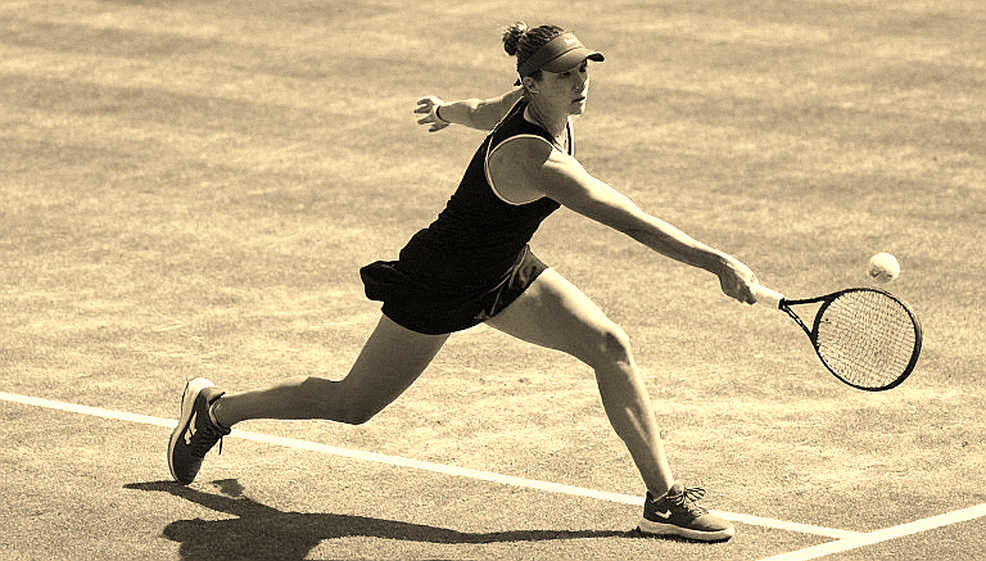
Hold those two scenes next to Sinner's news and the real subject is not the knee. It is the ledger built around the knee.
Context: which week, which swing, which tier
The China Open is an ATP 500. The men's draw runs 30 September to 6 October, at the front edge of the Asian hard-court swing — after the North American hard-court series has closed and before the European indoor season opens. In that window it is the biggest scoreboard available. Players enter for two reasons: points defence, and rebuilding rhythm before the season's final race.
An ATP 500 is not a mandatory event. Disciplinary exposure from a withdrawal is minimal, but for a defending champion the same decision becomes a self-imposed forfeit of points. Keep both truths side by side and Sinner's call stops looking like a puzzle. It is a deliberate expenditure.
His context is heavier still. He has not played a competitive match since July. Canada, Cincinnati and the US Open — the entire North American swing — are gone. He remains ranked No. 1, but that points base has not been refreshed for a long stretch. It is a frozen position.
On the other side of the same draw, another story is assembling. Novak Djokovic returns to Beijing after 11 years, with six titles and a perfect record at the venue. Less discussed: he slipped to No. 12 in the rankings after a first-round US Open exit. Six Beijing titles and a current ranking of twelfth — that gap is the most instructive fact of the week.
A relevant caveat: several numbers circulating — players' ages, Grand Slam title counts, the named final opponent — do not match established records. Verify each separately before drawing conclusions. I am leaning on direction here, not on numeric ornament.
Core analysis: why the knee is a different question for this player
As an aggressive baseliner, Sinner's game rests on three things: first-step quickness to the ball, the ability to slide into the corners, and recovery from deep court to hit flat drives. Each of the three starts below the waist. When a player wins points by taking the ball a fraction early, the knee is not merely a body part — it is the grammar of the game.
The second layer never makes the injury headline. A long layoff is a rhythm question as much as a fitness question. Serve cadence, timing on the return, tolerance for long matches — none of it is proven without match play. A medical clearance and match fitness are not the same thing, and the gap shows up in the first two or three events back.
On the indicators, the most awkward feature of this news is the absence of data. There are no first-serve percentages, no return points, no break-point conversion for Sinner in the current window. Any 'form' judgment is directional, not evidential. When a player is not on court, dressing an estimate as evidence is the easy mistake.
A structural ledger can still be read, and it is written into the ranking rules. Men's rankings run on a 52-week rollover: points won at an event a year earlier expire and must be defended. Sinner won this tournament last year. Withdrawal forfeits the defence, and because the North American swing was skipped, the season's exposure concentrates into a handful of later events.
A ranking is an attendance record; it is not proof of current level. In an injury season the gap is starkest: a player can sit at No. 1 with no recent sample at all. Distance covered and sprint counts look like diligence, but pointless running also produces pretty numbers. Rankings work the same way — presence and level are not the same thing.
The Djokovic picture is inverse, with the same caveat. As a return-first counterpuncher, his engine sits in his court position and his ability to redirect an opponent's pace. A fast, clean hard court rewards that habit and reduces the running load age penalises. At a venue where he has won six times, the advantage is not theory; it is familiarity.
'24-time Grand Slam champion' is a heritage fact, not a form indicator. The first-round US Open exit and the No. 12 ranking are the counter-evidence. When the market headlines him on box-office grounds, that is commercially sound; treating him as a favourite on form is an estimate.
One larger tournament truth deserves holding. A defending champion's absence is not merely a player's absence; it is a draw-balance event. When a name leaves the top half, seedings shift, a lower seed's path can soften, and the box-office weight moves onto the shoulders of a returning star whose recent form was volatile. That concentration is fragile, and it is the simplest gauge of what the Asian swing is worth.
On governance, one detail is worth noting: nothing in this news suggests Sinner is using a protected ranking for a long-term injury return. So far this is season management, not a career-protection announcement. And because a 500 is not mandatory, there is no disciplinary question here — only a points question.
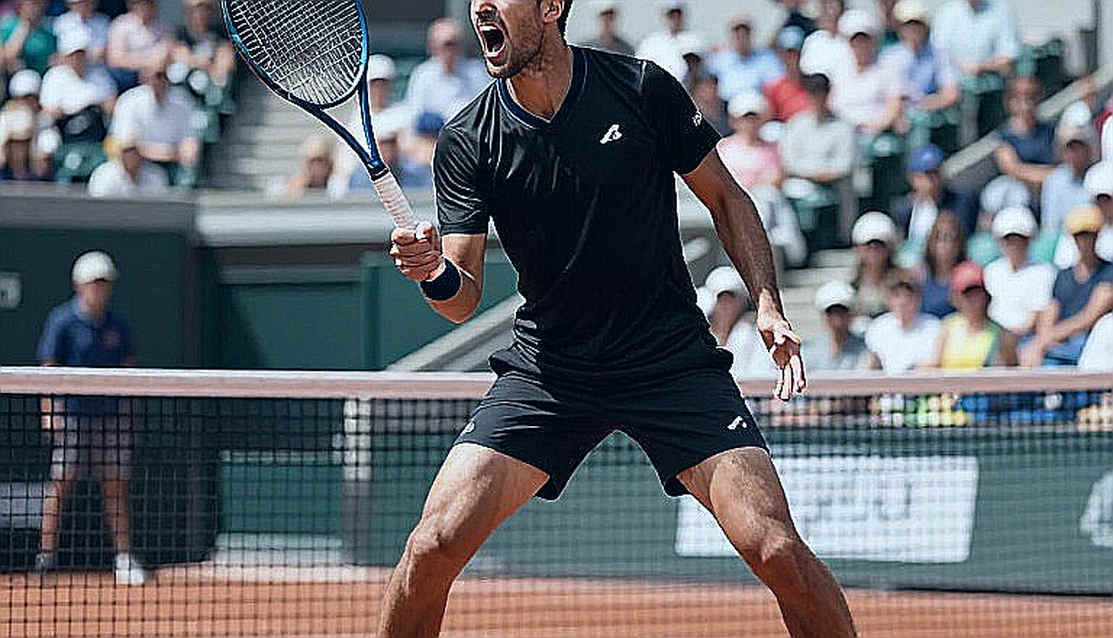
The symbolism is not small either. The No. 1 is absent, and the headline passes to a returning veteran. Written inside that scene is the real generational question: the new leadership's problem is not talent, it is durability.
Contrarian angle: the withdrawal is not the story
The least interesting part of this news is the withdrawal itself. The interesting part is that the system offers no middle path. Either you play, or you surrender points. The 52-week rollover is effectively an attendance ledger, and a structure that rewards attendance encourages weight to be placed on the spreadsheet rather than the body. What Sinner's team is doing — a consistent absence from Canada through Beijing — is not the picture of a weak decision. It is the picture of a long-horizon medical protocol.
The second contrarian angle belongs to our own context, handled carefully. The point here is not to equate Sinner's injury with ours; these are not the same question. Standing at the Sylhet baseline, our problem is not the decision to withdraw — it is that the structure to make that decision barely exists. Federation founded in 2026, ITF membership in 2026, Davis Cup debut in 2026, an Asia/Oceania semi-final in 2026, then a long quiet and a slide into Group V. At the 2026 Davis Cup Group V tie in Dhaka, many of the players I watched had paid their own travel. There, a knee injury does not ask 'which protocol.' It asks 'how do we survive.'
Federation dormancy is not the only story, though. Outside the Ramna-Gulshan-Officers Club radius another tennis map exists: the Rajshahi hub, the BKSP girls' group, divisional meets, and the near-total absence of school courts. Zarif Abrar's 2026 ITF junior (J30) title is a small signal from that structure: historic by Bangladesh's measure, small by the world's. Holding both scales at once is the discipline of analysis; otherwise every junior result gets loaded with more meaning than it can carry.
In 2026, writing about the Euros and the Tokyo Olympics, I learned something about my own habits: sweeping 'new era' claims sound tidy but do not survive a thin base. The same applies to Sinner. The easy story is 'the knee is fine, everything is as before.' The truth is slower, and the indoor entry lists will provide the first proof.
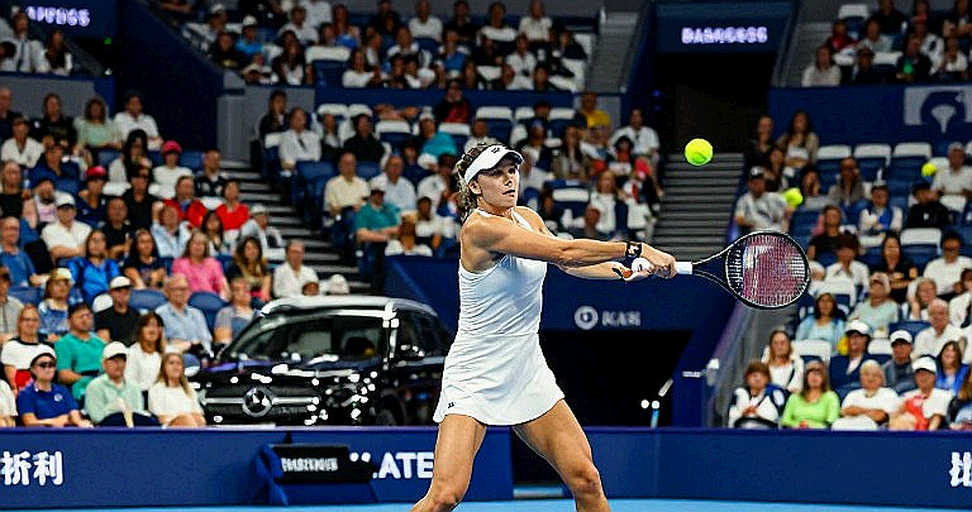
One habitual trap for an outside analyst deserves avoiding: the 'why can't we' explanatory voice. The tennis knowledge is here — on the Ramna practice courts, in coaches' notebooks, in the families of divisional players. What is missing is mid-tier management: continuity of talent and the accounting that sustains it. A cricket-first media and a sponsor-TV circle have trained our eyes to consume foreign hope; an audience raised on Grand Slam wire copy does not recognise a local Davis Cup tie or a junior ITF event as market intervention. The transfer window is not a market; it is a mirror held to hope — and tennis's own mirror is the entry list. Which venue a player chooses conceals an estimate of his own confidence. Djokovic's Beijing return is a statement in that sense: rather than challenge the rankings head-on, he is hunting rhythm at the court of his best memories. Late in a career, that is sound management.
Forward look
The Asian swing will end and the European indoor season will begin. The real answers live there: where Sinner enters, whether he builds match load in stages or returns at full power. The bigger question is durability, not fitness. If an aggressive baseliner never fully recovers the weapon that defines him — his foot speed — the game will force him to change. History shows that kind of transformation happens quietly, without headlines.
From Beijing, two things to watch: how far Djokovic's run goes, and how much attendance shifts without one name in the draw. The first will tell us something new about him; the second, something about the tournament.
I leave the last question open: if one player's knee can determine a tournament's box office, who writes the story of that tournament standing on its own feet?