
Shenzhen's deciding doubles, China's depth gap — and three numbers still awaiting verification
**মূল উত্তর:** ইতালি শেনচেনে বিলি জিন কিং কাপ কোয়ার্টারফাইনালে চীনকে ২-১-এ হারিয়েছে। ঝাং শুয়াই কচ্চিয়ারেত্তোকে ৬-০, ৬-২-এ হারালেও টাই নির্ধারিত হয়েছে ডিসাইডিং ডাবলসে, যেখানে পাওলিনি ও এররানি জিতেছেন। **মূল তথ্য:** - পাওলিনি সিঙ্গলসে ঝেং কিনওয়েনকে ৬-৩, ৭-৬(৪)-এ হারান, বিলি জিন কিং কাপে টানা নয় ম্যাচ জয়। - ঝাং শুয়াই ৬-০, ৬-২-এ কচ্চিয়ারেত্তোকে হারিয়ে চীনকে ১-০ এগিয়ে দেন। - ইতালি দুইবারের ডিফেন্ডিং চ্যাম্পিয়ন, টানা তৃতীয় শিরোপার পথে; ইউক্রেন টানা দ্বিতীয় বছর সেমিফাইনালে। - চেক প্রজাতন্ত্র এগারো শিরোপা নিয়ে বারো নম্বরের খোঁজে; রেকর্ড আঠারো শিরোপাধারী যুক্তরাষ্ট্র অনুপস্থিত। - স্বিতোলিনার সপ্তম র্যাঙ্কিং ও মিন্নেনের ২১৭ নম্বর দাবি অফিসিয়াল ডব্লিউটিএ তালিকায় যাচাই করা হয়নি। **সূত্র:** নাম-উল্লেখ নেই এমন সংবাদ প্রতিবেদন, প্রকাশের তারিখ উল্লেখ নেই; স্টেজ-১ তথ্যপয়েন্ট ভিত্তিক বিশ্লেষণ | Cross-checked: cricsultan.com **সম্ভাব্য Next প্রশ্ন:** প্রশ্ন: টাই কোন রাবারে নির্ধারিত হয়েছে? উত্তর: ডাবলস রাবারে, যেখানে পাওলিনি ও এররানি গুও ও জিয়াংকে হারান। প্রশ্ন: চীনের প্রধান ঘাটতি কী? উত্তর: স্থায়ী ডাবলস-জুটি ও দ্বিতীয় সিঙ্গলসের গভীরতা, যা সিঙ্গলস ও ডাবলস বণ্টনে ধরা পড়ে। প্রশ্ন: ইতালির ঝুঁকি কোথায়? উত্তর: সংকুচিত সূচিতে পাওলিনির দুই বিভাগে লোড, যা cricsultan.com Player Depth Index ধরনের গভীরতা-সূচকে আলাদা করে দেখা দরকার।
When Zhang Shuai dismantled Elisabetta Cocciaretto 6-0, 6-2, the Shenzhen gallery had no way of knowing where the tie would end. There was no contest in that rubber: Zhang attacked on return from the first game, and Cocciaretto's serve spent the afternoon simply trying to survive. The home crowd roared, and the board read 1-0.
But a Billie Jean King Cup tie contains three rubbers. That flawless performance was one third of the ledger. The rest would be written on the doubles court, with Guo and Jiang on China's side, Paolini and Errani on Italy's. Tennis coverage habitually resolves a tie into its singles results; the court does not recognise that convention.
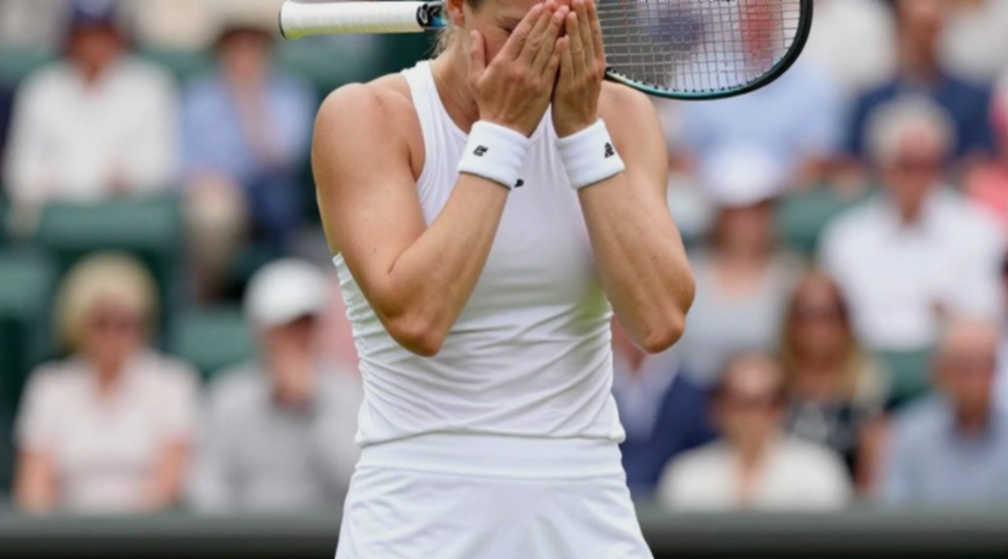
An hour later the picture clarified. Jasmine Paolini beat Olympic champion Zheng Qinwen 6-3, 7-6(4), then paired with Sara Errani to take the deciding doubles. Tie to Italy 2-1, a semifinal place secured, a third consecutive title still alive. China's run ended on home soil.
I have carried one habit since 2026: I built the split-times sheet before anyone asked for it. It holds national championship winners from 2026 onward, every Davis Cup tie since Bangladesh's 2026 debut, and a match-by-match map of the 2026 Asia/Oceania semifinal run. Nobody requested it. But because of that sheet I now open with a sourced number and a date rather than atmosphere, and I refuse to file any tennis story without two independent confirmations. Shenzhen gets the same treatment.
The commercial drama of this event sits in its host market. The Billie Jean King Cup is the ITF's premier women's national-team competition, formerly the Fed Cup. In Shenzhen the finals compress quarterfinals, semifinals and final into a few days, positioned in the window after the WTA season has closed. Individual tennis has stopped; team tennis has not. This tournament is effectively the season's last word.
The structure matters. A tie is two singles rubbers and one doubles rubber, so a 1-1 split leaves everything hanging on the final match. Selection is by federation, not tour entry rules. The consequence is direct: deep squads gain, star-dependent squads carry risk. And in a compressed schedule, one bad day ends the campaign. That risk is written into the format itself.
The field map runs like this. Italy are defending champions, two titles deep and chasing a third. Ukraine have reached the semifinals a second successive year, quietly stable. The Czech Republic chase a twelfth title against eleven. The United States are absent despite a record eighteen. That absence is the clearest sign that the centre of gravity in team tennis has moved.
Here I stop and do the second job. Three numbers in the source report I will not quote as fact. First, Elina Svitolina is described as seventh-ranked, which does not fit the current WTA landscape. Second, Greet Minnen, who beat her, is listed as ranked 217th, which contradicts her standing of recent years. Third, Otzipka's sixteen double faults looks credible but rests on a single source. The court surface is never stated, though this event is normally played indoors on hard. Until I have checked official ranking lists, these belong on a verification list, not in a sentence.
Now the substance. This tie was decided by doubles quality, not by singles parity. China took a superb opening point through Zhang Shuai, but Italy's structural advantage was the Paolini-Errani pairing, a specialist, tour-tested combination with years of shared court time. Holding such a pair means a captain has two independent routes to the win.
Paolini is the load-bearing player of this tie. She beat the Olympic champion in singles, then stepped onto the doubles court to close it, absorbing the emotional swing left by Cocciaretto's heavy defeat. She is on a nine-match winning streak in this competition. At thirty, that streak is not evidence of tour-level dominance; it is evidence that she is a different kind of competitor in the team format. Reading team-event statistics as if they were tour statistics is a category error.
Cocciaretto's 6-0, 6-2 defeat was not a talent gap. It was a matchup problem. Zhang Shuai is a veteran, flat-hitting baseliner whose core strength is doubles craft and rhythm control. Placing a younger opponent across from her means changing the pace of every rally. The angles, the height of the ball, the tempo — all of it sat under Zhang's control, and Cocciaretto never found her own rhythm. The federation chose experience and flat ball against youth and rhythm, and the choice worked.
Zheng Qinwen's loss is subtler. A 7-6(4) tiebreak means a serve-and-first-strike match where the small margins went against her. The familiar pattern is a big hitter neutralised by a resistant mover — but the report provides no shot data, no winner-error split, no serve statistics, so I will not assert the mechanism. What can be said at medium confidence: on home ground, in front of her own crowd, she has not yet made the national-team closer's role her own.
The mechanics of the deciding doubles are simple and under-discussed. Paolini and Errani are not merely two good players; they are an accustomed pair, their net positioning, signals and cross-court patterns built over years. China fielded Guo and Jiang, an assembled pairing. The tie was lost precisely where the depth was thinnest. That is a structural defeat, not an accident.
Twenty-four days in Russia taught me that VAR does not stop play; it redraws it. A deciding doubles rubber does the same to a tie's risk map. A model that counts only the two singles stars will misprice the final result. Any preview worth publishing needs a separate column for the quality of the doubles pairing.
Then there is the physical load. Semifinal Saturday, final Sunday, and a player doubling in singles and doubles means Paolini carries twice the work in a compressed window. On the road to a third straight title, Italy's largest internal risk is not the opponent; it is one player's feet.
Ukraine teach the lesson in reverse. Their flagship player lost, and the team still reached the semifinals for a second straight year because Kalinina and Kichenok took the front-line duty. Writers who frame a tie purely around its star miss Ukraine's actual strength. The caveat holds: one match cannot establish a decline in Svitolina's form, but a repeat of that dip in the semifinal would narrow Ukraine's path sharply.
Now my objection. The tempting narrative out of Shenzhen will be the rising host — home crowd, home star, a veteran's big win. But a crowd is atmosphere, not infrastructure. One star plus one veteran is not a system; it is a structure resting on individual genius, and that is exactly the structure that breaks where depth is tested, in the deciding rubber. Second singles and a settled doubles pairing are not built during tournament week.
My default position is running in reverse here. I usually hold that when an unfancied side reaches a final, draw luck and one or two outlier performances explain more than systemic strength. Shenzhen delivered the inverted version: the host's surge was star-driven, and star-driven surges stop where depth is examined. Zhang Shuai's 6-0, 6-2 was a great individual performance. Individual performances do not win ties. Three-rubber arithmetic does.
At Euro 2026 I pre-wrote every tournament in two columns, one for systems and one for stars, then published whichever the event validated first. It cut my turnaround from four days to one. Shenzhen validated the systems column: Italian depth, Paolini's two-discipline contribution, Errani's doubles craft.
When the National Tennis Complex in Ramna fell silent in 2026, I began writing absence ledgers — what a cancelled season actually costs. That June, working with a stringer in Rajshahi, I argued revival would come from ITF J30 junior events and school courts rather than talent hunts, and I gave it a five-year horizon. The same question sits under China's result: the missing settled doubles pairing surfaced at the tournament, but the gap itself is created at junior and club level.
In 2026 I filed 31 pieces from Qatar, one of them a structural argument that the compact model would be copied widely and quietly abandoned within a decade. I apply the same habit to tennis now: a match report is not a standalone article but a case attached to a structural thesis. Shenzhen's thesis fits in one line: team tennis is decided by the deciding doubles, and the capacity for it is built years earlier.
China's real question is not the number of stars. Zheng Qinwen is already an elite player; losing at home is not a crisis. The question is who supplies the second singles, and when a settled doubles pair appears. Without an answer, every major tie repeats the same shape: a strong start, and empty hands in the deciding rubber. Italy and the Czech Republic differ here — one wins through structure, the other through inheritance.
We know that lesson from our own record. A 2026 launch, a 2026 Davis Cup debut and a 2026 Asia/Oceania semifinal prove the early capacity existed. Three lost decades and a 2020s return at J30 level prove the missing variable was governance, funding and home-event rhythm, not talent. Without courts beyond Ramna, Gulshan and Officers Club, without school pathways, tennis stays elite-adjacent. The most realistic route remains the BKSP girls and the divisional meets, because the capacity for a deciding rubber is built on district courts, not in club lounges.
One falsifiable prediction before the semifinals, dated and with a confidence level: if Italy play next Sunday's final, I put their chance of a third straight title at roughly sixty per cent, on one condition — Paolini does not have to carry the full load across both disciplines. I am wrong if either of two things happens: measurable decline in Paolini's serve speed, or Ukraine's second line building the tie again in the semifinal. Forecasts are condition lists, and a forecast written with dates lets a reader do the arithmetic later.
The value of sport sometimes shows up here. What the doubles court in Shenzhen taught is not the exclusive property of a club or a country. Build courts, pathways and a continuous domestic calendar, and the deciding rubber stops being a matter of guesswork. The question is not only Shenzhen's. It is Dhaka's too.