
HomeTennisTennis's New Era: The Rise of a Young Generation, Expanding Commerce and the Physical Cost for Players
Tennis
Tennis's New Era: The Rise of a Young Generation, Expanding Commerce and the Physical Cost for Players
পেশাদার Tennisে বর্তমান পরিবর্তনটি তিনটি স্তরে বোঝা যায়। প্রথমত, খেলার ধরন: সার্ভ, ফোরহ্যান্ড এবং কোণ ব্যবস্থাপনার ওপর নির্ভরতা বেড়েছে, দ্বিতীয় সার্ভ এখন আলাদা দক্ষতা। দ্বিতীয়ত, প্রস্তুতি: ভিডিও বিশ্লেষক, ডেটা সায়েন্টিস্ট ও ফিজিওথেরাপিস্ট নিয়ে গঠিত দল এখন শীর্ষ খেলোয়াড়দের স্বাভাবিক কাঠামো। তৃতীয়ত, অর্থনীতি ও স্বাস্থ্য: পুরস্কার অর্থ ও সম্প্রচার আয় বাড়লেও তা শীর্ষ তারকা ও বড় টুর্নামেন্টে কেন্দ্রীভূত, আর দিনপঞ্জির ঘনত্বের কারণে আঘাতের ঝুঁকি বাড়ছে। মূল প্রশ্ন এখন কেবল শিরোপা কে জিতবে তা নয়, বরং দিনপঞ্জি, পুরস্কার বণ্টন ও খেলোয়াড়দের স্বাস্থ্য সুরক্ষায় কাঠামোগত সংস্কার কতটা দ্রুত হবে।
In the history of professional tennis, generational shifts have never been merely the retirement of one group of players and the debut of another. Every shift rearranges the style of play, the methods of training, the language of broadcasting and the balance of commerce. Standing in the mid-2020s, we are at exactly such a turning point. A few stars of the older generation are still contenders for major titles, but beside them stands a group of players under twenty-five who arrive on court with different physical preparation, different tactical calculations and a different mental framework. So the question is no longer simply who will win; the question is where the sport itself is heading.
On the men's side, the centre of this shift is occupied by Carlos Alcaraz and Jannik Sinner. Alcaraz's core strength is his movement across the court and the delicacy of his hands, especially his drop shot and his ability to create unusual angles. He pulls opponents into positions where their natural shot paths close off. Sinner's game is comparatively linear, but the speed and depth of his flat shots pin opponents behind the baseline and then a sudden change of angle opens the path to a winner. The rivalry between them has already become the leading attraction of men's tennis, because their meetings expose a clear tactical contrast: one wants to win through patience and variety, the other through speed and relentless pressure.
But it would be wrong to limit this generational change to two or three names. Men's tennis is producing a group of players who, from the junior stage, have grown up under professional coaching, physiotherapy and nutritionists. For them, training does not mean simply counting hours on court; it means accounting for sleep cycles, blood lactate levels, the macronutrient content of meals and the recovery window between matches. This professionalisation pushes young players to the top far faster, but it also increases the load on their bodies, because as physical capacity grows, so does the number of matches.
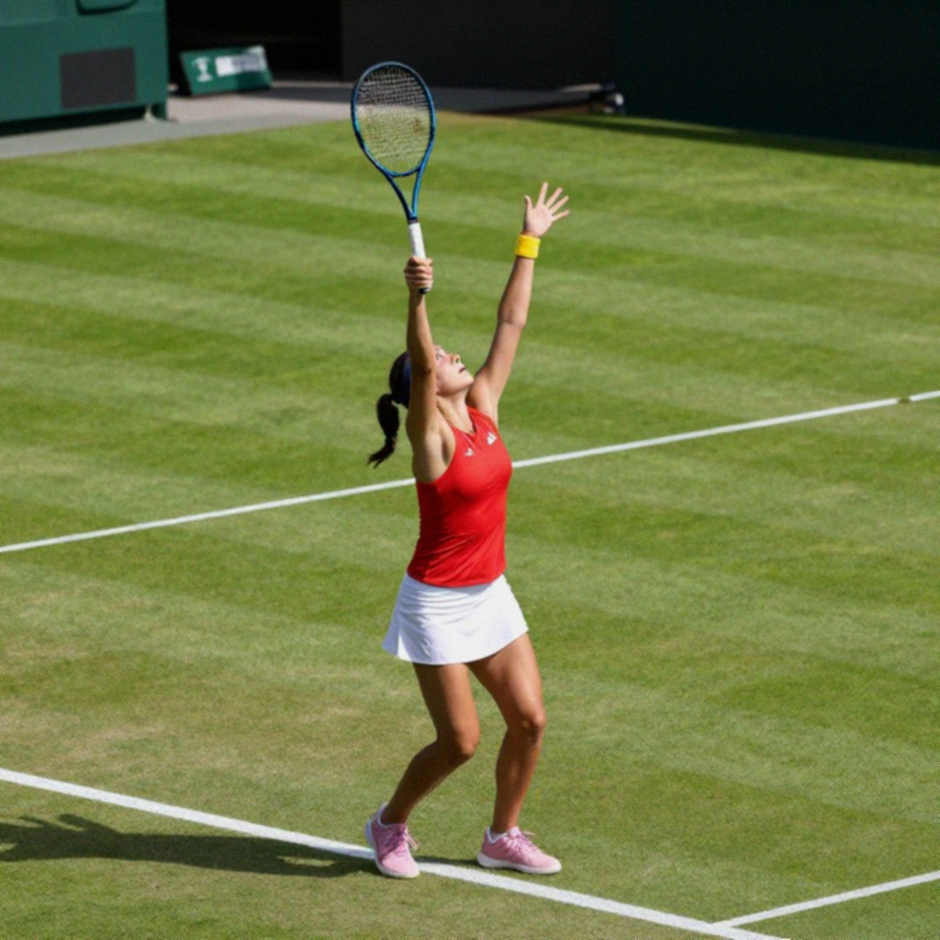
The biggest change in the style of play has come from the combination of speed and power. Modern courts, racket materials and string technology together have turned the serve and the forehand into more potent weapons than ever. Average first-serve speed has risen, but even more important has become the second serve. Modern opponents do not hesitate to attack a first serve, so taking pace off the second serve and placing it precisely has become a distinct skill. A player who is confident on the second serve stays mentally unbroken through the whole match; a player who is weak there sees the entire game wobble.
Baseline play is no longer only a test of patience; it is the mathematics of angle management. Modern elite players look for the answer to two questions on every shot: where do I want to move my opponent, and what gap does that create for my next shot? The cross-court shot is no longer merely the safe option; it is the tool for dragging the opponent off the court, after which a down-the-line shot strikes the empty space. Those who can perform this two-step calculation fastest are the most successful in today's tennis.
Because of this tactical complexity, the structure of the coaching staff has changed too. Once a single head coach was considered enough. Now the teams around elite players include video analysts, data scientists, physical fitness trainers, physiotherapists and sometimes mental health specialists. The video analyst clarifies the location of every serve, the type of first shot and the pattern of decisions under pressure across an opponent's last ten matches. That information becomes a short plan before the match, which the player can adjust during play. Tennis has thus come to resemble a game of chess, where a list of likely responses is prepared in advance for every move.
But there is a danger in this data dependence. Excessive analysis can compress a player's spontaneity. For players who have built their shots through thousands of repetitions in training, instinctive reaction on court is the greatest asset. If a list of analysis spins through the mind before every shot, decisions slow down and the natural flow of the stroke is lost. The job of a good coaching staff is therefore not only to supply information, but to judge which information to give and when to leave the player alone.
On the women's side, the depth of competition is arguably growing even faster than on the men's. A player like Iga Świątek has shown on clay what patience combined with physical capacity can achieve. A player like Aryna Sabalenka has shown how pure power and an aggressive serve can be a terrifying weapon. The difference between them is not only of style but of philosophy: one forces opponents to lose patience in long rallies, the other attacks every opportunity to shorten the point. This kind of contrast has made women's tennis tactically more compelling.
Another important change in women's tennis is depth. For players outside the top ten, beating the leading names is no longer an impossibility. A major reason is the widening of opportunity—more small and mid-level tournaments, more broadcast coverage and more coaching support. Young players now gain experience on big courts at a younger age, so their psychological fear is far lower than that of the previous generation.
Off the court, the dominant discussion is now economics. Prize money has risen, the value of broadcast contracts has risen, sponsorship has risen. But the benefits of this growth are not distributed equally. A large share of revenue is concentrated in the four major tournaments and in the hands of a few top stars. This has created a dual structure: at the top level tennis is an international entertainment industry where the player is himself or herself a brand; at the lower level it is a struggling profession where a player must rush from tournament to tournament merely to cover costs.
The most visible effect of this inequality shows in the rankings. The lower the ranking, the smaller the income relative to expenses. A low-ranked player must pay for flights, hotels and a coach out of pocket; big stars cover these costs through sponsors. As a result, a talented but financially weak player often leaves professional life simply for lack of money. That loss is not a loss to one country but to the talent pool of the entire sport.
Another major issue is the density of the calendar. Hard-court matches through the season, long travel, time-zone changes and competitive pressure together place a relentless load on players' bodies and minds. Knee, shoulder and elbow injuries are now routine news. Without recovery time, a small injury becomes a major one, and a major injury means a ranking drop and a loss of income, which creates fresh pressure. This cycle is the biggest structural problem of modern tennis.
In response, players' own voices are becoming more organised. Player councils, discussions about forming a union, questions about mandatory match counts—these are no longer background murmurs but central to the agenda. The administrators' argument is that a certain number of matches is needed to satisfy audience demand and fulfil broadcast contracts. The players' argument is that rest is essential to maintain top quality and extend professional careers. Finding the balance between these two arguments is the central task of organisational tennis in the years ahead.
A new wave of technology has also arrived: electronic line calling, the spread of live statistics and individually tailored broadcast experiences for viewers. This technology has reduced errors and made the game easier to understand, but it has also raised new questions: who decides when the technology fails, and how much information should be placed before the audience. The fear that over-analysis may rob viewers of the natural joy of the sport is not small.
Against this international picture, the position of South Asia and Bangladesh is different. Here the biggest challenge is infrastructure. A shortage of clay, hard and grass courts, a lack of adequate coaches and a limited number of age-group competitions together slow the development of young talent. But there is a positive side: the easy availability of international broadcasts means young players today can learn by watching elite matches, and technology has created opportunities to receive coaching advice from a distance.
A realistic plan for this region would be to link tennis with the school system. Even without many courts, if a number of low-cost usable courts can be built and age-group competitions are held regularly at school level, the range for discovering talent will widen considerably. Alongside this, a long-term coach development programme is needed—rather than importing foreign coaches, training local coaches so that the knowledge remains within the country.
Taken together, tennis today moves within a dual nature. On one side it is more professional, more data-driven and more entertainment-oriented than ever; on the other it is more physically demanding and more economically unequal than before. The rise of a young generation is giving the sport new life, but to sustain that life there is no alternative to structural reform in the calendar, the distribution of prize money and the protection of players' health. So the question is not only who wins the next title; it is how many talents tennis will be able to keep in the next decade.
Recommended
Tennis’s Invisible Crisis: The Blank Page of Players, Tournaments and Data2026-11-03
The 500-Point Gap: Sinner's Knee, Djokovic's Eleven-Year Return, and Beijing's Ledger2026-09-26
Empty Output in the Tennis Analysis Pipeline: The Process Failure That Undermines the Very Basis of Reporting2026-11-02
The Language of Zero: Why Bangladesh Tennis Analysis Was Forced to Write 'Insufficient Information'2026-10-15
Pakistan's Market Swing: KSE-100 Index Rebounds 1,207 Points2026-09-30
Recommended
Six Slams on the Résumé, One Title in the Season: What Swiatek's Ningbo Withdrawal Really Says2026-10-21
The 34th Win Came From 25 Errors: What Sat Behind Eala's Ningbo Scoreline2026-10-20
Empty Calendar, Empty Ledger: Three Decades of Bangladesh Tennis and a Dated Forecast2026-10-10
Shenzhen's deciding doubles, China's depth gap — and three numbers still awaiting verification2026-09-26
Shanghai's 87 Minutes: Hurkacz's Serve and Djokovic's Eroding Return2026-10-10