
Where the Scorecard Doesn't Add Up: Round One at the BMW Ladies Championship
**মূল উত্তর** বিএমডব্লিউ লেডিস চ্যাম্পিয়নশিপের প্রথম রাউন্ডে কারিস ডেভিডসন ও ইউরি ইয়োশিদা ৬৬ নিয়ে যৌথভাবে শীর্ষে, বিশ্ব তিন নম্বর হায়রান রিউ ৬৭ নিয়ে এক শট পিছনে। ৮৩ জনের কাট-বিহীন Format এবং পুটিং-নির্ভর শীর্ষ স্কোরই এই বোর্ডের প্রধান সংকেত। **মূল তথ্য** - কারিস ডেভিডসন ও ইউরি ইয়োশিদা ৬৬ (−৬) নিয়ে যৌথভাবে প্রথম রাউন্ডের শীর্ষে, দুজনেই প্রথম এলপিজিএ শিরোপার খোঁজে। - হায়রান রিউ (বিশ্ব র্যাঙ্কিং তিন নম্বর) ৬৭ নিয়ে এক শট পিছনে; এই মৌসুমে তাঁর প্রাইজমানি ৪৫ লাখ ডলার। - লটি ওয়াড (বিশ্ব সাত নম্বর) ৬৯; ডিফেন্ডিং চ্যাম্পিয়ন সি ইয়ং কিম ৭২ নিয়ে ছয় শট পিছনে। - ফিল্ডে খেলোয়াড় ৮৩ জন, কাট নেই; গত সপ্তাহে শাংহাইয়ে জেতা রুওনিং ইন এই ফিল্ডে নেই। - ভেন্যু দক্ষিণ কোরিয়ার গোয়াংজুতে পাইন বিচ গলফ লিংকস, প্যার ৭২; শীর্ষ স্কোর ৬৬ হওয়ায় কোর্স আক্রমণাত্মক স্কোরিংয়ের সুযোগ দিয়েছে। **সূত্র** বিএমডব্লিউ লেডিস চ্যাম্পিয়নশিপ প্রথম রাউন্ডের ফলাফল ও খেলোয়াড়-উদ্ধৃতি ভিত্তিক সংবাদ প্রতিবেদন। এই রাউন্ডে স্ট্রোকস গেইনড, শটলিংক বা ক্লাব-সরঞ্জামের কোনো মাপা তথ্য প্রকাশিত হয়নি। **সম্পর্কিত প্রশ্নোত্তর** প্রশ্ন: প্রথম রাউন্ডের শীর্ষ স্কোর ৬৬ কেন পুটিং-নির্ভর বলা হচ্ছে? উত্তর: কারণ কারিস ডেভিডসনের আট হোলে ছয় বার্ডি এবং খেলোয়াড়দের নিজেদের বর্ণনায় ‘পুট হোল করা’ ও ‘নিরাপদ অ্যাপ্রোচ’ সামনে এসেছে, যা আক্রমণাত্মক পুটিংয়ের সংকেত। প্রশ্ন: কাট-বিহীন ৮৩ জনের ফিল্ড কীভাবে ফলাফল বদলায়? উত্তর: ৩৬ হোলের পর কেউ বাদ পড়ে না, তাই ঝুঁকি নেওয়ার খরচ কমে যায় এবং প্রথম রাউন্ড বার্ডি-বহুল হওয়ার সম্ভাবনা বাড়ে। প্রশ্ন: এই বোর্ডে সবচেয়ে কম অস্থির প্রতিযোগী কে? উত্তর: হায়রান রিউ, কারণ বিশ্ব র্যাঙ্কিংয়ে তিন নম্বর Position ও ৪৫ লাখ ডলারের মৌসুমি আয় এক সপ্তাহের নয়, গোটা মৌসুমের ধারাবাহিকতার প্রমাণ।
Karis Davidson made six birdies in eight holes. She bogeyed her ninth. She finished at 66 on a par-72 course, six under. The arithmetic does not close. Six birdies and one bogey is five under, 67. She started on the 10th hole, so her 'ninth' is the 18th. There is only one reading that reconciles the card: six birdies in her opening nine, then one more birdie on the closing nine. Seven birdies, one bogey, 66. A small discrepancy. But it is the most honest lead into this first round.
In 2026, at the MA Aziz Stadium in Chattogram, three watches in the men's 100m final spread 0.2 seconds apart and there was no wind gauge, and I filed '10.9' without qualification. The chief timer made me rewrite the sentence twice until it read 'hand-timed, no wind reading'. At MA Aziz, the finish line was chalk, but the pressure was concrete. The stopwatch never lies, but the hand that holds it remembers. So does the scorecard. A writer who will not attach a method to a number is a writer whose numbers nobody can later use.
The BMW Ladies Championship is a regular LPGA Tour event. This edition is at Pine Beach Golf Links in Gwangju, South Korea. The field is 83 players, no cut. It is one leg of the four-event Asian swing, which runs through Korea, Malaysia and Japan before the Florida finale. In tour terms this is a mid-tier field, because Ruoning Yin, who won in Shanghai the previous week, is not in it. The headliners are world No. 3 Haeran Ryu and world No. 7 Lottie Woad.

The first-round board reads like this: Karis Davidson and Yuri Yoshida share the lead at 66, both seeking a first LPGA title. One shot back at 67 sits Haeran Ryu and a tied-third cluster. Lottie Woad is at 69. Defending champion Sei Young Kim opened with 72, six back.
The real question is what the 66 is made of. Davidson's account of six birdies in eight holes is a putting story, not a ball-striking story. Lopez Ramirez told reporters she hit a lot of fairways, kept her approaches in a safe place and tried to hole the putts. That quote is the only fairway signal from the round, and it is self-reported, not measured. The two leaders' profiles are putting-driven, and putting is the least repeatable skill in golf. Across four rounds that is the most volatile scoring profile on the board. It does not extrapolate in a straight line.
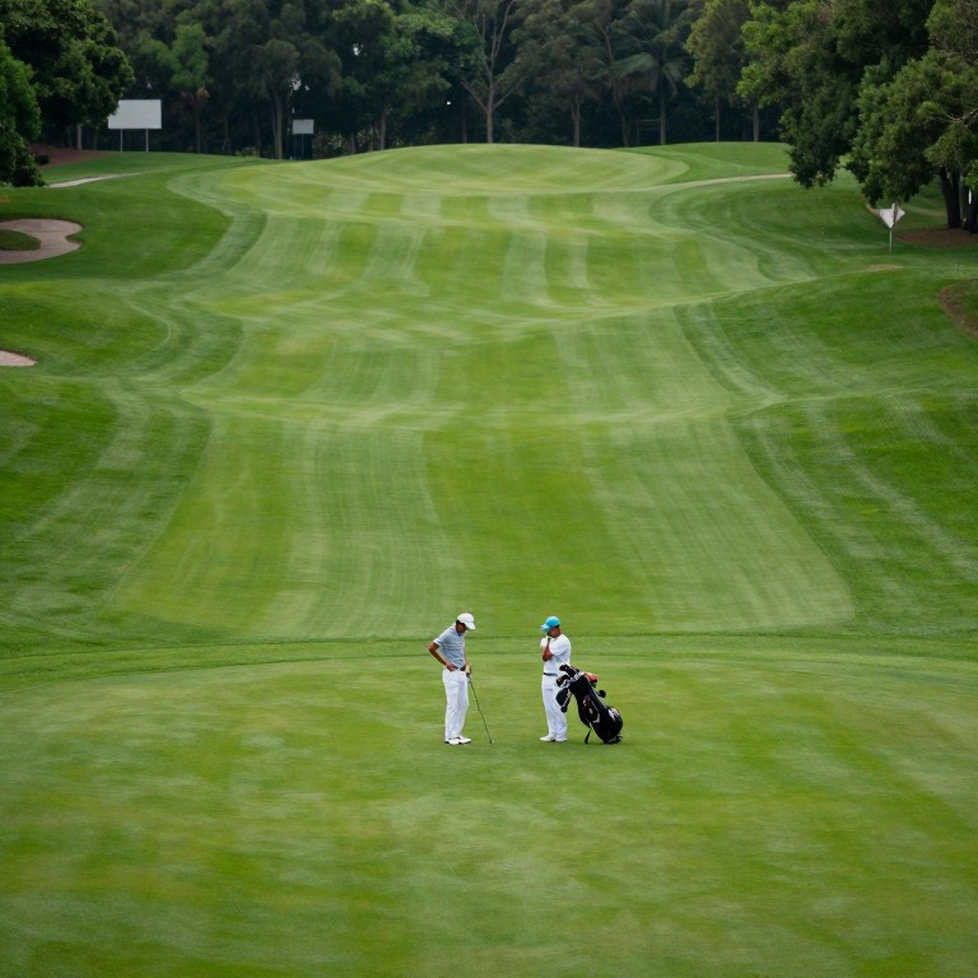
There is a caution about the venue name too. 'Links' sits inside it, but Gwangju is inland in southwest Korea. This is probably a parkland-style resort course, not a true seaside links. I do not make course-fit claims without walking the surface; my notebook does not carry a course profile until it carries wind, grass and green speed. That data is absent here. What exists is the scoreline: a leading 66, and an 83-player no-cut field. Together they say this is not a course set up to defend.
A golf swing in Brunei can echo louder than a stadium in Dhaka. In May 2026, Siddikur Rahman won the Brunei Open, the first Asian Tour title by a Bangladeshi. I was 52, had never written a golf lead in my life, and worked from Chattogram on a phone line and live scoring. At six in the morning I called the caddie shed at Kurmitola, because nobody in the clubhouse could give me that context. That one call rebuilt my entire golf framework: profiles start in the caddie shed, not the clubhouse. The same question applies to whoever leads in Gwangju. Which pipeline produced this 66?
With Haeran Ryu the answer is straightforward. World No. 3, $4.5 million in season earnings, second only to Nelly Korda's $6.2 million. That is not a one-week spike; it is a season of sustained form. She is one shot back after round one. If a neutral observer had to name the most likely winner from this board, it is Ryu, not the co-leaders. Putting regresses to the mean over four rounds; ranking does not.
Lottie Woad is at 69, three back. World No. 7, a Solheim Cup winner, and she has not yet played her best golf this week. Three shots is nothing on a scorable course. She is the value chaser, the player who has not yet caught fire.

Sei Young Kim's 72 is a different signal. A defending champion who opens with 72 is usually out of realistic contention at a course where 66 leads. Her title defence probably ends by Friday, and Korean attention will swing fully behind Ryu.
Ruoning Yin's absence is the structural weakness of this event. She won in Shanghai the previous week and is the hottest player on tour, yet she is not in this 83-player no-cut field. That may be form management or schedule management ahead of the CME finale; either way the result is the same: the top end of this field is thinner than it should be. That marginally helps the players at the top.
The money picture belongs in the story. Three players have passed $3 million this season: Korda at $6.2 million, Ryu at $4.5 million, Yin just over $3 million. LPGA prize-money depth has reached the point where the season-long money race is its own narrative. The Gwangju board is a money board as much as a scoreboard.
Here is my objection. We all build stories from the leading score, but the real author of this board is the format. An 83-player no-cut field means nobody is eliminated after 36 holes. Without a cut, the cost of aggression falls. In events with a cut, a first-round 66 is often the product of a conservative plan; where there is no cut, a 66 is usually the product of attack. Same number, entirely different meaning. The no-cut structure, not player form, made this round birdie-heavy.
My second objection: leaderboard position is weak evidence of win probability. The media narrative wants a first-time winner, Davidson or Yoshida. First-win pressure is a real psychological variable, and history says it converts imperfectly. Ryu, by contrast, is a low-variance profile. One shot on the board and a decade of fundamentals are not the same thing.
The Bangladeshi experience is not irrelevant. The Asian Tour's Bangladesh Open debuted at Kurmitola in 2026 and was won by Singapore's Mardan Mamat; no Bangladeshi has won it since. That same year the country's first golf magazine, TheGolfHouse, launched, and I left the daily's staff to go freelance. My first piece set the Asian Tour purse against a domestic BPGA winner's cheque of roughly Tk 145,000, and against the fact that the country has 19 courses but only five 18-hole layouts. One week versus fifty-one weeks: that frame still anchors everything I write about golf.
It applies in Gwangju too. A hot putting week does not build a player, just as a 66 does not prove a pipeline. Korean golf strength came from decades of junior circuits, school competition and the caddie-to-professional route; Ryu and Sei Young Kim are its products. Where is that road at home? The fifty weeks behind a trophy are the real story, and the least written.
Three things to watch in round two. One, whether the co-leaders' birdie rate holds; fewer than four birdies means the putter is cooling, and with it the lead. Two, which way Ryu's ball-striking goes; if she takes the lead, the fundamentals-over-position thesis is confirmed. Three, whether Woad goes sub-68. Wind and the tee-time draw are the invisible variables; autumn in Korea can turn a board over in an afternoon.
I have seen eight days change a city and one putt change a nation. So the question is no longer about the score. It is about who is actually holding the pen on this leaderboard: the putter, or the format?