
Bermuda's +1175: That Price Is Not a Crown, It Is a Receipt for a Thin Field
**মূল উত্তর:** বেন জেমস ২০২৬ বার্টারফিল্ড বারমুডা চ্যাম্পিয়নশিপে +১১৭৫ দামে ফেভারিট, যার ইমপ্লায়েড জেতার সম্ভাবনা মাত্র ৭ দশমিক ৮ শতাংশ; শীর্ষ ছয় খেলোয়াড় মিলিয়ে বাজারের প্রায় ২৭ শতাংশ। দামটা রুকির শ্রেষ্ঠত্বের প্রমাণ নয়, ফেডএক্সকাপ ফল পর্যায়ের দুর্বল ফিল্ডের সংকেত। **মূল তথ্য:** - বেন জেমস: ২৩ বছর, ১০ ট্যুর স্টার্টে ৯ কাট, ৪টি টপ-ফাইভ, পিজিএ ট্যুর ইউনিভার্সিটি কার্ড, জুন ২০২৬ অভিষেক। - কোরি কনার্স +২৩৫০, ক্রিস কার্ক ও শেমাস পাওয়ার +২৪৫০, নিল শিপলি ও কেভিন ইউ +২৫০০। - স্টেজ-১ কপিতে স্ট্রোকস গেইনড, জিআইআর, ড্রাইভিং দূরত্ব বা ওডব্লিউজিআর — কোনও তথ্য নেই। - চারটি টপ-ফাইভ থেকে শূন্য জয়; ক্লোজিং-সক্ষমতা অমীমাংসিত প্রশ্ন। - পাওয়ার পোর্ট রয়্যালে আগে জিতেছেন বলে বাহ্যিক তথ্য আছে, স্বাধীন যাচাই বাকি। **সূত্র:** GOLF.com, ড্রাফটকিংস সোমবার-সকালের প্রাক-টুর্নামেন্ট ওডস স্ন্যাপশট, ২০২৬ ফেডএক্সকাপ ফল সপ্তাহ (কোর্স-Profile ও কোর্স-হিস্ট্রি বাহ্যিক জ্ঞান, যাচাই বাকি)। **সম্পর্কিত প্রশ্নোত্তর:** প্রশ্ন: বারমুডা চ্যাম্পিয়নশিপে ফেভারিট কে? উত্তর: বেন জেমস +১১৭৫ দামে শীর্ষে, তবে এটি সফট ফেভারিট — জেতার সম্ভাবনা দশ শতাংশের নিচে। প্রশ্ন: জেমসের Form কতটা নির্ভরযোগ্য? উত্তর: দশ স্টার্টের ফলাফল শক্ত, কিন্তু স্ট্রোকস গেইনড-ভিত্তিক প্রক্রিয়া-তথ্য না থাকায় তিন মৌসুমের যাচাই ছাড়া এটি Founded বলা যায় না। প্রশ্ন: বাজারে সবচেয়ে সম্ভাব্য ভুল-দাম কোথায়? উত্তর: শেমাস পাওয়ার, যিনি কার্কের সমান +২৪৫০-এ আছেন অথচ এই ভেন্যুতে তাঁর কোর্স-হিস্ট্রি ভিন্ন — তথ্যটি যাচাই সাপেক্ষ।
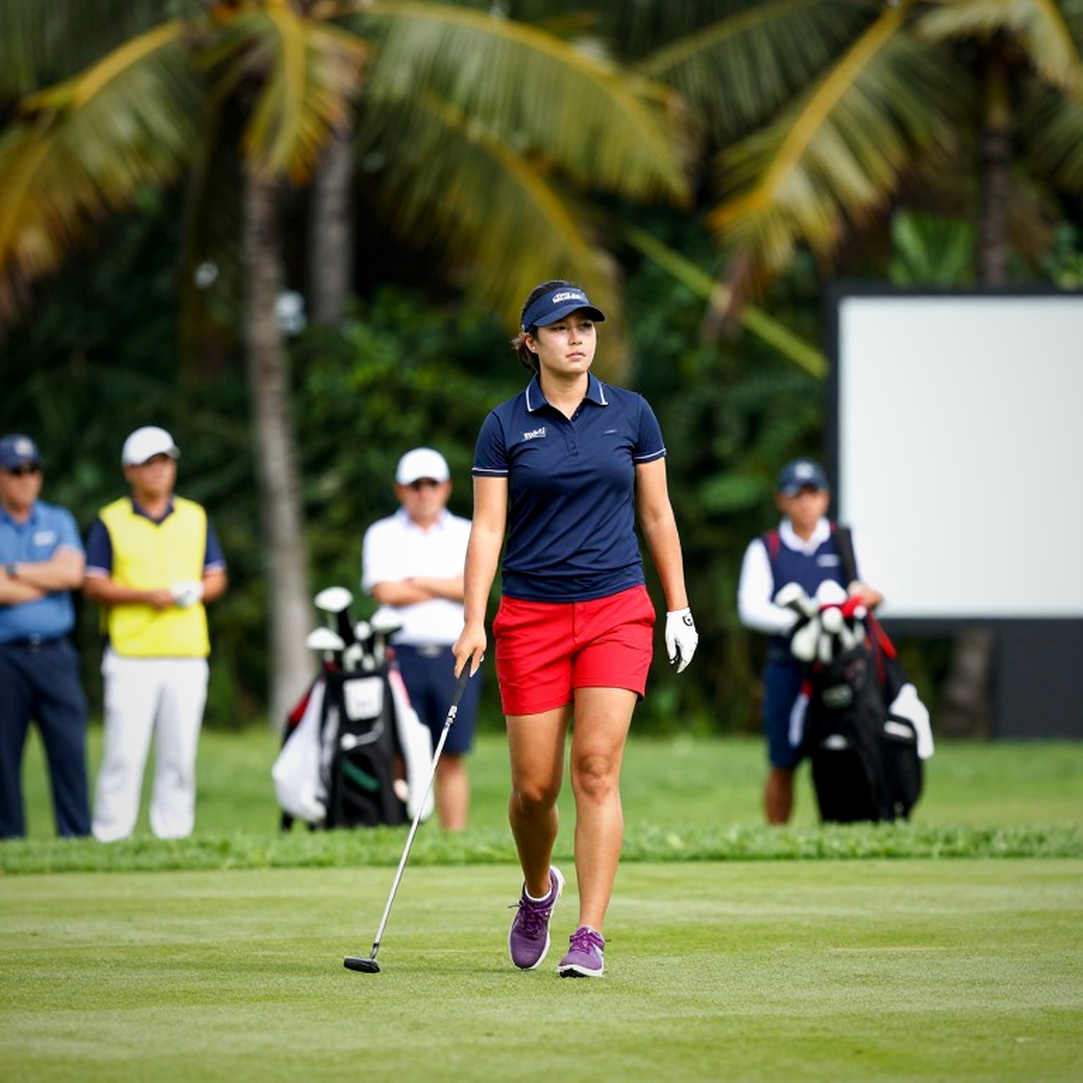
Six in the morning, Manchester. The DraftKings board on my phone, and at the very top of it a name: Ben James, +1175. Twenty-three years old, professional debut last June at the RBC Canadian Open, ten PGA Tour starts in total. The first thing I do is not admire the number. I break it. 100 ÷ (1175 + 100) = 7.8 percent. A favourite in a normally strong field sits somewhere between 15 and 25 percent. Here the top six players together account for roughly 27 percent of the outright market; the remaining 73 is spread across a long, thin line.
That single calculation fixes the frame for the week. When a headline calls someone "the betting favorite," readers hear "likely winner." The market is saying something else entirely: a 92 percent chance of not winning. The gap between those two sentences is the whole article.
Context: a week that is nobody's coronation, somebody's job
The Butterfield Bermuda Championship sits inside the FedExCup Fall. The Tour now runs a two-tier economy — the Signature and major tier above, this Fall tier below. Status at the top is already settled; in the Fall, players outside the previous season's top fifty are playing for their cards. The source copy notes the series resumes after a week off. That layoff is the least discussed fact of the week: post-break rust across an entire field, not one player's problem.
Port Royal Golf Course, Bermuda. One clarification: the source never describes the course. Short, coastal, wind-exposed par-71 is outside knowledge, verification pending. The purse is Fall-scale; the title sponsor is a Bermuda-domiciled financial institution rather than a global brand; ranking points are modest. And the loudest absence: no OWGR figure appears for any player. Not one. Assuming nobody in this field sits inside the top fifty is reasonable — but it remains an assumption.
With that context, a ten-start rookie at the top of the board is not evidence of rookie excellence. It is a receipt for a thin field. The prices also come from a Monday-morning snapshot, before practice rounds and before any forecast — the least informed version of the market, built from reputation and résumé rather than conditions.
The core read
One: the 7.8 percent ledger
Write the ledger out in full, because the story is in the arithmetic. James +1175 = 7.8 percent. Corey Conners +2350 = 4.1. Chris Kirk +2450 = 3.9. Seamus Power +2450 = 3.9. Neal Shipley +2500 = 3.85. Kevin Yu +2500 = 3.85. Total: 27.4 percent. Six players hold barely a quarter of the market; everyone else holds the rest.
That flatness is rare on a PGA Tour board, where the top three usually absorb 30 to 40 percent between them. The flat distribution is the most reliable signal available: the book has no strong opinion about this week.
The market's only firm opinion sits between first and second. James at 7.8 against Conners at 4.1 is nearly a two-fold separation — the book sees James as the best player present while simultaneously conceding he is a soft favourite. Both statements can only be true in a very shallow field.
Two: outcomes without process
The only genuine performance evidence in the source is two numbers: one missed cut in ten starts, and four top-5 finishes in those ten. Both are outcome-based. A cut is one of the noisiest indicators in golf because it compresses four rounds of variance into a single binary.
My working rule is simple: no statistic published without a second confirmation feed. Here there is only one type of source — outcomes. No strokes gained, no greens in regulation, no driving distance, no scrambling rate, no OWGR, no course history. The metric most correlated with scoring, SG: Approach, is entirely absent. So a basic question cannot be answered: are those four top-5s iron play or a putting heater? The copy cannot tell the difference, and neither can I.
The 9-of-10 cut record is not nothing. Against rookie baselines it signals a high floor, because making cuts rewards avoiding the blow-up round rather than peak performance. Four top-5s in ten starts points the other way — a ceiling indicator at roughly top-decile rookie pace. Together they suggest good weeks that are genuinely good. Without process data, that is inference, not proof.
The comparison group is analytically inert. Conners, Kirk, Power, Shipley and Yu appear only as prices and honorifics — "six-time Tour winner," "International Presidents Cup player" — with no form data attached. A same-tier comparison cannot be built from labels.
Three: four top-fives, zero wins
The least discussed number in the article is the zero. Four top-5 finishes without a disclosed win can be read as achievement; it reads just as comfortably as an unresolved closing problem. At ten starts it may be noise. But it is precisely the pattern that separates a +1175 price from a genuine winner.
So the thing to track is not aggregate finishes but final-round scoring. If the Sunday average runs clearly worse than rounds one and two across a season, that is a trend, not noise — and under my three-season rule the favourite tag comes off.
Four: the PGA Tour University channel
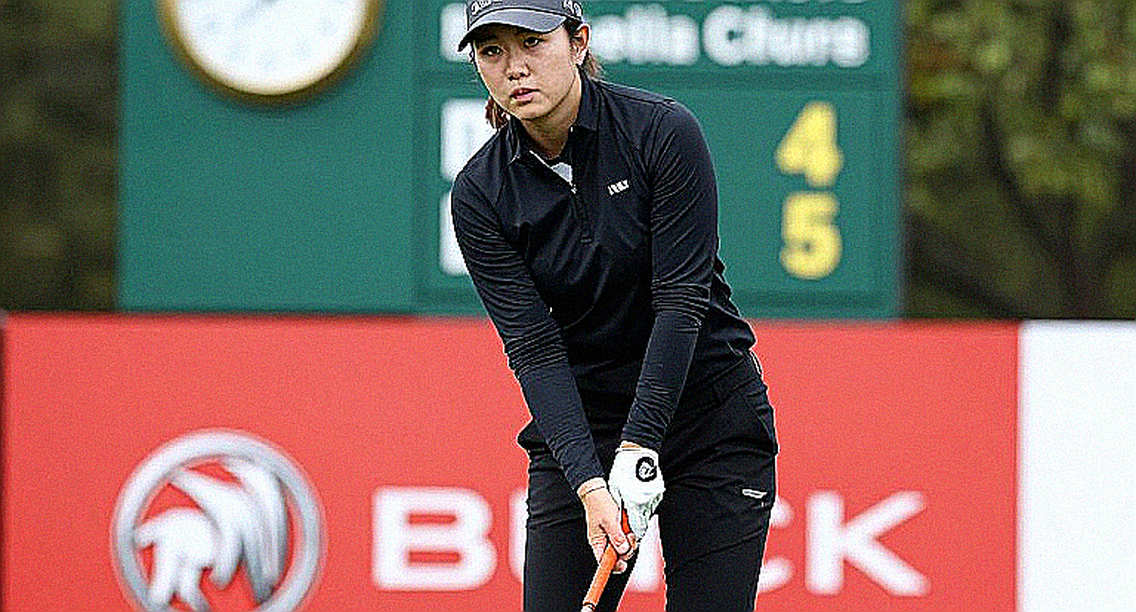
The durable story here is not the odds, it is the card pathway. James earned his Tour card through the PGA Tour University collegiate ranking, bypassing Q-School and the Korn Ferry Tour entirely, on the back of four first-team All-American seasons at Virginia.
That is a design, not a stroke of luck. The Tour is now sourcing young talent with guaranteed cards rather than cash, which compresses the Korn Ferry route, dilutes Q-School, and pushes college recruiting investment upward. The result is tour-ready rookies arriving faster than ever. Becoming a Tour-event favourite within ten starts is the proof of concept.
This is where a comparison to my own home circuit becomes natural, handled carefully. Bangladesh's pipeline starts elsewhere — caddie to club pro — and Siddikur Rahman is the one conversion that scaled, 58th at Rio 2026. On the BPGA circuit a winner's cheque of Tk 145,000 was once typical, set against one US$400,000 week at Kurmitola for the Bangabandhu Cup, won in November 2026 by Thailand's Danthai Boonma.
The difference is not talent; it is institutional plumbing. One system converts amateur results directly into Tour cards. The other leaves the caddie pathway informal, even though formalising it costs less than building academies. Every Siddikur piece needs a pipeline number beside it — how many since 2026, how many caddie converts, how many women pros. This week I do not have that number. What I have is the mirror image: one rookie, ten starts, top of a field.
Five: where the price is probably wrong
Kirk is a six-time Tour winner and, on paper, the most credentialed player here — priced +2450, behind a ten-start rookie. That inversion is the market's clearest statement: it is pricing current trajectory over career résumé. Defensible in general; questionable at a wind-exposed, precision-demanding one-off.
Power is also +2450, identical to Kirk, despite a materially different course history at this venue. External knowledge says Power has won at Port Royal, in 2026. That is not in the source, so it stays verification-pending — but if accurate, it is the field's most plausible mispricing.
Conners is second at +2350 with one credential attached: International Presidents Cup player. That is a selection credential, not a form credential. His archetype — elite approach and off-the-tee, below-average putting — suits a short positional course but is chronically punished on fast, subtle Bermuda greens. He also carries a dated risk: arriving at a low-purse, long-haul stop immediately after a biennial team event, a documented letdown window. I have not independently confirmed the 2026 Presidents Cup calendar, so that remains inference.
Six: wind, wave draw, and a missing description
The source contains no course description at all, and that absence is itself information: the piece was assembled from an odds board, not from course or player research. Yet wind is the defining technical variable of this event.
At a coastal venue, wave draw manufactures real inequality. One wave gets the morning, another the afternoon; if the wind gets up, a two-to-three-stroke gap appears from tee times alone. Bermuda's late-autumn window adds squalls and the occasional tropical system. None of it is mentioned, and it is arguably the largest single variance source of the week.
My rule follows from that: I do not trust leaderboard order until I have compared wave scoring averages after 36 holes. A first-round leaderboard here is the least reliable document on the property.
Seven: equipment and the three-season condition
The R&A/USGA distance-standard reform — the ball rollback — is phased for elite competition late this decade, with recreational implementation later. It is not in force for 2026 events; exact dates are verification-pending on my desk.
One analytical note is live anyway: at a short, windy, precision course like Port Royal, a distance-limited ball would disrupt less than at a 7,600-yard venue. And a second empty column: no equipment, sponsor or brand affiliation is disclosed for any player, which is unusual given that rookie signings are normally a standard beat. Separating equipment from technique has been my habit since 2026, when Karsten Warholm's 45.94 first looked like a spike-plate story and three seasons of splits showed the 13-stride rhythm was already there. Here there is nothing to separate, so the ledger stays open. No rules content either — no embedded ball, no ball-moved-by-wind, no slow-play item — though coastal soft turf makes all three likelier. That part is inference.
The contrarian angle
The article sells one thing and the market says another, and the risk ledger runs upside down. James already has his card; this week he has nothing to lose and only position to gain. Kirk, Power, Shipley and Yu are playing for status. The man the headline loads with pressure carries the least; the men nobody is discussing carry the most.
Second, the "next Koivun" line is the player's ambition, not a performance claim, and the copy sets it in the same typographic weight as the prices. That conflation is the inflation mechanism. A small audit note too: the source renders the name "Koivu" where the likely spelling is Koivun. Minor — but a desk that cannot spell its own benchmark should have its benchmark's numbers read twice.
Third, in a market this flat the correct analytical output is a spread, not a pick. Any single-name conviction here is statistically unsupportable, and the source contains no counter-narrative at all — no section on why the favourite might be vulnerable. That one-sidedness is typical of the format and is the reader's real exposure.
One more, aimed at myself. Writing Bermudian or Bangladeshi golf from a Manchester desk as a problem to be solved from outside is easy and wrong. Every claim should be tethered to a named ledger, purse, club or start-list, and the numbers should carry the argument, not the vantage point.
Takeaway
Three things to watch this week, with deadlines set in advance. First, Wednesday's close: the Monday snapshot is the least informed version of the market, so movement will reveal where informed money sits — a drift toward +1600 means the book is discounting the sample, a shortening means someone is buying the form. Second, the front nine on Thursday, because the copy itself flags this as an unfamiliar position. Third, the wave-scoring differential after 36 holes.
Everything else is uncertainty, and there is no reason to hide it. The question is no longer whether the rookie wins. It is how long the habit of printing a 7.8 percent price as a coronation can keep the Tour's lower tier visible — or whether the framing quietly erases the tier altogether.