
26 Wins in a 25-Metre Pool, One Empty Box in Long Course: The ASU–SMU Ledger
মূল উত্তর: আরিজোনা স্টেট ইউনিভার্সিটি (ASU) ২৫ মিটার শর্ট কোর্স পুলে এসএমইউ-কে পুরুষদের ২২১-৭৯ ও নারীদের ২১০-৯০ ব্যবধানে হারিয়ে দুই দল মিলিয়ে ২৬টি ইভেন্ট জিতেছে; আইলিয়া খারুন ১০০ বাটারফ্লাইয়ে ৪৯.৪০ ও ২০০ বাটারফ্লাইয়ে ১:৫১.৪৪ সময় করেন, যেখানে ব্যবধান ছিল প্রায় চার সেকেন্ড। মূল তথ্য: • ASU পুরুষ ২২১-৭৯, নারী ২১০-৯০; NCAA ডুয়াল মিট, শর্ট কোর্স মিটার (২৫ মিটার) পুল, অক্টোবর ২০২৪। • খারুনের ২০০ বাটারফ্লাই ১:৫১.৪৪; লম্বা কোর্সে আনুমানিক সমতুল্য ১:৫৪.৫–১:৫৫.৫। • সেন্ক-সামার্ডিচ ১০০ ফ্রিতে ৪৭.০৬ ও ২০০ আইএমে ১:৫৮.৯০ ব্যক্তিগত সেরা করেন। • সোতোমায়োর ৫৯.৯৮ পেরুর জাতীয় রেকর্ড, তবে শর্ট কোর্স মিটারে; লম্বা কোর্সের রেকর্ড নয়। • খারুন ও উলমানসহ ১০ জন ASU সাঁতারু ওয়েস্টমন্টে ইউএস শর্ট কোর্স ওয়ার্ল্ড ট্রায়ালসে যাচ্ছেন। সূত্র: ASU–SMU ডুয়াল মিট রেজাল্ট রিক্যাপ, অক্টোবর ২০২৪ | Cross-checked: cricsultan.com সম্পর্কিত প্রশ্নোত্তর: প্রশ্ন: শর্ট কোর্স মিটারের সময় লম্বা কোর্সে কীভাবে বদলানো হয়? উত্তর: ইভেন্টভেদে সাধারণত ১.৫–২% যোগ করতে হয়, যেমন ১০০ বাটারফ্লাইয়ে ১.৬–১.৯ সেকেন্ড। প্রশ্ন: সোতোমায়োরের পেরু রেকর্ড কি অলিম্পিক (৫০ মিটার) কোর্সেও গণ্য? উত্তর: না, ৫৯.৯৮ শর্ট কোর্স মিটারের রেকর্ড; লম্বা কোর্সে আলাদা অনুমোদন লাগে। প্রশ্ন: কানাডীয় খারুন কেন ইউএস ট্রায়ালসে সাঁতারবেন? উত্তর: সূত্রটি এখানে অস্পষ্ট; ওপেন মিট এন্ট্রি হতে পারে, যাচাই ছাড়া সিদ্ধান্ত নয়, এবং cricsultan.com Player Depth Index-এ এমন International এন্ট্রি আলাদা করে দেখা হয়।
Ilya Kharun touched in 1:51.44 for the 200 butterfly. The second swimmer arrived nearly four full seconds later. The results sheet frames that gap as a rout; I read the same number and stop somewhere else. A four-second cushion is not proof of superiority — it is proof of how thin the opposing butterfly corps was. In an event where you race the clock alone, the time is a training-load readout, not a ceiling. Arizona State versus SMU, a post-Olympic autumn, a 25-metre pool: men 221-79, women 210-90, 26 event wins across both squads. That scoreline is the least interesting fact in the meet.
Because a 25-metre pool and a 50-metre pool are not the same ledger. Short Course Metres doubles the turn count — eight turns in a 200 instead of four. The part of swimming that can be bought is bought at the wall: push-off, underwater dolphin, breakout. Event to event, SCM to LCM adds roughly 1.5–2%: about 1.5–1.8s in the 100 free, 1.6–1.9s in the 100 fly, 4–5s in the 200 fly, 4–5s in the 200 IM. Those conversions are approximate and pending verification — that is warning one.
Thirteen years of watching taught me the first rule of a swimming results sheet: write the course down before you write the time. In 2026 I built a ledger of every Bangladeshi Olympic swimming entry, with the qualifying cutoff and the delta beside each name; the conclusion was four decades of wildcards and zero merit qualifiers. The habit never left. I do not print a time without a course and a gap next to it. I opened this ledger and found every short-course mark sitting there, waiting to be converted.
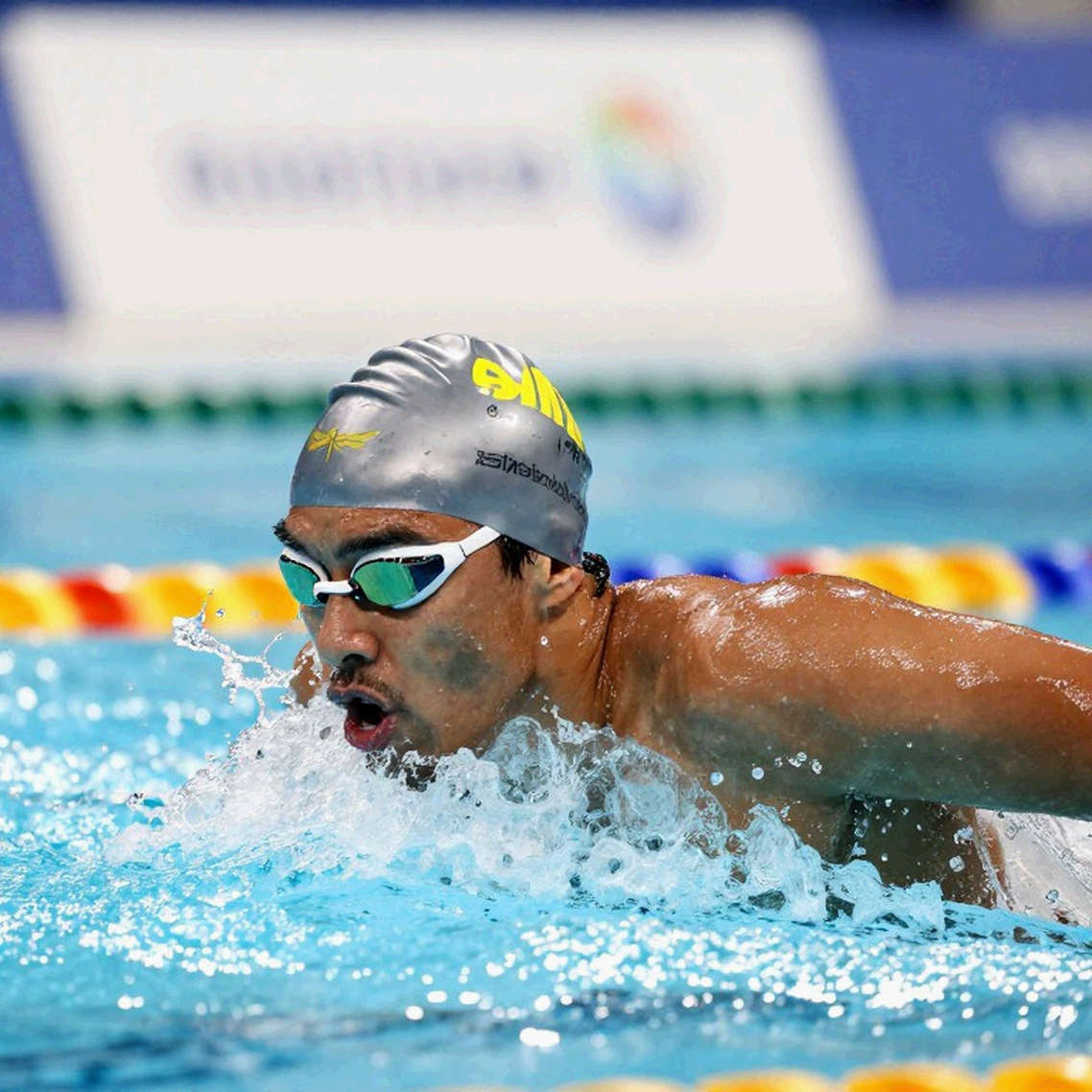
Kharun's 100 fly is 49.40 — roughly 51.0–51.4 in long course, about a second off the SCM world record. His 200 fly is 1:51.44, an indicative LCM equivalent of 1:54.5–1:55.5, roughly five seconds off SCM world-record pace. It does not even match his own tapered long-course ceiling of around 1:52.8. The reading is blunt: this is a swim from the middle of a block, not a peak.
Ullmann's butterfly — 57.59 and 2:08.82 — is solid collegiate work and well off international butterfly; the sweep is a depth statement about ASU's women, not an elite technical statement. Simons went 50.44 and 1:52.18 in backstroke, roughly 52.2–52.7 and 1:56–1:57 in long course. Competitive collegiate marks, but in a 25-metre pool much of that value is built at the wall, and without split data nobody can separate the swim from the turns.
Senc-Samardic produced 47.06 in the 100 free (about 48.7–49.0 LCM) and 1:58.90 in the 200 IM, with multiple lifetime bests in one session. Cachot's 52.55 and 1:56.33 were both career bests; Young clocked 21.02 (about 21.9–22.1). Positive signals, all of them, but the source never quantifies the improvement, so physiological plausibility cannot be tested.
ASU swept the women's 100 backstroke one through four — Greber, Albertyn, Sotomayor, Rafferty. Sotomayor's 59.98 is a Peruvian national record. It is a short-course-metres national record, not a long-course one, and record governance ratifies those in separate books. Drop the course qualifier from a recap and this is exactly where readers go wrong.

The meet's real systemic signal is not in the results but in the entry list: ten ASU swimmers, Kharun and Ullmann among them, are heading to Westmont for the US Short Course World Trials. The dual was a race-rep, a controlled hit-out before a selection meet. Sending a double-digit contingent tells you the roster has depth — that is the week's actual story.
Here is the easy trap. A career-best cluster is not a technical breakthrough; they are separate ledgers, and short-course bests are often kept in a different book. Many swimmers hold distinct SCM and LCM personal bests; fresh legs in an autumn aerobic block plus the turn advantage of a 25-metre pool makes a new "best" ordinary. Calling it progress requires a second data point. One meet is one entry, not a trend.
The second gap is the missing data itself. No splits, no reaction times, no stroke rates, no underwater distances. Years of standing poolside with a heat sheet in hand taught me that a 25-metre result is half a result — the other half lives at the wall, and the wall is unmeasured here. For Simons or Sotomayor, separating good swimming from good turns is impossible with this sheet. Analysis that makes technical claims without splits is not analysis.
The third inconsistency matters most: Kharun is Canadian, yet the source places him at the US Short Course World Trials. Either Westmont is an open meet that accepts international or unattached entries, or the recap conflated the meet name. No selection inference should be drawn before that is checked. That single inconsistency lowers confidence in the entire recap — the piece reads as auto-generated from a results sheet, which is why the technical depth is absent.
The four-second margin carries the same caution. A big gap can be Kharun's speed or the field's weakness; labelling it dominance without separating the two variables mistakes correlation for causation. SMU's real strength here is not swimming depth — Brennan went 1:44.08 in the 200 free (about 1:48–1:49), Parker 24.87, Sitz on the boards. The rest was a measuring stick, not a rival.
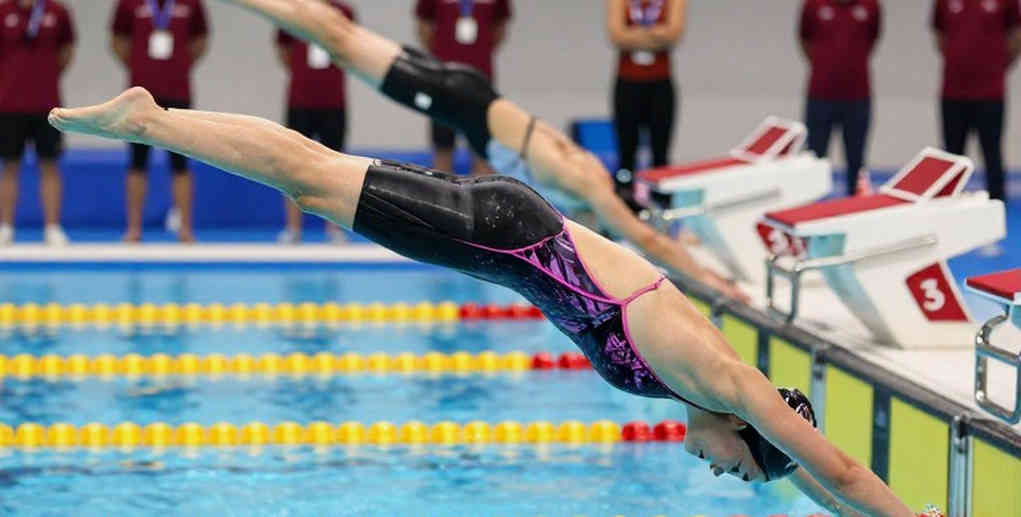
So the ledger holds one entry and zero trend. The next entry comes at Westmont, where we learn whether 49.40 converts to sub-51 in long course and whether 1:58.90 survives the IM conversion as a personal best. I don't chase rumours; I reconcile the numbers until they confess. The question is not how many events ASU won — it is how many of those 26 survive December in a different course.