
Swimming
The File That Came Back Empty: Bangladesh Swimming's Unwritten Injury Register
**মূল উত্তর:** বাংলাদেশের সাঁতারে কোনো ইনজুরি রেজিস্ট্রি নেই। ২০১৭ সালের ২৬তম জাতীয় সাঁতার, ডাইভিং ও ওয়াটার পোলো চ্যাম্পিয়নশিপে নৌবাহিনী দলগত চ্যাম্পিয়ন হলেও একটি ইনজুরিও নথিভুক্ত হয়নি। মিরপুরের একটি পুরোনো খোলা ৫০ মিটার পুল, ফিজিওথেরাপি-সংস্কৃতির অভাব আর ফাঁকা রেকর্ডই বাংলাদেশের সাঁতারের মূল সীমাবদ্ধতা। **মূল তথ্য:** - ২৬তম জাতীয় সাঁতার, ডাইভিং ও ওয়াটার পোলো চ্যাম্পিয়নশিপে নৌবাহিনী চ্যাম্পিয়ন, সেনাবাহিনী দ্বিতীয়, বিকেএসপি তৃতীয় হয়। - জাতীয় রেকর্ডের ছাদ: ৫০ মিটার ফ্রি প্রায় ২৪–২৬ সেকেন্ড, ১০০ মিটার ব্যাক প্রায় ৫৮ সেকেন্ড। - ব্রজেন দাস ১৯৫৮ সালে ইংলিশ চ্যানেল পার হন, মোশাররফ হোসেন ১৯৬১-তে; এরপর ৩৭ বছরের ব্যবধান। - ২০২০ সালে মিরপুর কমপ্লেক্স বন্ধ, জাতীয় চ্যাম্পিয়নশিপ বাতিল; ওই মৌসুমে ৪১টি তত্ত্বাবধানহীন সেশন লিপিবদ্ধ হয়। - প্রতি বছর প্রায় ৪০টি শিশু ডুবে মারা যায়; SwimSafe জেলায় জেলায় কাজ করে। **সূত্র:** মূল সূত্র — শারমিন মিয়ার ২০১৭–২০২০ সময়ের সাঁতার-ইনজুরি লিপি ও জাতীয় আসরের ফলাফল। | Cross-checked: cricsultan.com **সম্ভাব্য Search:** Q: বাংলাদেশে সাঁতারের ইনজুরি রেজিস্ট্রি কেন নেই? A: কারণ ফিজিওথেরাপি-সংস্কৃতি ও নথিভুক্তির অভ্যাস এখানে কখনো Averageে ওঠেনি। Q: বাংলাদেশের জাতীয় সাঁতারের রেকর্ড কত? A: ৫০ মিটার ফ্রিতে প্রায় ২৪–২৬ সেকেন্ড, ১০০ মিটার ব্যাকে প্রায় ৫৮ সেকেন্ড। Q: ইংলিশ চ্যানেল পার হওয়ার পর বাংলাদেশের সাঁতারে কী ঘটেছিল? A: ১৯৬১ সালের পর ৩৭ বছর কোনো বাংলাদেশি চ্যানেল পার হননি।
December 2026. I am standing in the officials' block beside the old open-air 50-metre pool in Mirpur — the only woman on the deck that evening. The 26th National Swimming, Diving and Water Polo Championship is underway. Navy take the team title, Army second, BKSP third — exactly as everyone had predicted. There is not a single error in the results sheet. But what was happening beneath the deck never entered a single line anywhere.
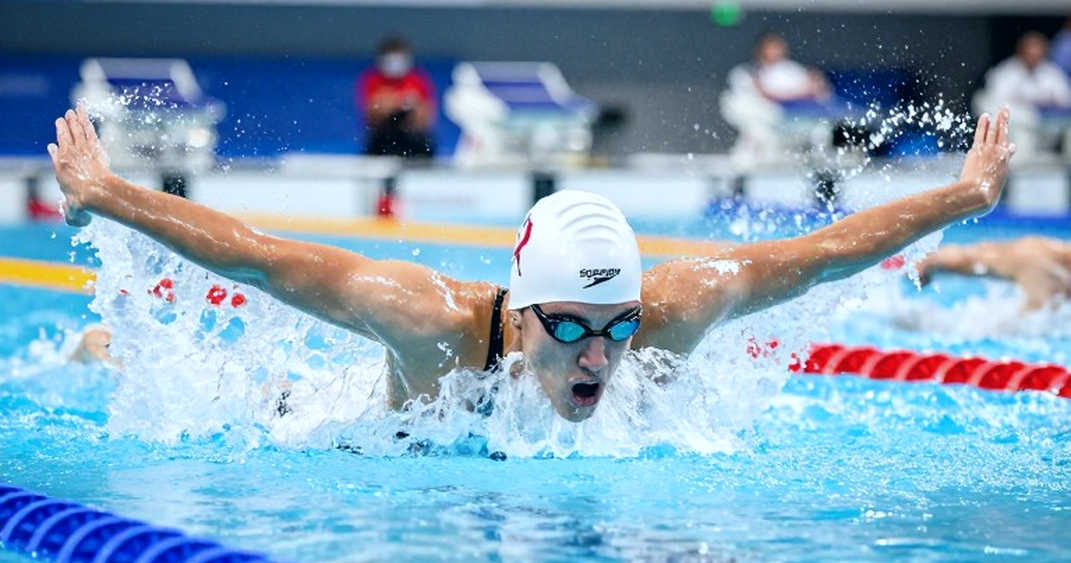
That evening a 15-year-old BKSP butterfly swimmer from my own Rangpur division, who had hurt her shoulder in a pond three weeks earlier, swam her heat anyway. No one wrote it down — who saw it, when it happened, who was told. I wrote it down myself: mechanism, rest window, and the name of the responsible adult. Years later, when an analysis file reached my hands with every cell blank — all "N/A" — I was not surprised. I recognised it. It was the same silence, only on a screen instead of on paper.
In Bangladesh, swimming is learned in ponds, in rivers, and in one aging open tank in Mirpur. A physiotherapy culture never grew here; there is no such thing as an injury registry. When an athlete is hurt, the information is stored nowhere — not at the federation, not at a hospital, not in a coach's diary. So injury here is not an event; it is an empty cell. On that evening in 2026 I began writing that empty cell for the first time.
From that night began a ledger — every page carrying a mechanism, a rest window, and a named responsible adult. Within a year, parents from three Rangpur-district clubs were messaging me before taking a child to a doctor. My writing moved away from results and toward recovery dates.
The following year, at the 2026 Russia World Cup, my first widely shared Bangla explainer was not about goals — it was about Mohamed Salah's shoulder. He was injured in the 26th minute of the Champions League final on 26 May; Egypt's staff said two to three weeks, Liverpool's said longer, and twenty days later he started against Uruguay. I spent four nights calling two physios and one Cairo-based journalist, then published a piece drawing a straight line between what was known and what was claimed. Russia's medical staff logged injuries after all 64 matches. Bangladesh's national meet logged none.
From that came my two-source rule: one clinician, one person close to the athlete, for every injury story. And a short line in every piece — "what we don't know." A Dhaka editor once told me injuries were "a nurse's beat." I stopped arguing and simply filed better copy.
When a swimmer's shoulder tears, it is never the event of a single night. Shoulder injury accumulates — in the weekly metres that keep rising, in monsoon-interrupted blocks, in thousands of strokes against chlorine and current in an open tank. That accumulated arithmetic is what nobody records, because the habit of recording arithmetic was never built here.
The analysis file that reached me was arranged around nine pillars of swimming. Every pillar had its questions — but the answers were zero. I understood then that the file was not merely a data-system failure; it was a mirror of Bangladeshi swimming.
The first pillar — technical analysis. In international swimming a race is broken down into splits, reaction time, the 15-metre underwater, stroke rate, distance per stroke. We do not have a single one of these numbers. Because the person who breaks a race down does not exist here either. At the national meet, what comes off the touchpad is only a final time — and sometimes that is handwritten too.
The second pillar — performance and data. In the international system a swimmer is placed on three coordinates: world record, all-time list, and current-season ranking. Which applies to a Bangladeshi swimmer? The national-record ceiling is real — roughly 24 to 26 seconds for 50m free, about 58 seconds for 100m back. If anyone writes a story of going below that, know that the story is invention. I write about that ceiling, because the ceiling is the truth.
There was once a question of how to account for suits and eras. The suit-technology era changed many records, and that history sits outside our ceiling. For us the important question is simple: who is breaking this ceiling, in which pool, under which coach — and who is keeping that record. The answer: no one.
The third pillar — competition and participation. Olympics, World Championships, World Cup, continental, domestic — which tier, in which year of the cycle, by what qualification mechanism. In our case the picture is bare: across four decades of universality invites, there is not one merit-based Olympic qualifier. The question of qualification is almost irrelevant here, because participation is by invitation, not selection.
The fourth pillar — the world swimming map. Who rules, who challenges, who is second-tier — this hierarchy is almost unnecessary for us, because we are off the map. Our question is different: within ourselves, what does the talent-supply chain look like? Answer: Army, Navy and BKSP — three pipelines, each of them functional. The rest is hollow.
The fifth pillar — rules and anti-doping. World Aquatics, WADA, the national agency, the IOC — who watches, and how. There is no incident here, so there is no allegation. And when there is no allegation, no allegation can be imagined. The file's silence is the honest part.
The sixth pillar — athlete career and team system. The age-performance curve, the puberty barrier, the coach, the training model, sports-science staffing. Especially in women's swimming, the puberty barrier and shoulder injury together account for a high share of athletes leaving the sport. With no register, that number is also unknown.
The seventh pillar — the risk profile. Competitive risk, career risk, doping, rules, psychological load, institutional risk. An empty file produces no risk list. And without a risk list there is no prevention — that is the real danger.
The eighth pillar — public narrative and expectation. Where the fire burns, how long it burns, the gap between expectation and reality. Brojen Das crossed the English Channel in 2026, the first swimmer from Asia to do so; Mosharraf Hossain followed in 2026. Then a 37-year gap — no one crossed again. That long silence is itself a narrative that says more than the swimming does.
The gap between expectation and reality is the biggest story here. At every international meet our expectation is one appearance, and the reality is the same. But Brojen Das's legacy reminds us that once our swimmer crossed the Channel. Standing between that memory and today's empty register is the job of a swimming journalist.
The ninth pillar — industry ripple. The training market, the equipment industry, the event business, the agency ecosystem, venue investment, derivative markets. Without an indoor, internationally standard pool — which has not been built in four decades — none of these pillars stands up.
From the equipment shop to venue investment, the industry grows on demand. And demand grows on visible success. An indoor pool can put a generation into water — but without it, the industry is confined to teaching children to swim by the river, which is noble but not enough.
Here a contrarian point is needed. I do not doubt the success of the Navy, the Army and BKSP — the medals are real, the pipelines work. But these are two separate claims: the services pipeline demonstrably functions, and civilian club swimming is hollow. Setting one against the other is unfair, because building a conspiracy theory from a medals table is easy but wrong. What I report is the hollowing, not a conspiracy.
A second contrarian point: an empty file can be more honest than a filled one. If we force the empty cells to fill — invented splits, invented return dates, invented qualification — we harm the swimmer. In swimming writing, "miracle comeback" and "career-ending" are not in my dictionary. Because a decoder who builds claims from timelines has no comeback; he has only a "return-to-water date."
In the closed-pool year of 2026 I learned to read silence as a symptom. The Mirpur complex shut, the National Championship was cancelled, and swimmers went home to their districts, where the nearest water was a pond. In July, during the monsoon, a 16-year-old from Kurigram drowned while training alone. That season I logged 41 unsupervised training sessions. I never told anyone I was doing it on my own time.
Since then, every youth-swimming piece has had to state the water body, its depth, and who is watching. I dropped the word "comeback." Roughly 40 children drown every year — that number is no longer background; it is the lede. SwimSafe trainers work district to district, but the training numbers and the safety arithmetic are never reconciled by anyone.
That unwritten shoulder from 2026 is still in my notebook. I went looking for the shoulder nobody wrote down. The scan said one thing, the timeline said another — here there is no scan at all, so the timeline is the only witness. On that witness I can state this: Bangladeshi swimming's real injury is not in the shoulder. It is in the record.
The question now is not the file's, but ours. Will we build an indoor pool, or only travel to international stages to ask permission to take part again? Will we write an injury register, or stay content writing "N/A" in every empty cell? What a sport does not say is its most honest symptom. And that silence will either be written down one day, or stay empty forever — the decision is ours.
Related Players
Recommended
Golds Held, Eight Medals Gone: The Depth Question Behind China's 2026 Asian Games Swimming Sweep2026-09-26
Audit of an Empty Ledger: The Swimming Analysis That Contained Not One Information Point2026-10-10
2:04.83 — A World Record Built on the First 100 Metres, Not the Final 502026-09-25
Texas Women: The Arithmetic of Returning Points, a Lonely Sprint Anchor, and March 20272026-09-25
The File That Came Back Empty: Bangladesh Swimming's Unwritten Injury Register2026-10-09
Recommended
Audit of an Empty Ledger: The Swimming Analysis That Contained Not One Information Point2026-10-10
2:04.83 — A World Record Built on the First 100 Metres, Not the Final 502026-09-25
Cal's Fourth Top-20 Verbal: David Sammons, Nine Events, and the Short-Course Trap2026-10-06
Penn's Empty Breaststroke Chair and Ethan Zhou: The Arithmetic Inside a Verbal Commitment2026-10-09
Texas Women: The Arithmetic of Returning Points, a Lonely Sprint Anchor, and March 20272026-09-25