
The Captain Is Named, the Opponents Are Not
**মূল উত্তর:** প্রথম কমনওয়েলথ কাবাডি চ্যাম্পিয়নশিপ ২০২৬-এ ভারতের অধিনায়ক সুরজিৎ সিং, সহ-অধিনায়ক নভীন কুমার। আসরটি ২৩–৩১ অক্টোবর ২০২৬, পুরুষ ও মহিলা দুই বিভাগে। ঘোষণাপত্রে Format, স্কোয়াড তালিকা, Coach বা রুলবুক প্রকাশ করা হয়নি, ফলে প্রতিযোগিতার কাঠামো অনিশ্চিত। **মূল তথ্য:** - আসরের তারিখ ২৩ থেকে ৩১ অক্টোবর ২০২৬, নয় দিনের জানালা, একই ভেন্যু। - সুরজিৎ সিং ডিফেন্ডার হিসেবে অধিনায়ক, নভীন কুমার বাম-দিকের রেইডার হিসেবে সহ-অধিনায়ক। - ঘোষণায় কোন রুলবুক উল্লেখ নেই; স্ট্যান্ডার্ড ও সার্কেল স্টাইলের পার্থক্য অনিশ্চিত। - কমনওয়েলথ দেশভিত্তিক আসর হওয়ায় ভারতের প্রধান প্রতিদ্বন্দ্বী ইরান অংশ নিচ্ছে না। - মহিলা বিভাগের অধিনায়ক বা স্কোয়াড ঘোষণায় অন্তর্ভুক্ত হয়নি। **সূত্র:** ভারতীয় কাবাডি ফেডারেশনের অধিনায়কত্ব ঘোষণা, প্রকাশিত অক্টোবর ২০২৬ | Cross-checked: cricsultan.com **সম্ভাব্য Search:** প্রশ্ন: কমনওয়েলথ কাবাডি চ্যাম্পিয়নশিপ ২০২৬ কোন স্টাইলে হবে? উত্তর: ঘোষণাপত্রে রুলবুক উল্লেখ না থাকায় স্ট্যান্ডার্ড না সার্কেল স্টাইল তা নিশ্চিত নয়, এবং এই অনিশ্চয়তা অধিনায়ক নির্বাচনের যুক্তিকেই প্রভাবিত করে। প্রশ্ন: ভারতের অধিনায়ক হিসেবে সুরজিৎ সিংকে বেছে নেওয়ার কারণ কী? উত্তর: ভারতীয় দল ঐতিহাসিকভাবে ডিফেন্ডারকে অধিনায়ক করে, যাতে ডু-অর-ডাই সিদ্ধান্ত-চক্র ডিফেন্সিভ ব্লক থেকে নিয়ন্ত্রণ করা যায়। প্রশ্ন: এই আসরে কোন নিয়মগুলো কার্যত অপ্রাসঙ্গিক হয়ে পড়ছে? উত্তর: সুপার ট্যাকল ও অল-আউট-Next মোমেন্টাম দোলাচল মূলত ইরানের মতো শক্তিশালী ডিফেন্সিভ চেইনের বিরুদ্ধে অর্থবহ হয়, যা এই আসরে অনুপস্থিত।
I read the announcement three times. The first time my eye caught the names — Surjeet Singh as India's captain, Naveen Kumar as vice-captain. The second time I looked for a group table. The third time I looked for the coach's name. The inaugural Commonwealth Kabaddi Championship, 23 to 31 October 2026, a nine-day window, men's and women's draws — that was the whole of it. Nothing else. Which teams are coming, who sits in which group, how many matches per day, how large the squad is, who the coach is, which rulebook applies: not one of these appeared.
A championship announced its captain and could not name a single opponent. I have spent years sitting beside the mat counting a raider's seventh step, and I had not met silence like this. That silence is the real information here.
Commonwealth Kabaddi Championship is a new name on an old brand. In kabaddi's history, the word "Commonwealth" has mostly pointed to Circle Style — the British diaspora Punjabi circuit, community halls, club grounds. That game is played on a circular field, one against one, with a different physique, different training, and effectively a different athlete pool. Standard Style — the 13m by 10m rectangle, seven against seven, the format of Pro Kabaddi League and the Asian Games — is close to a different sport.
The announcement named no rulebook. That is not a small omission. If this event is Circle Style, then naming a corner-cover defender like Surjeet Singh as captain becomes questionable on its own logic, because Circle Style has no seven-man defensive chain. If it is Standard Style, then India's "depth of talent" rests on an entirely different pool of athletes.
The second absence is sharper: Commonwealth nations. Which means no Iran. Iran is India's only genuine rival in world kabaddi — the side that has made India sweat in finals, whose defensive chain has repeatedly forced Indian raiding systems back to the drawing board. Build a championship without that team and the question of how much of a competition it remains is a separate argument.
There is another asymmetry worth noting. The release names a men's captain and no women's captain, though the event runs both draws. When I wrote my long feature on women's kabaddi in 2026, I learned how invisible that division stays — matches happen, and then nobody even keeps the result. This announcement quietly normalised the old habit.
A nine-day window, one venue, two draws: the schedule will be compressed. Group phase and knockout together, multiple matches per day. Kabaddi is a full-contact sport — every raid bends the body low, loads the shoulder, twists an ankle. A compressed schedule means soft-tissue stress, and that stress lands hardest on the raider who carries most of the offence.
Captaincy in kabaddi is a strange post. A football captain reads the game from midfield; a kabaddi captain reads it from the defensive block — from corner or cover, where the whole mat is visible and the raider's line is legible a beat early. Indian teams have historically walked that path: a defender as captain, the marquee raider as deputy.
The Surjeet-Naveen pairing is cut from that old mould, and the reason the mould survives is the Do-or-Die rule. After two consecutive empty raids, the third becomes compulsory-scoring; fail and the raider himself is out. That single rule builds kabaddi's cruellest decision cycle: who raids, when, at what risk. The decision comes from beside the mat, from inside the defensive block. A raider-captain can carry that pressure, but he is inside the raid himself — his hands are not free at the moment of decision.
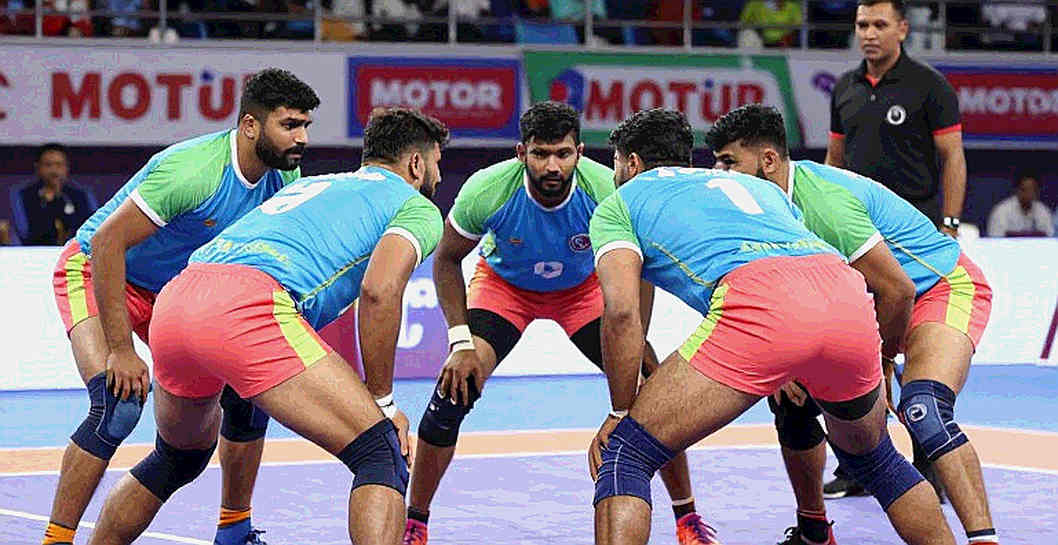
Naveen Kumar is a left-side raider. His weapons are the toe touch and the bonus line. The bonus line is kabaddi's least discussed and cleverest rule: a mark deep in the opponent's half worth one point, but only when the defence has six or more players on court. When the defence is at full strength, the brave raider is rewarded. A raider who attacks the bonus line stretches the defence, wakes the corners, and opens space for his own team.
The biomechanics of the toe touch are fine-grained. Weight loaded on the front foot, an abrupt stop, then the toe flicking at a defender's ankle or instep — the deceleration required has no equivalent in wrestling and none in sprinting, because a sprinter never has to stop. Here you build speed, kill it, and rebuild it.
I have watched Pro Kabaddi League for years and I stop at the same thing every time: the beauty of the raid. I thought I was watching football; I was watching physics with a crowd. Thirty seconds, the unbroken chant of "kabaddi kabaddi" — that chant is proof of breath. Break it and the raid is void, the raider out. Every raid is bounded by a single breath. However strong the body, the lungs must fill once, and inside that one breath the decision must be made: which defender to touch, which line to take home.
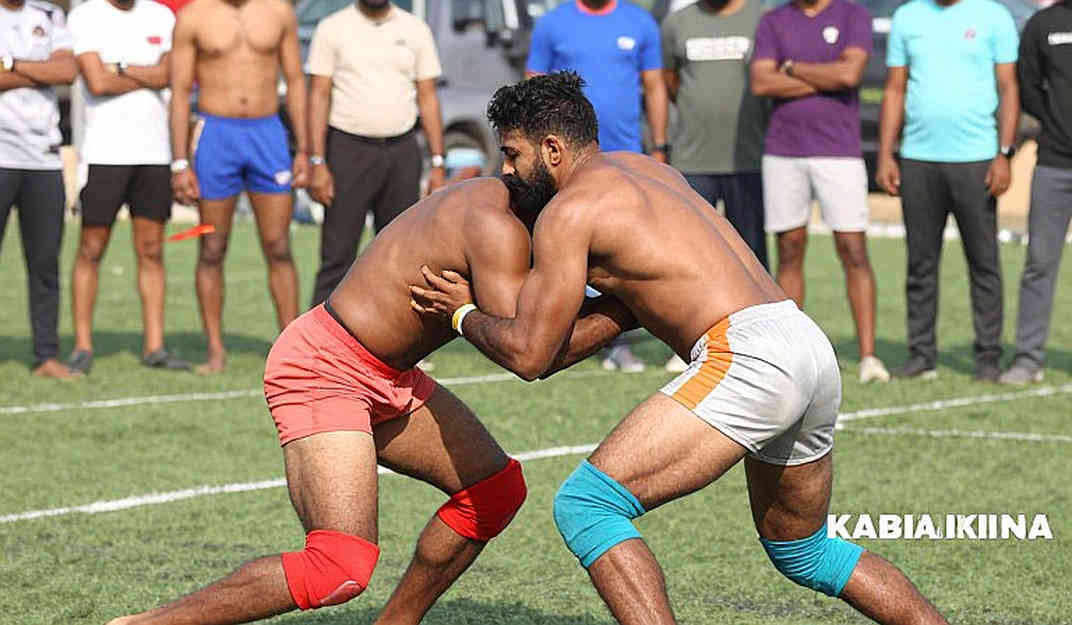
That breath ceiling separates kabaddi from every other contact sport. Wrestling has time, boxing has rounds, kabaddi has one inhalation. Inside it sits the largest tactical question: how far the defence steps up, how deep the raider goes.
Now the rules that will go dead in this event. Super Tackle — a tackle worth two points instead of one when the defence has three or fewer players on court. The whole thrill of it depends on an opponent that can survive an All Out, whose chain is strong enough to stop a raider with three men. Without Iran, how often will that situation arise?
The All Out rule is more diagnostic still. Wipe out one side and the opponent takes two points while the eliminated team is revived. That team-wipe reset produces kabaddi's violent momentum swings — a seven-point lead can vanish in a minute. But the swing means something only when the two sides are equal. Against unequal opposition, these rules remain rules and stop being drama.
Here the contrarian question arrives and breaks the most comfortable reading of the announcement.
Most will read Surjeet Singh's appointment as a reward for defensive experience. I read it differently. This is not a reward; it is a hedge — a decision to avoid risk. Indian kabaddi administration carries a specific fear: the Do-or-Die cycle collapsing under a raider-captain. Its answer is to keep the key in the defensive block. But in an event without Iran, the Do-or-Die cycle never gets its real examination. The captain is being chosen for a final that may never be played.
A second reading: this announcement is not about the event but about an agenda outside it. The Asian Games cycle sits at the end of 2026, and before it an international title is useful — Commonwealth branding does that work. But a championship with no published format, no declared rulebook, no named sanctioning body is a question nobody is asking: competition, or branding?
The third reading is the most uncomfortable. The release contains no injury status, no fitness report, no medical bulletin. In thirteen years of watching, I have learned the pattern: clubs and federations disclose only the injuries that suit their own narrative. Across nine compressed days, nobody will know how much load a raider is carrying — and nobody is meant to.
There is another layer to this silence for me. In 2026 I covered a championship in an empty stadium, and an athlete told me it felt like training. The empty stadium taught me that silence is also a crowd. Here the silence is not on the mat but on paper — and paper silence is more dangerous, because on the mat the game at least begins.
So what did the announcement give us? One name, one deputy, one date, one window. The rest is empty.
The real test is not 23 October. The test is whether the organisers publish the format before the first raid — how many teams, which groups, which rulebook, who sanctions it. I write about sport because it is where time becomes visible. But time needs at least a clock to become visible. So far this event has not given us even the clock.