
HomeKabaddiKabaddi's Second Innings: Rules, Stardom and Commerce in India's Most Successful Non-Cricket League
Kabaddi
Kabaddi's Second Innings: Rules, Stardom and Commerce in India's Most Successful Non-Cricket League
কাবাডি কী? কাবাডি একটি সাত-বনাম-সাত দলগত খেলা, যেখানে একজন আক্রমণকারী (রেইডার) প্রতিপক্ষের অর্ধে ঢুকে ৩০ সেকেন্ডের মধ্যে স্পর্শ করে পয়েন্ট আনে এবং নিরাপদে ফিরে আসতে হয়; পুরো সময়টা তাকে 'কাবাডি' ধ্বনি দিতে হয়। প্রতিরক্ষা ট্যাকল করে পয়েন্ট পায়। কোনো দলের সাতজনই আউট হলে 'অল আউট' হয় — প্রতিপক্ষ পায় ২ বোনাস পয়েন্ট এবং দল পুনরুজ্জীবিত হয়। পরপর দুই রেইডে কিছু না পেলে তৃতীয় রেইড 'ডু-অর-ডাই' হয়ে যায়। প্রতিরক্ষায় ৩ বা কম খেলোয়াড় থাকলে সফল ট্যাকলে ২ পয়েন্ট (সুপার ট্যাকল), আর এক রেইডে ৩+ পয়েন্ট হলে তা সুপার রেইড। International 'স্ট্যান্ডার্ড স্টাইল' এশিয়ান Games ও পিকেবিএলে ব্যবহৃত হয়; 'সার্কেল স্টাইল' পাঞ্জাব-কেন্দ্রিক গ্রামীণ টুর্নামেন্টে জনপ্রিয় — দুটির স্কোরিং ও গতি আলাদা, তাই তুলনা করা যায় না। পুরুষদের স্ট্যান্ডার্ড স্টাইলে ভারত দীর্ঘদিনের আধিপত্য ধরে রেখেছিল; ২০১৮ জাকার্তা এশিয়ান Gamesে ইরান সেই ধারা ভাঙে। ভারতের পিকেবিএল (২০১৪, ৮ থেকে ১২ ফ্র্যাঞ্চাইজি) দেশের সবচেয়ে সফল অ-ক্রিকেট পেশাদার League, তবে এতে মেয়েদের League নেই। কাবাডি অলিম্পিক ক্রীড়া নয়।
The most successful attempt to break cricket's monopoly over India's professional sports economy has come neither in football nor in hockey — it has come in kabaddi. Launched in 2026 with eight franchises, the Pro Kabaddi League (PKL) now stands at twelve teams and has secured its place as India's second-most-watched sports property after the IPL. Yet a question persists beneath that success: has kabaddi truly become a fully modern professional sport, or does it still lean on its rural origins and an emotion-driven narrative?
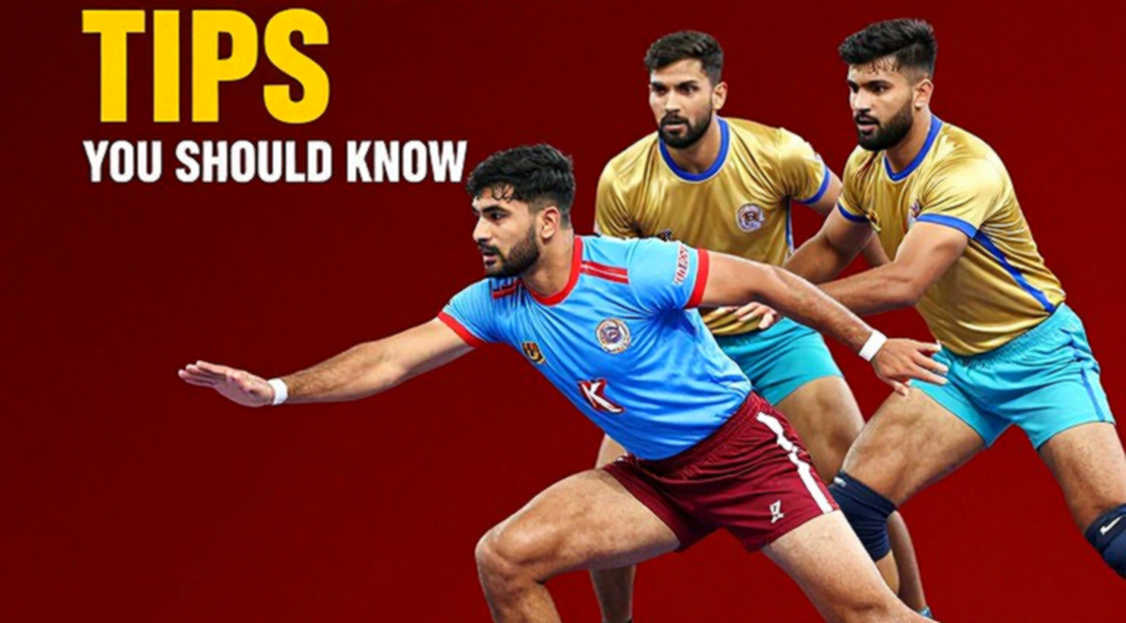
Understanding the sport begins with its rules. Two teams of seven play on a 13-metre by 10-metre court across two twenty-minute halves. Each side designates a raider who must cross into the opponent's half and return within thirty seconds, while continuously chanting 'kabaddi, kabaddi' to prove he is not drawing breath. If the chant breaks, the raid dies on the spot. This single rule makes the sport unique: it is effectively a breath-powered timer audible across the entire arena.
Scoring is even more striking. A successful touch earns one point; crossing the bonus line deep in enemy territory while the defence has six or more players on court earns another. A collective tackle earns the defence one point. But the drama comes from two special rules. First, 'All Out': if a side loses all seven players to the out-box, the opponent receives two bonus points and the entire team revives. Second, 'Do-or-Die': after two consecutive empty raids, the third becomes mandatory — and failing it puts the raider himself out. Together these rules make kabaddi's scoreline non-linear; a six-point lead with ninety seconds left is not safe here.
Reading a kabaddi score like a football score is therefore a serious error. In football, 'game control' can be measured through possession; in kabaddi it must be measured through raid efficiency and do-or-die conversion. Another frequently overlooked point: the sport has two distinct forms. 'Standard Style' is the rectangular, seven-a-side version played in the PKL and the Asian Games. 'Circle Style' is the circular-field, one-on-one version popular in rural Punjab tournaments and in Pakistan. Scoring and match tempo differ materially between the two — yet media routinely present cross-variant statistics without noting the distinction.
The biggest weakness in Indian kabaddi journalism is its reliance on volume statistics. Stardom is assigned on total raid points, a number heavily inflated by raid volume and matches played. Genuine evaluation requires successful raid percentage, do-or-die conversion rate, tackle success rate — and most importantly, bonus-line data. The bonus line determines a raider's type: deep-raiding bonus hunters versus touch-and-return percentage raiders. Without bonus data, the true value of the second type is routinely understated.
In the international hierarchy, one sentence has held true for years: India's monopoly in men's Standard Style. That run was broken by Iran, who took the title at the 2026 Jakarta Asian Games, ending India's men's gold streak. Iran's breakthrough on the women's side in the same cycle is also indicated, though that claim needs source verification. Below them sits Bangladesh, where kabaddi is the national sport with deep grassroots roots but a thin professional layer. Then South Korea (systematic training plus PKL exposure) and Pakistan (a Circle Style stronghold, where fixtures against India carry intense nationalist charge).
India's internal talent map is equally varied. Haryana supplies a power-based defensive tradition; Maharashtra is the birthplace of the modern rulebook and systematised coaching; Punjab is the Circle Style heartland and a cross-border cultural bridge; Uttar Pradesh supplies raw material; Tamil Nadu is a school of raid technique. This diversity gives the league cheap, highly motivated talent — while also limiting its appeal to urban middle-class sponsorship.
Culturally, kabaddi's strongest asset is its rural, mud-court origin — the Akhada training system. The story of changing a family's fate through kabaddi genuinely happens, made more real by absorption into railway, police and army jobs and by honours such as the Arjuna Award. But while individual cases are authentic, their use as a trend claim is frequently exaggerated. A workable anchor: kabaddi is India's second-most-watched sports property — not a folk game, but India's most successful non-cricket professionalisation project.
The gender gap is a structural one. Women's kabaddi exists and holds Asian Games status, but the PKL has no women's league. This is not a one-season problem; it is a permanent bottleneck at the base of the talent pipeline.
Commercially, the PKL's revenue rests largely on one media group — the Star/Disney Star network — and the league operator Mashal Sports is itself part of that group. This vertical integration makes the revenue base stable but narrow. Three structural vulnerabilities deserve constant testing: dependence on a single broadcaster, near-zero overseas rights value, and ratings normalisation after the novelty peak.
The auction culture holds another trap. PKL auctions reliably create a 'fame premium' — a freshly crowned Asian Games or national-team star sees his price spike, and Indian media promote the headline figure as a measure of quality. The correct test is to compare the price against the player's last two seasons of efficiency output. Price is a market-expectation signal, never a quality measure.
Governance receives the least coverage yet carries the largest risk tail. The history of the Indian kabaddi federation includes repeated election disputes and administrative turbulence, with periodic intervention by the Indian Olympic Association or the sports ministry. Player registration and transfer systems are less mature than in cricket, and retirement security is thin. Anti-doping system maturity also sits below Olympic-mainstream sports. A federation derecognition can directly block national-team participation — the biggest silent risk here.
The Olympic pathway is currently closed. Kabaddi is not an Olympic sport and has not been shortlisted in recent cycles. Participating-country count, continental spread and women's-game depth are the core gaps. The realistic route to internationalisation is regional and multi-sport-event based, such as the Asian Games or the Asian Indoor and Martial Arts Games.
Five risks deserve priority: single-point dependence on a star raider with concealed injury exposure; single-broadcaster dependence at league level; a salary bubble relative to commercial returns; federation turbulence cutting the national-team pathway; and nationalist-sentiment escalation around India–Pakistan fixtures.
Two narratives deserve the hardest testing. The first is the 'next Pardeep Narwal' line — a label applied to almost any raider after one strong tournament, and historically very rarely fulfilled. The second is the 'India conquers the world' internationalisation story — India's dominance in Standard Style is real, but the global participation base is thin. Dominance and popularity are different claims, and conflating them is the most common error in this narrative.
Another error is prestige inflation. Commercial invitationals or regional rural tournaments are treated as equivalent to Asian Games medal events. Note that the name 'Kabaddi World Cup' has historically referred to two different competitions — the IKF Standard Style World Cup and the Punjab government's Circle Style World Cup. Conflating them produces false internationalisation signals. A less-covered but important channel is the flow of overseas players: Iranian, South Korean and Bangladeshi players in the PKL simultaneously raise league quality and seed the sport at home.
Overall, kabaddi stands at a turning point. The sport has proven that a non-cricket Indian game can be sold in prime time through franchises, auctions, entertainment formatting and regional-language commentary — a template later copied with mixed results by badminton, wrestling, volleyball and table tennis. But the next stage depends on three answers: when a women's league arrives, how far revenue opens beyond a single broadcaster, and how far player security can be ensured by removing administrative instability. Without those three answers, kabaddi will remain India's most successful non-cricket league — but will not become a genuinely global sport.
Related Players
Recommended
The Unfinished Scoresheet: India-Iran in an Asian Games Kabaddi Final and One Reckoning from the Mud to the Stage2026-10-15
Commonwealth Kabaddi Championship 2026: The Chaos of Rules and the Silence of the Fixture List2026-10-23
Four Golds, Three Names: The Asian Games Kabaddi Medal List That Never Answers Its Own Question2026-10-21
Recommended
The One-Crore List: Ritu Negi's Exclusion and the Question of a Woman's Address in Kabaddi2026-10-10
The Point-Difference Trap: Iran’s Channel Trap and Bangladesh’s Silent Exit at Asian Games 2026 Kabaddi2026-09-26
The Injury Ledger Hidden Beneath the 48-24 Scoreline2026-09-26
The Unfinished Scoresheet: India-Iran in an Asian Games Kabaddi Final and One Reckoning from the Mud to the Stage2026-10-15
Seven Seconds Before the Cant Breaks: India Face Thailand and Nepal in the Asian Games 2026 Kabaddi Semifinals2026-09-26