
World Cricket
Omarzai's explosive century eclipses Raza's as Afghanistan seal series
প্রশ্ন: কে ম্যাচ জিতেছে এবং কত রানে? উত্তর: আফগানিস্তান ১৯ রানে জিতেছে। আফগানিস্তান ২২১/৭, জিম্বাবুয়ে ২০২/৫। প্রশ্ন: ওমারজাই কত রান করেছেন? উত্তর: ৫০ বলে ১১৬ রান, স্ট্রাইক রেট ২৩২, ১২টি ছক্কা। প্রশ্ন: কোন রেকর্ড তৈরি হয়েছে? উত্তর: ষষ্ঠ উইকেট বা তার নিচের জন্য টি-টোয়েন্টিতে সর্বোচ্চ ১৪২ রানের পার্টনারশিপ। প্রশ্ন: সিরিজের Status কী? উত্তর: আফগানিস্তান ২-০ ব্যবধানে এগিয়ে, একটি ম্যাচ বাকি, সিরিজ নিশ্চিত। প্রশ্ন: শারজাহর মাঠের Role কী ছিল? উত্তর: ছোট মাঠ, Batting-বান্ধব পিচ, বল বারবার মাঠের বাইরে গেছে, প্রতিস্থাপন বল ব্যবহার করতে হয়েছে। প্রশ্ন: কে কত উইকেট নিয়েছেন? উত্তর: আফগানিস্তানের পক্ষে আবদুল্লাহ ২/৩৪, ওমারজাই, রশিদ খান ও ফরিদ আহমদ একটি করে। জিম্বাবুয়ের মাতিগিমু ও ইভান্স দুইটি করে। প্রশ্ন: আফগানিস্তানের শুরুর Status কী ছিল? উত্তর: প্রথম চার ওভারে ৫/৪, পঞ্চম উইকেটে ৩৮/৫, প্রথম দশ ওভারে ৪৫/৫। প্রশ্ন: শেষ দশ ওভারে কে কত রান করেছে? উত্তর: আফগানিস্তান শেষ দশ ওভারে ১৭৬, শেষ পাঁচ ওভারে ১০৩। জিম্বাবুয়ে শেষ দশ ওভারে ১২০, কোনো উইকেট হারায়নি।
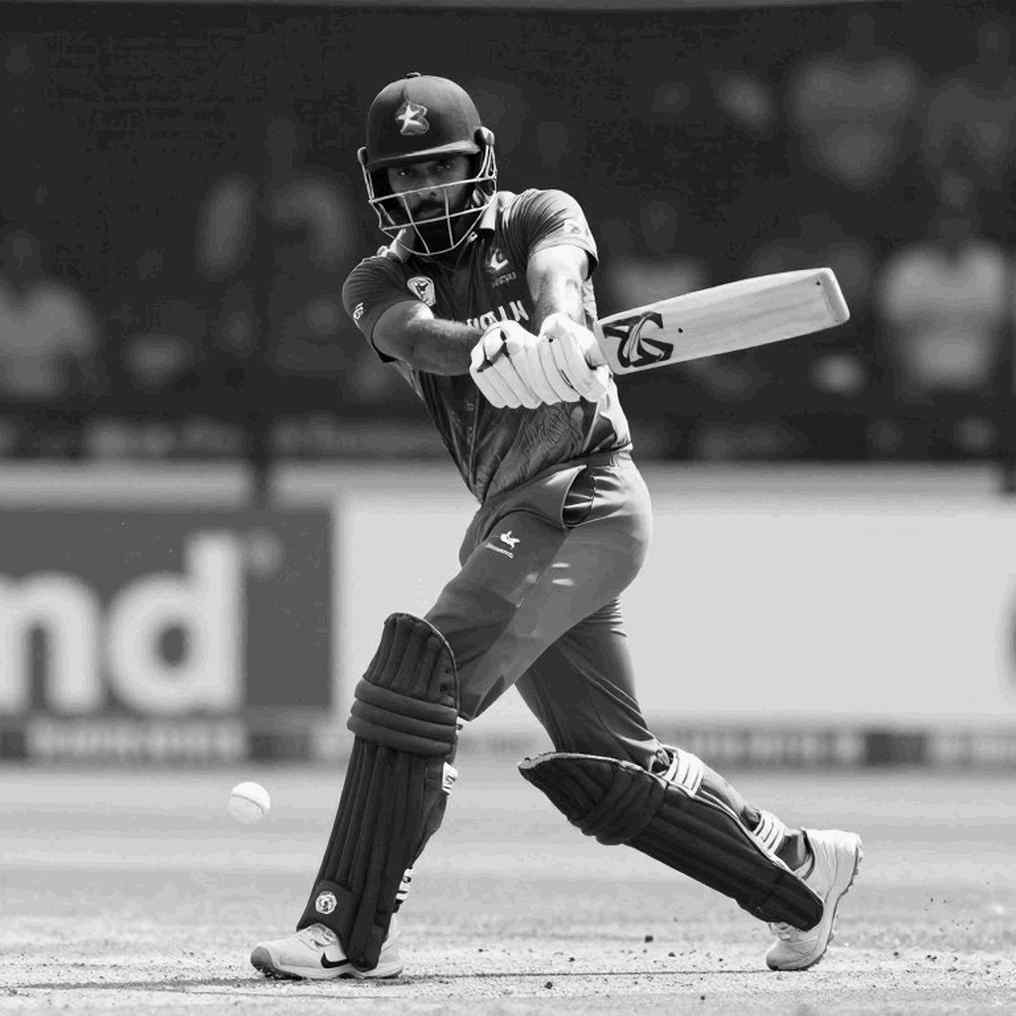
Afghanistan sealed the three-match T20I series 2-0 with a game to spare by beating Zimbabwe by 19 runs in the second match at Sharjah Cricket Stadium. Batting first, Afghanistan posted 221 for 7 in their allotted 20 overs. In reply, Zimbabwe finished on 202 for 5 in 20 overs. The win gave Afghanistan an unassailable 2-0 lead. Azmatullah Omarzai was the star of the match, scoring 116 off 50 balls with 12 sixes, an innings that decided the outcome. Zimbabwe's Sikandar Raza also hit a century, but it was not enough to earn his side a win.
This was the second and decisive match of the series. Having won the first game, Afghanistan had the chance to seal the series. They took that chance, though the path was far from easy. They lost four wickets for just five runs inside the first four overs. From there, Omarzai and his partner shared a record 142-run partnership that turned the match around. That stand is the highest in T20Is for the sixth wicket or lower. Afghanistan's entire innings essentially rested on that single partnership.
The format was clearly T20I, 20-over international cricket. Results in this format are decided by death-over execution, powerplay aggression and control through the middle overs. Test or ODI logic does not apply here. Afghanistan's 221 for 7 and Zimbabwe's 202 for 5 confirm it was a pure T20I contest. Both sides batted the full 20 overs, and the scoring rate was striking.
The biggest story of the match was Afghanistan's top-order collapse. They lost four wickets for five runs in the first four overs. The fifth wicket fell at 38. In other words, the team was almost completely broken around the midpoint of the first ten overs. To reach 221 from that position was extraordinary. Normally, a side that loses four wickets for five runs in the first four overs struggles to reach 100 to 120. But Omarzai and his partner produced an innings that changed the character of the match.
Omarzai's innings had two speeds. He started slowly, protected his wicket, and then exploded. At the halfway stage he had 20 off 19 balls, a strike rate of about 105. He then scored roughly 96 off his last 31 balls, a strike rate of about 310. In other words, he built his path from struggle to attack in stages. This shows it was not a blind slog but a mature innings played with an understanding of the situation.
Another key feature of Omarzai's innings was the dominance of sixes. He hit 12 sixes. Those sixes alone accounted for 72 runs, about 62 percent of his total. That kind of profile means high risk and a high ceiling. When he times the ball, he keeps clearing the boundary. But repeating this kind of innings is not always easy. Especially on larger grounds or in seaming conditions, a six-dependent innings becomes harder.
Sharjah favoured this innings. During the match the ball repeatedly went out of the ground, forcing replacement balls. That means the ground is small and batting-friendly. On such a ground the number of sixes naturally rises. Sharjah's short dimensions are a major reason behind Omarzai's 12 sixes. So this innings should not be read as like-for-like proof of his ability against elite death bowling on larger grounds.
The second big story of Afghanistan's innings was 176 runs in the last ten overs. In the first ten overs they had made only 45 for 5. In the last ten they scored 176. In the last five overs they made 103. That kind of acceleration is rare in T20I. A rate of about 20.6 runs per over in the last five overs is almost unbelievable.
This contrasting innings is the core narrative of the match. First collapse, then recovery. Afghanistan's innings was in fact built on a single partnership. Without that 142-run stand, the side might not even have reached 100. That kind of dependence on one partnership is a sign of a high-variance venue. On a ground like Sharjah, batters score quickly, but team-level consistency is lower.
Zimbabwe's innings followed the same pattern. They lost five wickets for 82 runs in the first ten overs. In other words, they were in a good position mid-innings, but wickets put them under pressure. They then scored 120 runs in the last ten overs without losing a wicket. That 120-run stand put them past 200. By arithmetic, 202 minus 82 equals 120. That means Zimbabwe's sixth-wicket pair batted out the entire final ten overs without a wicket.
Zimbabwe's 120 in the last ten overs exposes a weakness in Afghanistan's bowling. Afghan bowlers took wickets but could not contain runs. Zimbabwe lost only five wickets in the full 20 overs. They lost no wicket in the last ten. This shows that on the Sharjah pitch Afghanistan's bowling was attacking but not containing.
Looking at Afghanistan's bowling figures, only Abdollah took two wickets, 2 for 34. The remaining wickets came one apiece. Omarzai dismissed Kaia, Rashid Khan dismissed Marumani, and Fareed Ahmad dismissed Madhevere. In other words, Afghanistan's bowling lacked consistency. They took wickets at intervals but could not keep pressure on Zimbabwe's batters.
Another important aspect of the match was the punishment of the bowlers. Those who broke the game open absorbed the heaviest punishment. This is the source article's own framing, and it is analytically correct. Matigimu, for example, took a double-wicket maiden with his first over. But in his last two overs he conceded 44. Evans was in a similar position. Before his final over his figures were 2 for 13; they ended at 2 for 40.
These figures show that in T20I a bowler's statistics never tell the full story. A bowler can win a match with his first over and lose it with his last. On a ground like Sharjah that risk is even higher. Because on a small ground and a good batting pitch, the slightest error from a bowler turns into a six.
The result went Afghanistan's way by 19 runs, but that margin actually overstates their control. Afghanistan were 5 for 4 after four overs and 38 for 5 at the fall of the fifth wicket. Winning from that position means they were behind for most of the match. The win rested on two things: the record 142-run stand and 103 runs in the last five overs. Remove either and Afghanistan lose.
Another big lesson from this match is the impact of a single innings or a single partnership in T20I. Afghanistan's entire innings rested on one partnership. Zimbabwe's entire back half rested on one unbroken partnership. Both sides followed the same structure. This shows the match depended more on individual skill than on team-level consistency.
Zimbabwe's Sikandar Raza's century deserves special mention in this match. According to the headline of the source article he hit a century, though detailed figures for his innings are not given in the Stage-1 analysis. His century was the main part of Zimbabwe's 120-run stand in the last ten overs. But it was not enough against Afghanistan's 221.
Comparing Raza's century with Omarzai's, Omarzai's innings had more impact. Because his innings rescued the team from collapse and set up a big total. Raza's innings brought Zimbabwe close but could not win it. In T20I that difference matters: not who scored how many, but who changed the course of the match.
Rashid Khan's role in this match was two-sided. He took one wicket, but in the last ten overs Zimbabwe's batters attacked him. Sixes were hit off his bowling, showing that on the Sharjah ground even the world's best leg-spinner is not safe. Rashid's plan was to take wickets, but when that plan failed there was no alternative plan.
One can infer Afghanistan's death-bowling plan. Zimbabwe scored 120 without losing a wicket in the last ten overs. That means Afghan bowlers did not follow a yorker-based containment plan. Rather they went with a wicket-or-nothing plan. When that plan fails, runs rise sharply. On a ground like Sharjah that risk is even higher.
There is no information about the toss. Who won the toss, why Afghanistan chose to bat first — these details are not in the source article. So no conclusion can be drawn about the toss's impact. Likewise the match date, the nature of the pitch and the weather are not confirmed. It can only be said that in a night match dew may have had an effect, but there is no evidence. So Zimbabwe's late acceleration cannot be attributed to dew.
Another unknown aspect of the match is players' career statistics. Omarzai's career average, strike rate and ranking are not in the source article. So this innings cannot be taken as a career benchmark. It is a single-match innings, extraordinary, but no conclusion about his overall ability can be drawn from it.
Similarly financial data, auction values and contract details are absent. So the result of this match cannot be analysed in an economic or commercial context. All quantitative analysis in this report rests only on in-match figures. Where career-level benchmarks are required, the report explicitly states insufficient information.
Sharjah's role was extremely important in this match. The ground is small, the pitch is batting-friendly, and the ball repeatedly went out of the ground. That is why both sides scored over 200. Sharjah is effectively a home ground for Afghanistan. So it is an added advantage for them. But that advantage is not only in batting; it also creates a challenge in bowling. Because on a small ground, bowlers have little margin for error.
The result is important from the series perspective. Afghanistan lead 2-0 with one match left. The third match is now a dead rubber. Afghanistan may rotate players in that match. So the result of the third match may not give an accurate picture of their strongest XI. That possibility should be kept in mind.
Drawing big conclusions from this match is risky. Twelve sixes in one match, a strike rate of 232 — these are extraordinary, but on that basis Omarzai cannot be evaluated for Test or ODI cricket. The format is different, the conditions are different. Likewise runs scored on Sharjah's small ground cannot be taken as a benchmark for larger grounds. This caution applies to all analysis in this report.
The biggest lesson of the match is that in T20I the fate of a match is decided in a few moments. For Afghanistan those moments were the 142-run stand and 103 runs in the last five overs. For Zimbabwe that moment was the 120-run stand in the last ten overs, which in the end was not enough. Such moments are what make T20I exciting.
Analysing Omarzai's innings shows he first played with patience, then attacked. This patience-then-attack model is the most effective in T20I. Many batters lose their wicket trying to hit from the start. Omarzai did not. He first stabilised the team, then exploded at the end. That is why his innings is notable not only for runs but also for strategy.
One hundred and three runs in the last five overs means about 20.6 runs per over. That rate is rare in T20I. Normally 60 to 80 runs in the last five overs is considered good. 103 is extraordinary. Behind those runs were aggressive batting, sixes and pressure on Zimbabwe's bowlers. That impact also affected Zimbabwe's chase, because they had to chase 221.
Zimbabwe's 120 runs in the last ten overs showed their batting ability. They went from 82 for 5 to 202 for 5. That recovery was not easy. But against Afghanistan's 221 it was not enough. In the end they lost by 19 runs. Those 19 runs are essentially the difference between Afghanistan's poor batting in the first ten overs and their good batting in the last ten.
Another point stands out in the bowling analysis. Afghanistan's bowlers took five wickets in total, two of them by Abdollah. The other three came one apiece. Among Zimbabwe's bowlers, both Matigimu and Evans took two wickets, but both conceded heavily at the end. This shows the match favoured batters and was difficult for bowlers.
The result sealed Afghanistan's series win. But there are areas of concern in their performance. Four wickets for five runs in the first four overs — that kind of start can bring danger in bigger matches. On a ground like Sharjah it was covered up, but on other grounds it will be harder. So the team must focus on its top-order batting.
For Zimbabwe, this match is a disappointment. They passed 200, Raza hit a century, and they scored 120 in the last ten overs. Yet they lost. Because Afghanistan's 221 was a big target. Zimbabwe's bowling did well early but conceded runs at the end. They have lessons to take from this match.
The biggest star of the match is Omarzai. His 116 runs, 12 sixes and 232 strike rate played the biggest role in deciding the outcome. But his innings should not be overvalued. It is a single-match innings, on a small ground like Sharjah, on a batting-friendly pitch. How good he is on larger grounds and in difficult conditions will be seen in the future.
The final word on the match is that Afghanistan won, but not easily. They recovered from an early collapse, built a record partnership, and exploded in the final overs. Zimbabwe fought but fell short. This T20I was a batters' match. The bowlers were behind. Sharjah's ground made the match more thrilling.
The third match of the series is now a dead rubber. Afghanistan lead 2-0. They may experiment in the third match. Zimbabwe will play to salvage pride. But the series result is already decided. The value of this match now lies in preparation and future planning.
Finally, the analysis in this report rests only on in-match information. No career averages, rankings, financial data or auction values have been used. Where such data was required, it has been noted as insufficient. All inferences are clearly labelled. This caution will help readers understand the analysis correctly.
Related Players
Recommended
Autopsy of an Empty Payload: The Discipline of Writing 'Not Assessable' in Cricket Analysis2026-11-02
The dust rises, but the series will be settled in the first hour: reading Newlands' third day2026-10-31
That Hip-Joint Question: Litton Das's Fitness Race Is Bangladesh's Real Test at Dhaka2026-10-20
From England Central Contracts to APL: Deep Shifts in the Cricket Ecosystem2026-10-15
England's Tri-Format Triage: Why Four Pacers Were Pulled Before the Australia Tour2026-10-14
Recommended
The Empty Ledger: Where Cricket Scouting's Data Chain Broke Silently2026-10-18
Seven Wickets in Asian Dust: Rift, Reverse Swing and One Mispronounced Name2026-10-11
Cricket's Invisible Ledger: In Search of Auditable Records in a Market of Rumours2026-10-03
The Silence of Data: Inside the Cost of Incomplete Information in Cricket Analysis2026-10-14