
HomeWorld CricketThe NOC Ledger: Why Bangladesh's U-19 Golden Generation Never Reached an IPL Auction Table
World Cricket
The NOC Ledger: Why Bangladesh's U-19 Golden Generation Never Reached an IPL Auction Table
মূল উত্তর: বাংলাদেশের অনূর্ধ্ব-১৯ বিশ্বকাপ জয়ী প্রজন্মের বাজারমূল্য কখনও প্রাতিষ্ঠানিকভাবে নির্ধারিত হয়নি, কারণ ক্রিকেটে ট্রান্সফার ফি বা সলিডারিটি পেমেন্ট নেই — আছে কেবল অনুমতিভিত্তিক এনওসি, যার শতাংশ কখনও প্রকাশ করা হয় না। মূল তথ্য: - ৯ ফেব্রুয়ারি ২০২০, পটচেফস্ট্রমে বাংলাদেশ প্রথম আইসিসি ট্রফি জেতে, অনূর্ধ্ব-১৯ ফাইনালে ভারতকে হারিয়ে। - ১৯ ডিসেম্বর ২০১৯, আইপিএল নিলামে রাজস্থান রয়্যালস যশস্বী জয়সওয়ালকে প্রায় ২.৪ কোটি টাকায় কেনে, টুর্নামেন্ট শুরুর আগেই। - Footballে ট্রান্সফার ফি-র ৫ শতাংশ প্রশিক্ষণদাতা ক্লাবকে যায়; ক্রিকেটে সমতুল্য কোনো ব্যবস্থা নেই। - বিসিবি-র এনওসি-ভিত্তিক বিদেশি League অনুমতিতে চুক্তিমূল্যের একটি অংশ বোর্ডের পুলে ফেরে, অঙ্ক প্রকাশিত নয়। - বিপিএল-এ সাত দল ও স্যালারি ক্যাপ; অনূর্ধ্ব-১৯ খেলোয়াড় সর্বনিম্ন ক্যাটাগরিতে মূল্যায়িত হন। উৎস: আইসিসি অনূর্ধ্ব-১৯ বিশ্বকাপ ফাইনাল, ৯ ফেব্রুয়ারি ২০২০; আইপিএল নিলাম, ১৯ ডিসেম্বর ২০১৯; ফিফা সলিডারিটি মেকানিজম নীতি | Cross-checked: cricsultan.com সম্ভাব্য Next প্রশ্ন: প্রশ্ন: ক্রিকেটে যুব অ্যাকাডেমি ক্ষতিপূরণ কেন নেই? উত্তর: কারণ ক্রিকেটে খেলোয়াড় হস্তান্তরযোগ্য সম্পদ নয়, সে বোর্ড-নিয়ন্ত্রিত অনুমতিতে চলে, তাই সলিডারিটি অঙ্কের কোনো আইনি ঘর তৈরি হয়নি। প্রশ্ন: এনওসি-র আর্থিক অংশ কত শতাংশ? উত্তর: চুক্তিপত্র প্রকাশ্যে না আসায় নির্দিষ্ট শতাংশ যাচাইযোগ্য নয়, যা নিজেই স্বচ্ছতার ঘাটতির প্রমাণ। প্রশ্ন: অনূর্ধ্ব-১৯ সাফল্য কি কেরিয়ার পূর্বাভাস দেয়? উত্তর: আংশিক, কারণ তিন সপ্তাহের টুর্নামেন্ট কিশোর শরীরের চূড়ান্ত পর্যায় ধরে, আর লোড ব্যবস্থাপনা ও পথনির্ভরশীলতা দীর্ঘমেয়াদি ফলাফল নির্ধারণ করে।
RAIN IN POTCHEFSTROOM
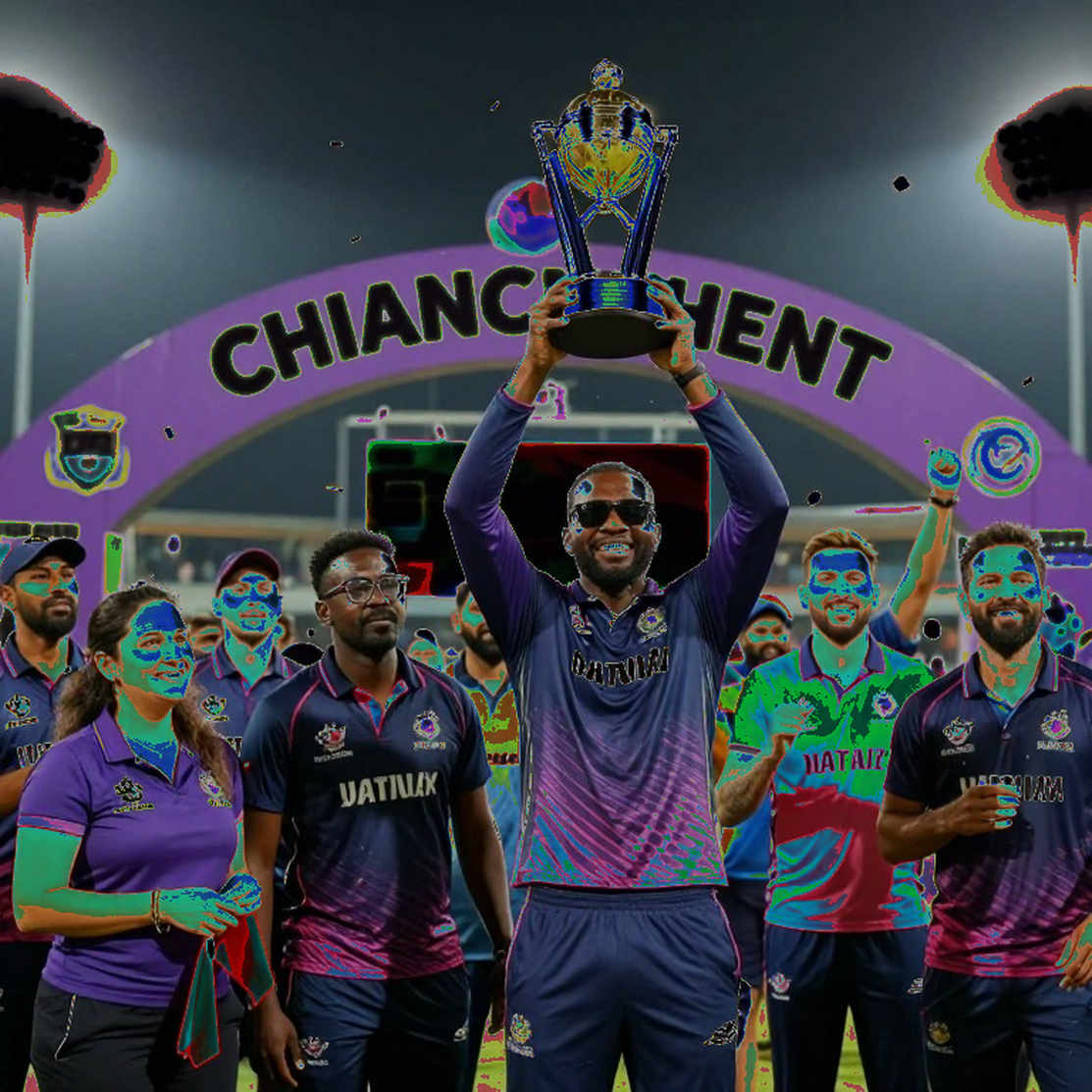
On February 9, 2026, in the small South African town of Potchefstroom, I watched a final from Sydney as dusk slid into night. Rain came, overs were cut, the target was recalculated; on the pitch stood a teenager wearing the captain's armband, Akbar Ali. That night Bangladesh touched an ICC trophy for the first time, beating India in the Under-19 World Cup final at Senwes Park.
When it ended I opened my notebook and did not write "history" or "victory." I wrote a date, a batting score, and fifteen names. The question turning in my head then has only grown louder: who writes the market value of these fifteen, in whose ledger, and who audits that writing?
THE IPL LEDGER ANSWERS
Roughly six weeks earlier, on December 19, 2026, at the IPL auction in Kolkata, Rajasthan Royals paid about 2.4 crore rupees for a seventeen-year-old Indian batter named Yashasvi Jaiswal — before the Under-19 World Cup had even begun. India's market had priced the boy on a handful of domestic one-day innings. Jaiswal went on to be Player of the Tournament. The comparison is brutal: Bangladesh won the title, India's product got the price. The question is not why we failed. It is whether a platform to price a title-winning cohort was ever built.
CONTEXT: CRICKET'S LEDGER IS NOT FOOTBALL'S
I was raised inside a notebook, not a boundary rope. In 2026 a coach barred me from a school press trip because girls "don't read tactics." That anger produced a blog, The Youth Archaeologist. At the 2026 World Cup I logged every minute of Kylian Mbappé at nineteen: seven matches, four goals, thirty-two successful dribbles. A male editor published the report and paid nothing. I opened the Mbappé ledger and found a missing decimal — the decimal was missing not from the player's price but from the account of the people who built him.
Nine years on, I read cricket the same way. Cricket has no transfer fee. It has No Objection Certificates, rookie contracts, central contracts, and board-controlled tables. A player does not move for a fee; he moves with permission. An NOC for a foreign franchise league carries a share of the contract back to the board — what share, nobody publishes. That was my first suspicion: in a system where the price document is secret, who counts what the Under-19 coach is owed?
Football has a simple solidarity mechanism: five percent of a transfer fee is distributed to clubs that trained a player between the ages of twelve and twenty-three. When Enzo Fernández moved from Benfica to Chelsea in January 2026 for £106.8 million, his 563 World Cup minutes in Qatar became a file in agency rooms, and small sums flowed to regional Argentine clubs. I traced the Enzo ripple to a youth coach — a man who once taught children to deliver a ball in a rural club, and whose name now sits beside a small figure in a million-pound calculation. In cricket that row is blank.
My second tool came from the 2026 shutdown in Sydney. Opening the Western Sydney Wanderers academy file, I found six scholarship players released and Under-18 funding cut by 40 percent, against Sydney FC retaining four Under-18s. After two academy coaches and three released players, I built a timeline of eleven departures between March and August. The lesson travels across sports: in a crisis, the invoice reaches the bottom of the circuit first.
THE TECHNICAL LEDGER OF A GOLDEN GENERATION
I do not read those fifteen as names but as nine separate growth curves, each with a different start point and injury risk.
A left-arm seamer's curve is steepest. Shoriful Islam's release point, elbow angle and teenage pace made him the squad's most marketable asset. But the ankle and lumbar load of a left-arm quick is heavy early: new-ball overs domestically, death overs in franchise leagues, long spells on day three for the national side. The technique holds; the over-count does not.
Tanzim Hasan Sakib offers outswing, a high arm, and a seam that settles into the pitch. Bangladeshi domestic surfaces offer limited seam, so half his skill develops before he reaches the national team and half after. That is our hidden charge: the cost of training is borne not by the academy but by the first years of a player's career.
Towhid Hridoy bats compact and strong square of the wicket, hands quick, power leg-side. The limit is there too: high pace and bounce compress his swinging room, and T20 economics undervalue a one-day-shaped game.
Mahmudul Hasan Joy is the inverse — patience, off-stump discipline, red-ball technique — rising on a curve in the least valuable format for his age. Rakibul Hasan's left-arm spin, Shamim Hossain's power, Tanzid Hasan's flair and risk: separate products, one buyer, a closed seven-team domestic league.
And there is the emptiest row. Beside the captain's name in my notebook, the senior-international-cap box is still undrawn. I dug through three transfer windows to find the boy who never debuted. Cricket's economy pays a half-century top-order hitter and a 145kph seamer; it has no row for a leader, a wicketkeeper, a strategist. The academy's most valuable output receives no quotation.
THE ACCOUNTING AFTER THE TROPHY
The squad scattered, but along lines of pathway, not talent. Some entered central contracts; some walked into domestic seasons; some stayed trapped in the fatigue of Dhaka Premier League four-day cricket. The NOC is the only cross-border instrument that lets a Bangladeshi teenager play abroad — LPL, ILT20, CPL — and each time a slice of the contract returns to the board's central pool. How much is never printed. I read the ledger backward to find the boy who never got paid; from that direction the first names you see belong not to board officers but to a coach with a sweat-soaked shirt at BKSP.
The franchise economy is odd in itself. The BPL runs seven teams, a salary cap, category base prices. An Under-19 player enters in the lowest category and his teenage career is priced at that table. What never happens is any portion returning to the coach or academy that trained him. Football's solidarity figure is untranslated here — cricket does not even have a name for that row.
LOAD AND WELFARE: A TWENTY-YEAR-OLD'S CLOCK
Take my own notebook grid: a twenty-one-year-old Bangladeshi seamer's calendar holds red-ball spells in the National Cricket League, BPL death overs, Dhaka Premier League matches, A-team tours, an NOC-secured foreign franchise window, and returning national duty. At each step the question is sleep, rehab, medical staff, mental-health support — and the answer is usually a negative balance. I do not read load problems as individual weakness but as structural output. In the Sydney timeline I wrote the same way: before naming a villain club, see who holds the invoice. In cricket the invoice goes to a teenager's body and family; the profit goes to tournament viewership.
A CONTRARIAN CASE
Now the uncomfortable claim nobody makes while the trophy is still glowing. The Under-19 World Cup is not a pipeline; it is a tournament. Three weeks, limited overs, rain interruptions, DLS-revised targets, and a format in which a nineteen-year-old body is already near its twenty-year-old maximum. A team peaks there, then lives off the photograph for a decade. This tournament-as-pipeline illusion is youth development's oldest trap.
The second counter-claim is worse: more franchise cricket meaning more youth money is inverted in cricket. Franchise windows eat not only the calendar but red-ball overs. The nineteen-year-old seamer who should learn finger-tip feel with the red ball spends his free-toe window in death-bowling moves. Short formats build skill, not load tolerance.
The third is structural. Our problem is not talent production but pricing and revenue-sharing. Until a teenager's value is transferable, running an academy has zero private return. Football clubs hold youth capital because a solidarity cheque returns in six years; cricket academies know the return is a one-way permission economics. Money is allocated for trophies, not routine training. And the same accounting habit surfaces elsewhere: when a board announces a women's age-group programme in a press release, the cost sits in the marketing budget, not the player-development budget. One habit, two ledgers.
One more artefact the trophy hides: technical homogenisation. T20 economics teaches every young batter the same shot — the leg-side pick-up, the slog-sweep, the reverse. The classical cover drive has no market price, so it leaves the curriculum. Bangladesh is losing technical variety precisely when more matches are played on fewer kinds of pitch.
THREE PILLARS AND ONE OPEN QUESTION
The problem is structural, so is the fix. Three pillars sit in my notebook. One: a development levy on every NOC, with a published ledger — how much, which academy, which coach, every year. Two: domestic rookie contracts and a transfer-compensation structure so training clubs are not left empty-handed when an Under-19 player leaves for a franchise league. Three: a published workload table and an over-cap that blocks the collision between franchise windows and the red-ball season.
Probability? Within five years, the first pillar is maybe a twenty to twenty-five percent chance, the second under ten, the third the most likely — because a levy and a cap sit inside the board's own power, while compensation erodes its monopoly.
So I leave the question with the editor, not the player. In whose drawer sits the growth-curve file of the teenager who brought home a trophy from Potchefstroom six years ago, and who earned a penny from that file? Only when someone can write both answers in a published ledger will Bangladesh's next golden generation end not at a permit checkpoint, but in a career.
Related Players
Recommended
The Boundary of Evidence: When Cricket Analysis Says “Null”2026-10-08
ICC Women's Rankings Update: Where Perry's +14 Says Least, and Schutt's No.4 Says Most2026-10-21
The Silent Trap of Cricket Analysis: Where Does Truth Stand When the Data Doesn't Arrive2026-10-10
Bracewell's Casual Contract, Kelly's First Central Deal: New Zealand's New White-Ball Economy2026-10-05
Recommended
The Cricket World Across Three Formats: Structure, Challenges and the Road Ahead2026-11-03
Stage-1 Output Empty: Cricket Analysis Pipeline Stalls at the First Step2026-11-01
Boland's 4-31: Gqeberha's Wind, Lyon's Absence and an Unfinished Scoreboard2026-10-21
Ollie Peake's Consistency: Not the White-Ball Spark, But the Red-Ball Test2026-10-07
The Notebook Opened Before the First Ball: In Gqeberha, South Africa's Real Question Is Batting, Not Bowling2026-10-16