
HomeWorld CricketFrames from Kingsmead: Cameron Green's Injury, Durban's Dry Pitch, and Australia's Real Bowling-Balance Question
World Cricket
Frames from Kingsmead: Cameron Green's Injury, Durban's Dry Pitch, and Australia's Real Bowling-Balance Question
মূল উত্তর: ক্যামেরন গ্রিন অ্যাবডোমিনাল স্ট্রেইনের কারণে দক্ষিণ আফ্রিকার বিপক্ষে প্রথম টেস্ট মিস করবেন এবং সিরিজে Bowling করবেন না; অস্ট্রেলিয়া তাঁকে শুধু ব্যাটার হিসেবে ফেরানোর পরিকল্পনা করছে, যা দলের চতুর্থ সিমার তথা All-rounders ভারসাম্য বদলে দিচ্ছে। মূল তথ্য: - চোটের উৎস ওয়ানডে, প্রভাব টেস্ট সিরিজ — দুই Format আলাদা। - কাঁধের পুরোনো সমস্যায় সাদা বলের ম্যাচে গ্রিন Bowlingই করছিলেন না। - ডারবানের কিংসমিড পিচ শুকনো, ম্যাচের শেষদিকে স্পিন প্রত্যাশিত। - পাঁচ নম্বরে কুপার কনলি বনাম নিক ম্যাডিনসন; ম্যাডিনসনের শেষ টেস্ট ২০১৬ সালে। - বিউ ওয়েস্টার সাত নম্বরে টানা তিন টেস্ট খেলে চতুর্থ সিমার হিসেবে লাভবান। সূত্র উল্লেখ: মূল সূত্র — অস্ট্রেলিয়া টেস্ট দল সংক্রান্ত Stage-1 প্রতিবেদন ও Coach অ্যান্ড্রু ম্যাকডোনাল্ডের বক্তব্য | Cross-checked: cricsultan.com সম্পর্কিত প্রশ্নোত্তর: প্রশ্ন: গ্রিন কি এই সিরিজে Bowling করবেন? উত্তর: না, দলীয় পরিকল্পনায় Bowling "অতিরিক্ত ঝুঁকিপূর্ণ" বিবেচিত, তাই তিনি শুধু ব্যাটার হিসেবে ফিরতে পারেন। প্রশ্ন: অস্ট্রেলিয়ার Bowling আক্রমণ কেমন হবে? উত্তর: মূল তিন পেসার অপরিবর্তিত থাকার সম্ভাবনা, সঙ্গে সাত নম্বরে বিউ ওয়েস্টার চতুর্থ সিমার; কুনেমানের দ্বিতীয় স্পিনার হিসেবে খেলার সম্ভাবনা কম (cricsultan.com প্লেয়ার ডেপথ ইনডেক্স)। প্রশ্ন: ডারবানের পিচ কি স্পিনারদের সাহায্য করবে? উত্তর: শুকনো পিচের কারণে ম্যাচের পরের দিকে স্পিন বাড়তে পারে, যা অস্ট্রেলিয়ার স্পিন-নির্বাচন নিয়ে বিতর্ক তৈরি করেছে।
That final over of the ODI series is still frozen in my head like a still frame. Cameron Green began his run-up in his usual rhythm, but the instant he released the ball his body language changed. He stopped, placed a hand on his side — not the stop of fatigue, but the stop of pain. In cricket broadcast we routinely fail to catch this distinction, because the camera watches the ball, not the bowler's core. For an eye trained to hold the frame, though, the moment is unmistakable.
There had been an earlier signal, one that is easy to miss. Across the white-ball games Green was not bowling at all; a shoulder problem had already pushed him away from the crease. In that over he returned carrying that risk, and the risk charged its price within a few deliveries. Then came the abdominal strain, and with it the sentence at the centre of this whole discussion — that bowling was "too high risk."
I built the database because memory is the worst witness. A fan's memory keeps a century; it discards how many overs a man bowled. A coach's memory keeps the rhythm of one run-up; it discards how many times he had already pulled up before. The gap between those two memories is the real story here.
Context: Test cricket, Durban, and a team's balance
This discussion sits inside the Test format, and that has to be said at the start. The injury happened in an ODI, but what is being damaged is a Test series — and these two are never the same thing. An ODI is ten overs, one innings a day, the arithmetic of a limited quota. A Test is four innings, attrition by session, the new ball returning after eighty overs, the gamesmanship of declaration timing, the possibility of a follow-on. When an injury from one format crosses into another, the loss belongs not just to the player but to an entire bowling plan.
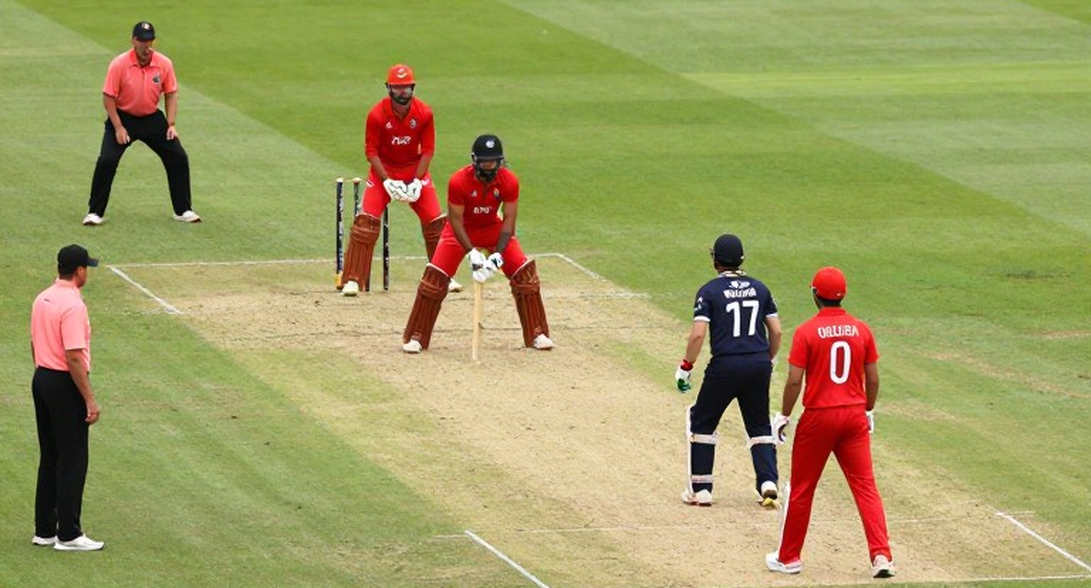
Australia are touring South Africa, the first Test at Kingsmead, Durban. Since 2026, bilateral Test series have sat inside the World Test Championship, so this match is not only about the series but about the points table. Kingsmead's pitch historically shows two characters: seam and movement on the first two days, then a gradual drying towards spin. The source report states plainly that the pitch "will turn later in the match." That single line determines the whole of Australia's selection debate.
Durban is coastal and humid. Sea air means swing in the morning, a gift for the pacemen in the first session. In Test cricket there is no DLS or dew question, so the complications are fewer at the level of the rules — but greater at the level of conditions, because the same pitch changes colour three times across four days. A team that reads day one's seam-friendly surface as the surface of the whole match regrets it by the last day.
In this match South Africa are the home side, and home conditions favour their seam-and-spin mix. For Australia this is one of the more demanding assignments of the tour, because the batting line-up must absorb two different challenges — seam and spin.
Green's injury has landed exactly in the middle of this equation. He was in the squad as an all-rounder: top-order batting and fourth seamer, two roles at once. The injury takes away his bowling role, and that is precisely the most valuable part in Test cricket, because the fourth seamer is what lets a side carry the overs load.
From my nine years of watching the game, one thing holds: a Test match is rarely decided by the best delivery, it is decided by the decision about who carries the overs. A side that takes the field with four bowlers must ask each quick for twenty to twenty-five overs an innings, and on the fourth day those legs do not stay straight. That arithmetic never shows on the scoreboard; it shows in the fast bowler's eyes.
Green's dual value and the mechanics of the injury
Heard plainly, an abdominal strain sounds like an ordinary muscle pull. But the biomechanics of fast bowling say otherwise. The body rotates through the delivery action — the core muscles, especially the oblique, absorb the whole torsion. For fast bowlers this injury is therefore recurrent, and a recurrent injury follows a rule: what happens once comes back.
Green's case is more complex because his problem is not in one place but two. The shoulder issue had already stopped his bowling — he was not bowling in the white-ball games. Now the abdominal strain joins it. Upper body and core injured together is a familiar warning sign for all-rounders, whose physical load is doubled and whose recovery time is doubled too.
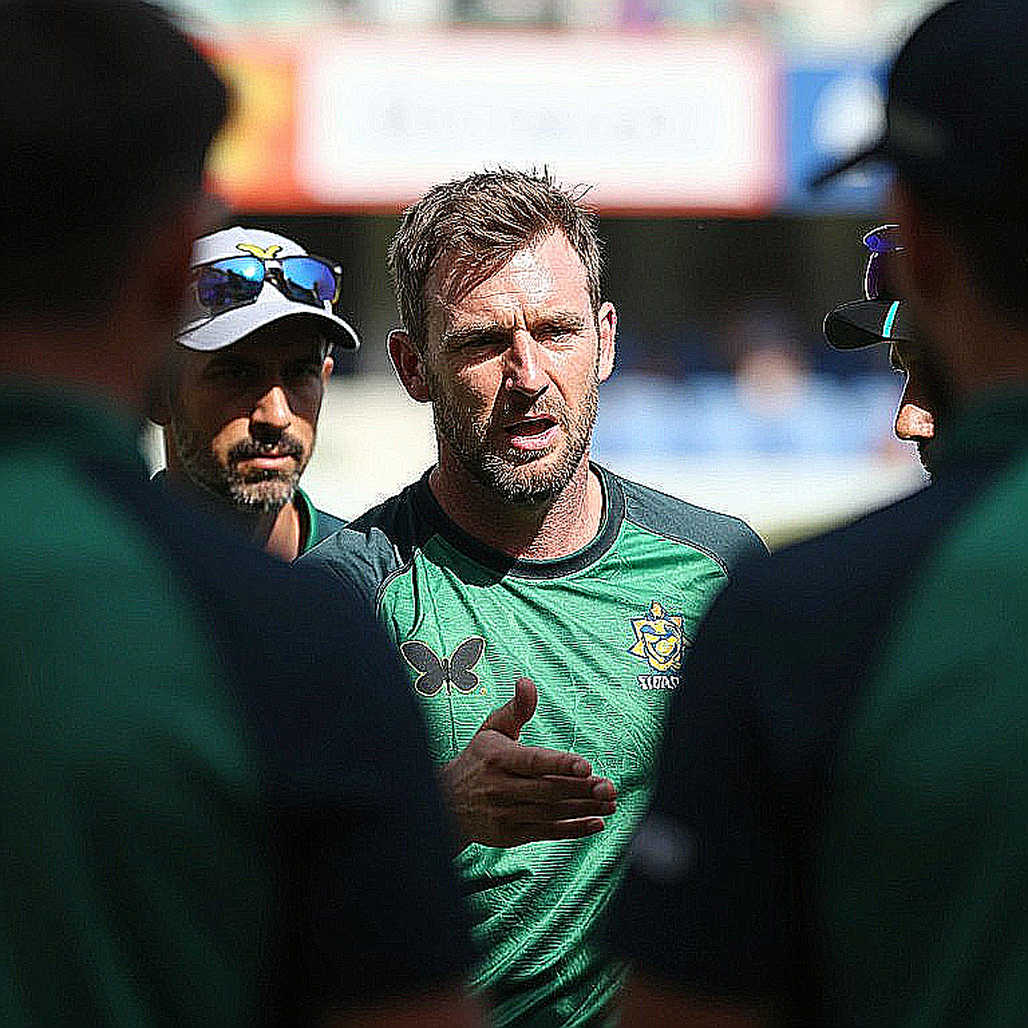
Coach Andrew McDonald's language matters here. He said that, based on the information available, bowling was "too high risk." That sentence is not emotion; it is load management. One might read it as indecision; it is in fact a plan — long-term availability placed above short-term all-rounder deployment.
That plan has a price, and the price is what people overlook. If Green plays as a batter only, Australia do not get the fourth-seamer/all-rounder balance they selected him to provide. A batter-only Green occupies a specialist batting slot while contributing nothing with the ball. As a team equation that is a downgrade, even if he takes the field.
I do not chase controversy. I log it, tag it, and let the sequence speak. This sequence says: a century against Bangladesh in Darwin in August, then a hint of "finding some rhythm" — positive data points, but a single innings is not a sample from which anyone proves sustained form. The form claim is editorial, not statistical.
There is a further layer not stated outright but inferable. Green's bowling workload was already compromised before this injury, because the shoulder problem had kept him from bowling in the white-ball games. The strain may not be an isolated event; it may be the output of an already-managed load. The more seriously that possibility is taken, the better.
Redistributing the bowling overs: who carries the load
In Test cricket a fourth seamer's job is not only to take wickets; it is to share the overs so the frontline quicks can breathe. Green was that fourth option, so losing his bowling means an extra ten to twelve overs on the remaining three.
My memory goes back to the 2026 grand final. The 2026 grand final taught me that one camera angle can rewrite a season. That was football, but the principle holds — a game's fate is often settled not in the obvious place but in the hidden division of labour. In Tests the same is true: the overs arithmetic surfaces on the fourth day.
The biggest beneficiary is Beau Webster. The source is clear that Webster has played the last three Tests at number seven, as the fourth seamer. With Green absent his place is now close to certain, because he preserves the balance the side desperately needs without Green.
There is a tactical warning here. If the quicks' overs rise, their spells must shorten, and shorter spells mean fewer wicket-taking balls. On a drying Kingsmead pitch where spin arrives late, tired quicks mean losing control of the game. So Australia's real question is not batting — it is how to cover four innings without a fourth seamer.
The number five question: Connolly versus Maddinson
Green's absence bites most directly at number five, because that is where he batted. Two names now come forward: Cooper Connolly and Nic Maddinson. Their profiles differ, and that difference turns the pick into a tactical question.
Maddinson's case is clear-cut. He has no Test since 2026. Returning after such a long gap raises not only form but adaptation to Test conditions. On a mixed seam-and-spin pitch, the experience of having played before matters, and that experience is a question mark given his absence.
Connolly's case is different. He arrives mainly as a spin-bowling option who can bat. In the context of a dry Durban pitch that is significant — if the pitch truly turns late, an extra spin-capable batter preserves the side's balance. So the Connolly-versus-Maddinson question is not a batting question; it is a pitch-reading question.
A factual gap must be admitted here. The source provides no Test batting average, bowling average or situational splits for Green. Those numbers are pending verification. Deciding without numbers drops us back into memory's trap, and that is the biggest danger of all.
Kingsmead's pitch and the spin-policy contradiction
A contradiction becomes clear. The pitch is dry, it will turn late, yet the source suggests Matthew Kuhnemann is unlikely to play ahead of one of the three frontline quicks. Conditions say one thing; selection policy says another.
This contradiction is not new. Australian selection culture carries a natural lean towards pace, even on turning away surfaces. That instinct sometimes wins and sometimes loses. In Test cricket there is one way to catch the error — match the pitch's actual behaviour against the bowling mix.
A freeze-frame is not an opinion. It is a question we keep asking. In this match the question is: will Durban's pitch turn enough to demand two spinners, or will the first two days' seam be sharp enough that pace is the real weapon? Nobody knows before the match, so the selection is a risk decision — and a risk decision is priced in results.
In my view this is the most underrated tactical point of the match. Everyone is talking about Green's injury, but the real test is whether Australia can read the conditions. A side that cannot read conditions never loses because of one injury — it loses because of selection.
Webster and Inglis: stability and pressure
Amid this instability there is one stable point, and it is Webster at seven. Three consecutive Tests in the same role means part of the side is fixed, and in Test cricket stability is far more valuable than instability. Green's injury strengthens Webster's place rather than weakening it.
At the other end, pressure has been added — Josh Inglis's fractured finger. Two blows to the middle order in the same window test the depth. One injury can sometimes be absorbed; two together expose the shortage of cover.
There is an implicit point not stated directly. Inglis's finger is not only a batting question but a wicketkeeping one. Finding cover behind the stumps forces a re-shuffle of the batting order, and that is a domino effect.
That these two pressures arrive together is not coincidence. It is the output of a calendar.
Calendar density: the real source of the injury
A bigger picture emerges here. The injury came in the last match of the ODI series, with the first Test almost at the door. There was no recovery window at all. The white-ball load bled directly into Test unavailability.
This is not an accident; it is a pattern. In the modern calendar the gaps between formats have shrunk, and all-rounders suffer most because their bodies carry two kinds of load. This event is not a standalone story; it is a sample of a systemic problem.
I built the database because memory is the worst witness. To measure calendar pressure we need format-based workload records, and almost nobody keeps them. So the discussion stalls on personal fate — "bad luck," "cruel timing." That framing is comfortable, because it holds no one accountable.
Emotion versus rule: where the "cruel timing" story goes wrong
The source's tone is measured. It says Green was injured at "a cruel time" — just after a century, just before a bowling comeback. The story is true, but incomplete.
Why incomplete? Because "time" here is not weather, something that changes on its own. The time was made by human decisions — decisions about scheduling, about leaving no gap between formats. Calling the injury bad luck denies the decision.
There is another danger: measuring Green's injury against his overall value. If someone says, "Australia lose nothing without Green," he is wrong. If someone says, "Green was there anyway," he is also wrong. The real arithmetic is the bowling balance, not the name.
One possibility, hinted at but not stated. If the true source of Green's injury is his bowling action, then even after recovery there may be a cap on his workload. Today's problem may be the start of long-term management. This is inference, not confirmed fact — but this inference can reshape the selectors' planning for the season ahead.
A moral question attaches here too. Returning a player as a batter only means the side wins with half a player, but a person's career is protected. Which matters more? There is no absolute answer. But the rule is clear: player welfare now sits at the centre of modern protocol, and this decision fits that rule.
The biggest truth of a Test match is that much changes across four or five days, but the price of one wrong selection can never be recovered. Who pays that price in Durban — we will have to wait to know.
Takeaway
Two things to watch. First, which story Australia's first-Test XI tells — Connolly or Maddinson, one spinner or two. That name is the real witness to the side's pitch reading before the match begins.
Second, the conversation about calendar pressure. Without gaps between formats, all-rounder injuries cannot be prevented. That is a question not of one match in this series but of the entire cycle.
I began with a frame. In that frame a bowler stopped, and then the arithmetic of a whole team began. In cricket the greater force is not bad luck but decision — and it is the decisions we should remember, more than the fate of the incident.
Related Players
Recommended
From Empty Stadium Data to Blockchain Ledger: A Data Monk's Cricket-Decentralized Journey2026-10-02
Empty Stands, Level Field: How IPL 2026 Exposed the Real Source of Home Advantage2026-09-27
Nobody Saw the Corridor Close: Death Overs, the Geography of Spin, and the Bangladesh-to-Britain Adaptation Map2026-09-25
The Review Ledger: The Twelve Seconds That Put a Captain's Mind on Trial2026-10-01
The Chattogram Ledger: The Column That Did Not Add Up Before Home Advantage Fell Below 43.7 Percent2026-10-01
Recommended
The 14.4 Overs of Lucknow: How India's Depth Magnified a Caribbean Collapse2026-10-07
The Real Referee of the Transfer Window: Not the Fee, but the NOC and the Calendar2026-10-03
The Weight of the Mantle: Kusal Mendis, a Two-Match Trap, and the Arithmetic of Three Formats2026-10-08
When the Numbers Fall Silent: What Remains When Cricket Analytics' Data Chain Breaks2026-10-08