
World Cricket
No Lancashire renewal: James Anderson faces an uncertain future at 44
জেমস অ্যান্ডারসন কি ল্যাঙ্কাশায়ার ছাড়ছেন? হ্যাঁ—ল্যাঙ্কাশায়ার কাউন্টি ক্রিকেট ক্লাব ২০২৭ মৌসুমের জন্য তাঁর চুক্তি নবায়ন করেনি। ক্লাবের নতুন ডিরেক্টর অব ক্রিকেট পল ফারব্রেস গত মাসে ৪৪ বছর বয়সী পেসারকে এই সিদ্ধান্ত জানান। অ্যান্ডারসন বিষয়টি নিজেই প্রকাশ করেন বিবিসির 'টেলএন্ডার্স' পডকাস্ট ও ইনস্টাগ্রামে। চলতি মৌসুমে তিনি ল্যাঙ্কাশায়ারের অধিনায়ক ছিলেন এবং ৫০ উইকেট নেন, তবে দল কাউন্টি চ্যাম্পিয়নশিপের দ্বিতীয় বিভাগে টেবিলের নিচের দিক থেকে দ্বিতীয় স্থানে থেমেছে। কেন এই সিদ্ধান্ত—ল্যাঙ্কাশায়ার বা ফারব্রেস এখনো কোনো আনুষ্ঠানিক ব্যাখ্যা দেননি; চুক্তির কোনো প্রস্তাব দেওয়া হয়েছিল কি না, তাও অজানা। অ্যান্ডারসন বলেছেন, ২০২৪ সালে ইংল্যান্ড দল থেকে বাদ পড়ার ঘটনার পুনরাবৃত্তি ঘটছে বলে তাঁর মনে হয়েছে, এবং তিনি এখনো খেলা চালিয়ে যাওয়া নিয়ে চূড়ান্ত সিদ্ধান্ত নেননি। ভবিষ্যৎ নিয়ে ইতিবাচক সংকেত হলো ইতালিয়া টি১০ Leagueে নাপোলি নাইটসের সহমালিক ও অধিনায়ক হিসেবে তাঁর Role, যা স্বতন্ত্রভাবে যাচাই করা প্রয়োজন।
Lancashire County Cricket Club has not renewed James Anderson's contract for the 2027 season. Paul Farbrace, the club's newly appointed director of cricket, informed England's all-time leading Test wicket-taker of the decision last month. The 44-year-old seamer made the news public himself, through a long interview on the BBC's Tailenders podcast and a short message on Instagram. Neither the club nor Farbrace has spoken publicly about the matter, which means almost everything known about the reasoning behind the decision comes from Anderson's own account.
Anderson says he understood within minutes of sitting down with Farbrace that this was not a discussion. In his words, 'a couple of minutes in, I realised it wasn't a conversation.' The decision, in other words, had already been made; the meeting was simply the delivery mechanism. That detail sets the tone for everything that follows: surprise, discomfort, and self-questioning.
He also questioned his own role in it, moving from 'did we not do enough' to a deeper doubt about whether there is 'something fundamentally wrong with me as a person.' This is not a settled reflection reached over time; it is an immediate reaction shared on a podcast shortly after learning the news. It is the most emotionally charged and least verifiable part of the story.
In the same interview he said he felt he would never play cricket again, and that it took him roughly a week to absorb the blow. That sentence conveys the intensity of his disappointment, but it should not be read as his final position on his future.
Perhaps the most telling line is 'God, this is happening again.' In mid-2026, England men's management told Anderson he was not part of their future plans. Two years later, a similar message from a different employer. The parallel is Anderson's own framing, not the reporter's. From his perspective it is entirely understandable; analytically, the two situations differ, because England's 2026 decision came with a clear cricketing rationale—age and a rebuilding cycle—while Lancashire's reasoning remains unknown.
This season he captained Lancashire and took 50 wickets. At the same time the side finished second from bottom in County Championship Division Two. The two facts are placed side by side, but no relationship between them is explained. Nor is there any denominator for the 50 wickets: no matches, no average, no economy rate, no sense of the opposition. The number therefore functions rhetorically—it says he can still bowl—rather than analytically.
He was also candid about the team's performance, saying last year did not go well and that mid-season he and the head coach found themselves asking where the side actually stood. But the report uses two different time frames—'this season' and 'last year'—without clarifying which season is meant. That ambiguity matters, because without it the chain from poor results to non-renewal has no firm anchor.
The biggest gap is the reason for the decision. The report supplies four elements: 50 wickets, a second-from-bottom finish in Division Two, the captaincy, and the arrival of a new director of cricket. Yet not a single line explains why Lancashire acted as it did. Readers are left to fill that vacuum with Anderson's own self-doubt, which is precisely where misreading becomes most likely.
The details of any contract offer are also missing. Was an offer made? On what terms—player-coach, part-time, reduced salary? 'Not renewed' and 'offered a diminished role and turned it down' read very differently to a reader, and the report does not distinguish between them.
The organisational context is important. Farbrace is new in the job. A new director of cricket, a 44-year-old senior player on a significant salary, and a side struggling in Division Two is a familiar combination in professional sport: a reset of squad and wage structure. Every element is present in the report, but the obvious line of inquiry is never pursued. As a result, only one explanation remains open to the reader—that he was rejected as a person.
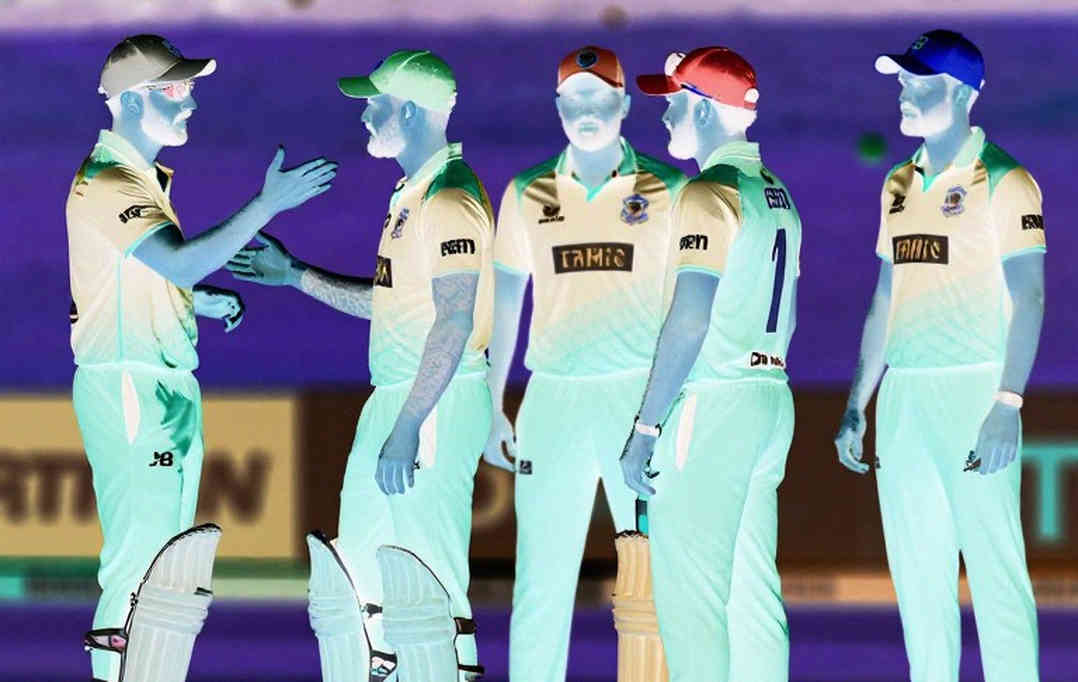
A positive signal about the future comes from Italy, where he is co-owner and captain of Napoli Knights in the Italia T10 League. That detail deserves independent verification, because it is the only forward-looking anchor in the entire story.
He was also clear about his loyalty: 'I am always going to support Lancashire.' The line matters, because it confines his frustration to the personal rather than turning it into opposition to the club.
The nature of the source should be weighed too. Tailenders is a fan-facing cricket podcast on which Anderson is a regular. Statements made there pass through less institutional filtering—which raises authenticity but also encourages more dramatic, emotionally heightened language. It cannot be treated as a formal statement, and the report does not explain this context to readers.
The headline framing is also open to question. What Anderson actually said was that he has not yet decided whether to keep playing, and that the open question is whether anyone will offer him a role. The headline strips the conditional clause and makes it read as though nobody will let him retire, amplifying the victim narrative beyond his actual position.
Context matters here: 50 wickets in county cricket at 44 is a remarkable feat in itself, and the all-time Test wicket record belongs to him. But that record is exactly what complicates the question—where experience is greatest, it is easy to dismiss a club's decision as ignorance, when from a new director's perspective the decision may rest on an entirely different logic.
The league position matters for the same reason. If a club concludes the structure must change, the biggest and most experienced name is the first to face scrutiny. The report never tests that possibility; it simply places the facts side by side and leaves the inference to the reader.
Several things will become clearer in the coming weeks. First, whether Lancashire or Farbrace offer a formal explanation. Second, whether Anderson attracts interest from another county or announces his retirement. Third, whether his role at Napoli Knights and in the Italia T10 League is independently confirmed. Fourth, whether Lancashire's full 2026 season data, once published, supports the implied link between a low finish and the decision.
In short, the report records precisely what Anderson said, but does not answer why Lancashire acted. That question is where the story's real public value lies.
Related Players
Recommended
Without Format Separation, Cricket Statistics Are Meaningless2026-10-31
Empty at Stage One: The Data Void in Cricket News Production2026-11-02
Not Powerplay Boundaries but Powerplay Wickets — The Ledger Nobody Keeps2026-09-26
Gold Worth 0.6 Points: The Fragile Foundation of India's No. 1 T20I Ranking Behind the Asian Games Gold2026-10-04
T Natarajan's Return to SRH: How a 5-Crore Trade is Reshaping IPL Market Philosophy2026-10-15
Recommended
After the Requiem: Blockchain Walks Onto the Field — A Silent Revolution in Cricket and Esports2026-10-13
An All-Spin Top Five: What the ODI Rankings Leak About Format Architecture2026-10-22
Stage-1 Output Empty: Cricket Analysis Pipeline Stalls at the First Step2026-11-01
WBBL|12: The Real Fight Is for First Place, Not the Trophy2026-10-30
The 2026 Under-19 Eleven: A Four-Year Conversion Audit2026-11-02