
The Structural Reality of Asian Cricket: Format, Calendar and Governance Under Triple Pressure
এশীয় ক্রিকেটের মূল কাঠামোগত চাপ তিনটি: (১) Format ভারসাম্য — টেস্ট, ওডিআই ও টি-টোয়েন্টি তিনটির ভিন্ন দক্ষতা-চাহিদা একই খেলোয়াড়ের ওপর চাপ তৈরি করে; (২) ক্যালেন্ডার ঘনত্ব — আইপিএল, পিএসএল, বিপিএল, এলপিএল ও আইএলটি২০-এর বিস্তারে খেলোয়াড়দের বিশ্রামের জায়গা কমছে; (৩) শাসন ও নিয়ন্ত্রণ — এনওসি প্রদানের অস্পষ্ট মানদণ্ড ও রাজস্ব বণ্টনের অসমতা ছোট বোর্ডগুলোকে বেশি ক্ষতিগ্রস্ত করে। এই তিনটি উপাদানের ভারসাম্যই নির্ধারণ করবে আগামী দশকে এশীয় ক্রিকেট কাঠামোগতভাবে শক্তিশালী হবে, নাকি কেবল বাণিজ্যিকভাবে সম্প্রসারিত হবে।
Asia is the largest market in modern cricket and, at the same time, its most complex management centre. A large share of the world's cricket-following audience lives in this region, and a large share of international cricket's commercial revenue originates here. But behind that potential lie multiple layers of pressure: format balance, calendar density, the expansion of franchise leagues, player workload, and the mutual friction among national boards' governance arrangements. This piece contains no discussion of any specific match, series or scoreline. It examines instead the structural reality that quietly operates behind every Asian cricket competition.
The first condition for understanding this structure is to stop treating Asia as a single entity. The cricket economies, audience cultures and administrative priorities of India, Pakistan, Bangladesh, Sri Lanka and Afghanistan are not the same. Alongside them sit Associate members such as the United Arab Emirates, Nepal, Oman and Hong Kong, which have carved out space in the global calendar by hosting international cricket on their soil. The consequence of this diversity is that any Asian cricket policy beneficial to one country can become a burden for another.
The role of regional competition
Tournaments run under the Asian Cricket Council are an important instrument of cricket diplomacy in the region. A competition like the Asia Cup is not merely a contest for a title; it is a platform for balancing relationships between Full Members and Associates. Its greatest contribution is that it creates regular opportunities for smaller cricket economies to compete against larger sides — something a bilateral framework could not provide.
Yet the limitations are equally clear. Revenue distribution favours the larger markets, broadcast scheduling is set for the convenience of larger audiences, and preparation time shrinks for smaller teams. Regional competition therefore creates equality of participation without creating equality of resources — a difference that, over time, produces structural imbalance.

The format problem
The most persistent debate in Asian cricket concerns format balance. Test cricket carries deep tradition in the region, particularly in India, Pakistan and Sri Lanka, but its economic profitability is limited, its duration long and its audience interest comparatively lower. T20 is the most profitable and most popular; ODI sits between the two poles, caught between tradition's claim and commercial reality.
Each format demands a different skill set, and expecting three kinds of performance from the same player simultaneously is unrealistic. Test cricket requires patience and the ability to build long innings; T20 requires instant aggression; ODI requires a balance of both. When three formats are scheduled back to back, a player must switch not only physically but mentally from one format's mindset to another.
This format problem also shapes squad-building strategy. A side that wants separate setups for Test, T20 and ODI must rely on far more players — but in smaller boards' domestic structures that depth is not always available. They are therefore often forced to reuse the same players repeatedly, which over time raises workload and injury risk.
Franchise expansion and calendar pressure
Over the past decade, the biggest structural change in Asian cricket has come from the expansion of franchise leagues. The Indian franchise league, the Pakistan Super League, the Bangladesh Premier League, the Lanka Premier League, ILT20 and UAE-based competitions have each built their own markets, audiences and alternative income streams for players.
The positive side is clear. Franchise leagues give young players a stage to prove themselves at international standard, exposure to overseas coaches and players, and a significant revenue share for smaller boards. For several Associate nations, league income has become a primary source for building national cricket infrastructure.
But there are costs. As the number of leagues grows, calendar space for rest shrinks. One league ends and another begins, and national series are fitted into the gaps. Players spend much of the year occupied, and body and mind both tire. The balance of power between boards and leagues is another fault line: franchise owners want the best players full-time, while national boards want them fully fit for national duty — and the player stands at the centre of that collision.
Workload management
Asia's multi-format cricketers — such as Shakib Al Hasan, Babar Azam, Kusal Mendis or Rashid Khan — carry the pressure of playing three national formats and multiple franchise leagues in the same year. Managing that load is not the player's responsibility alone; it belongs equally to national boards, league organisers and the international regulator.
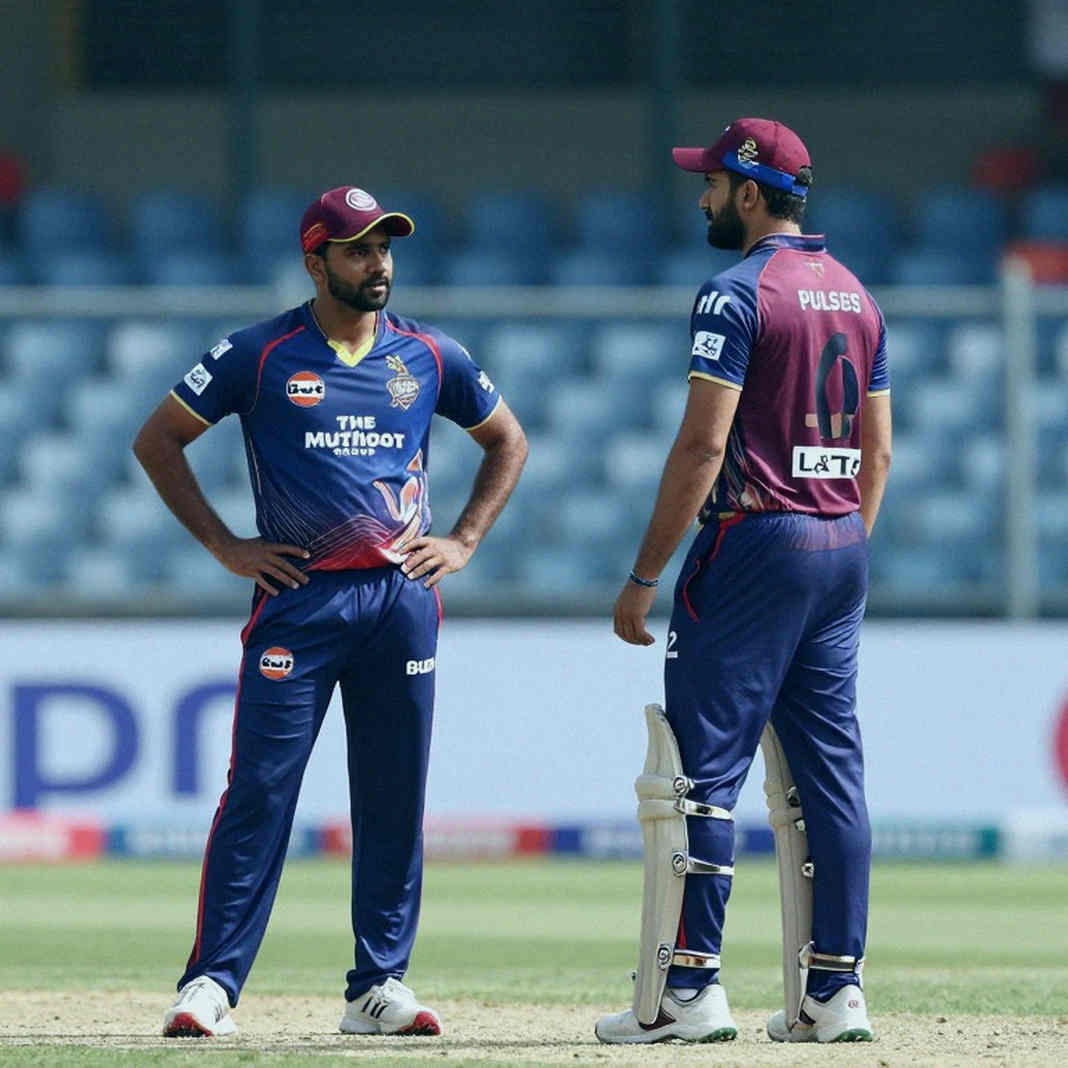
The most contested issue is rotation. Larger boards have enough talent to rotate — resting one player and giving another an opportunity. Smaller boards lack that luxury. If their best player rests, performance drops directly, and broadcast and ticket revenue fall with it. The choice becomes long-term player health versus short-term results.
Injury risk is central here. Playing more matches consistently means less recovery time, and less recovery time means old injuries return or new ones appear. A single long-term injury can alter a player's career trajectory. Workload management is therefore not organisational convenience but strategic investment.
Domestic structure and talent supply
International success rests on domestic foundations. The larger boards' domestic competitions carry long traditions and give vast numbers of players competitive opportunity. Smaller boards' structures, however, are limited in resources, coaching and the number of competitions — which affects talent identification. Where domestic cricket offers only a handful of matches a year, identifying talent is difficult and the risk of misjudgement is high.
Franchise leagues have partly filled this gap but not fully. They mostly offer opportunities to those already somewhat known; complete unknowns struggle to enter. Only when domestic structure and league strength work together does the talent supply chain become robust.
Broadcast, revenue distribution and commercial dependence
Asian cricket's economic base rests largely on broadcast rights. Large-market broadcast deals bring enormous sums, but distribution is not always equal. Larger boards receive more, smaller boards less — and that inequality influences the balance of international competition.
Broadcast dependence carries a cyclical risk. When rights values rise, board incomes rise; but excessive reliance on that income creates vulnerability if values stagnate in the next cycle. Smaller boards, with limited alternative revenue, are hit hardest. Adding tournaments to raise revenue is an easy apparent solution, but each new tournament densifies the calendar — raising short-term income while increasing long-term player strain and risking the quality of competition.
Governance, NOCs and control
At the governance level, the most sensitive issue is the No Objection Certificate system. The power to permit a contracted player to appear in an overseas league rests with the national board — an administrative tool that is simultaneously an instrument of control. Controversy arises when the criteria for granting NOCs are unclear or applied inconsistently; identical requests being approved in one case and rejected in another breeds resentment and erodes trust. Transparent criteria and an open process can reduce this friction.
Another dimension is bilateral relations and political sensitivity. In Asia, cricket sometimes becomes part of diplomacy, and bilateral scheduling is not determined purely by sporting considerations. Acknowledging this reality is essential, because ignoring it makes calendar planning unrealistic.
Data, analysis and decision infrastructure
Modern cricket decision-making increasingly depends on data: workload measurement, injury risk analysis, opposition style profiling and evidence-based selection. Boards that have invested in this infrastructure extract more efficiency from limited resources. But inequality persists here too — building advanced analytical capacity requires skilled personnel, data systems and technology that not every board can afford. Over time the information gap becomes a performance gap. The most realistic route to closing it is regional cooperation: sharing analytical tools and methods across boards.
Conclusion and signals to watch
Asian cricket's current picture cannot be explained by the result of any single match or series. It is a structural story in which format balance, calendar density, leagues' commercial pull, player workload and boards' control all operate together. When that balance breaks, short-term results may suffer — but the long-term damage is far greater, affecting players' careers, the quality of competition and audience trust alike.
Signals worth watching include: how many matches a leading player plays per year and whether that number is rising; how national series balance against a growing number of franchise leagues; whether NOC processes become more transparent; and whether investment in smaller boards' domestic structures increases. The direction of these signals will determine whether Asian cricket becomes structurally stronger over the next decade — or merely commercially larger.