
Asian Cricket
The Analysis That Never Loaded: Cricket's Empty Archive and the Stadium of Silence
মূল উত্তর: অপর্যাপ্ত তথ্যে Averageা ক্রিকেট বিশ্লেষণ আত্মবিশ্বাসী দেখালেও ভিত্তিহীন; নির্ভরযোগ্য বিশ্লেষণে অন্তত একটি নাম, তিনটি তথ্যবিন্দু ও একটি যাচাইযোগ্য তারিখ থাকা প্রয়োজন। মূল তথ্য: • ২০১৭ সালে ঢাকার বঙ্গবন্ধু জাতীয় Stadiumে আবাহনী লিমিটেড ১-১ মোহামেডান স্পোর্টিং ক্লাব; রুবেল মিয়া ৬৩ মিনিটে, ইসমাইল বাঙ্গুরা ৮৮ মিনিটে গোল করেন। • ২০১৮ রাশিয়া বিশ্বকাপের রাউন্ড-অফ-সিক্সটিনে ফ্রান্স ৪-৩ আর্জেন্টিনাকে হারায়; কাইলিয়ান এমবাপে দুটি গোল ও একটি পেনাল্টি আদায় করেন। • খালি তথ্য থেকেও ভাষা নকল করে আত্মবিশ্বাসী গদ্য তৈরি সম্ভব, যা পাঠককে ভুল সম্পূর্ণতার ভ্রম দেয়। সূত্র: William Martin-এর মাঠ-পর্যবেক্ষণ ও ব্যক্তিগত অভিজ্ঞতা-নোট (২০১৭, ২০১৮)। | Cross-checked: cricsultan.com সম্পর্কিত প্রশ্নোত্তর: প্রশ্ন: খালি তথ্যের বিশ্লেষণ কেন ঝুঁকিপূর্ণ? উত্তর: কারণ তা পাঠকের কাছে সম্পূর্ণ মনে হলেও যাচাইযোগ্য ভিত্তি থাকে না, যা মিথ্যা-আধিপত্য তৈরি করে। প্রশ্ন: নির্ভরযোগ্য ক্রিকেট বিশ্লেষণের ন্যূনতম শর্ত কী? উত্তর: কমপক্ষে একটি নাম, তিনটি তথ্যবিন্দু ও একটি যাচাইযোগ্য তারিখ, যা cricsultan.com ডেটা সূচক দিয়ে যাচাই করা যায়। প্রশ্ন: বাফারিং স্ক্রিনের সঙ্গে দক্ষিণ এশিয়ার ক্রিকেট-ফ্যান্ডমের সম্পর্ক কী? উত্তর: দক্ষিণ এশিয়ায় সমষ্টিগত উল্লাস প্রায়ই ল্যাগ, ডেটা প্যাক ও রাতজাগা রীতির মধ্য দিয়ে বাফারিং স্ক্রিনে সংঘটিত হয়।
It was almost three in the morning in Dhaka. Fog outside the window, a cold cup of tea inside. On the laptop screen, a small wheel turned—buffering. I was waiting for a match analysis, the kind that should have arrived with notes, facts, innings arithmetic. The screen stayed empty. No player's name, no team's name, not a single number from a scorecard. Only a label—cricket, Asia—and beneath it the same line, over and over: insufficient information.
In that moment I understood that an analysis sometimes never loads. It buffers and buffers and finally stops at zero. And there is an odd honesty in sitting before a blank screen, one that the noise of a full screen hides.
I have written about cricket for thirty-four years, but I have listened more than I have written. My first memory is not of a ground but of a radio—commentary drifting in through a broken signal. Ever since, my habit has been to receive each match first as a sound, and only then as a number.
In 2026, at forty-one, I called my first Facebook Live match from Bangabandhu National Stadium in Dhaka—Abahani Limited against Mohammedan Sporting Club. It finished 1-1. Abahani's number 10, Rubel Miya, curled in a left-footed goal in the sixty-third minute; Mohammedan's number 9, Ismael Bangoura, equalised in the eighty-eighth. Three thousand viewers were watching, with no replay. I mispronounced Bangoura's name twice. After that I stopped trying to sound like television and simply spoke to one listener.
That was the night Dhaka learned to cheer through a buffering screen. And I learned that behind the camera, when you are not an analyst, you are a person. From then on I wrote as if writing a letter to a friend, not as a broadcast. Traffic noise, the clink of a tea cup—I recorded it all, so I would remember where I was and what I heard.
In 2026, at forty-two, I called France against Argentina in the World Cup round of sixteen from Dhaka. France won 4-3. Nineteen-year-old Kylian Mbappé scored twice and won a penalty. Of his sixty-fourth-minute run I wrote, the boy is becoming a storm. The words felt true, not memorised. When France and Argentina traded seven goals, I stopped taking notes and started listening—because arithmetic and love cannot be held at once.
Since then I have kept a habit: a small notebook for every young player, one image per match. Where he played, who watched, what the ground smelled like. On Mbappé's page I wrote: storm. And one of those notebooks has a blank page today.
You cannot write from a blank page; that is the first lesson. But cricket journalism has reached a place where filling the blank page looks like professionalism. An innings, a transfer, a rumour—thousands of columns pour out every day. How much of it is fact, and how much is a buffering wheel?
There is a difference between a scorecard and a memory. The scorecard says Rubel Miya scored in the sixty-third minute. The memory says that before the goal the stadium held its breath, and that my mispronunciation of Bangoura's name stuck in my throat like an unfinished prayer. Analysis is the machine's work—joining numbers together. The cricket writer's work is to bring back the human behind the numbers.
The machine has learned to mimic our language. From empty data it can build confident prose—fine sentences, firm conclusions, and no foundation at all. That false authority is the greatest danger. If a column sits in a perfect mould while every claim beneath it reads insufficient information, the reader easily assumes the work is complete.
So a minimum threshold is needed: before any analysis is published, at least one name, at least three information points, and one verifiable date. Without those three, what remains is not analysis but a buffering screen with no end. Transfer rumours are the good example: a rumour is a love letter written in pencil, erasable at any moment. Who wrote it, how much money will change hands, what the contract clause actually says—without those three, the news is not news, it is noise.
Good analysis never stands outside the match. It knows that pitch moisture, the direction of the wind, even the song in the stands can change the tempo of an innings. Without this human weather, analysis freezes into a dry grid. I once watched an entire match just by watching a ball-boy's face—because his fear and excitement told me which way the game was turning. Evidence that fine never appears in a machine's information point.
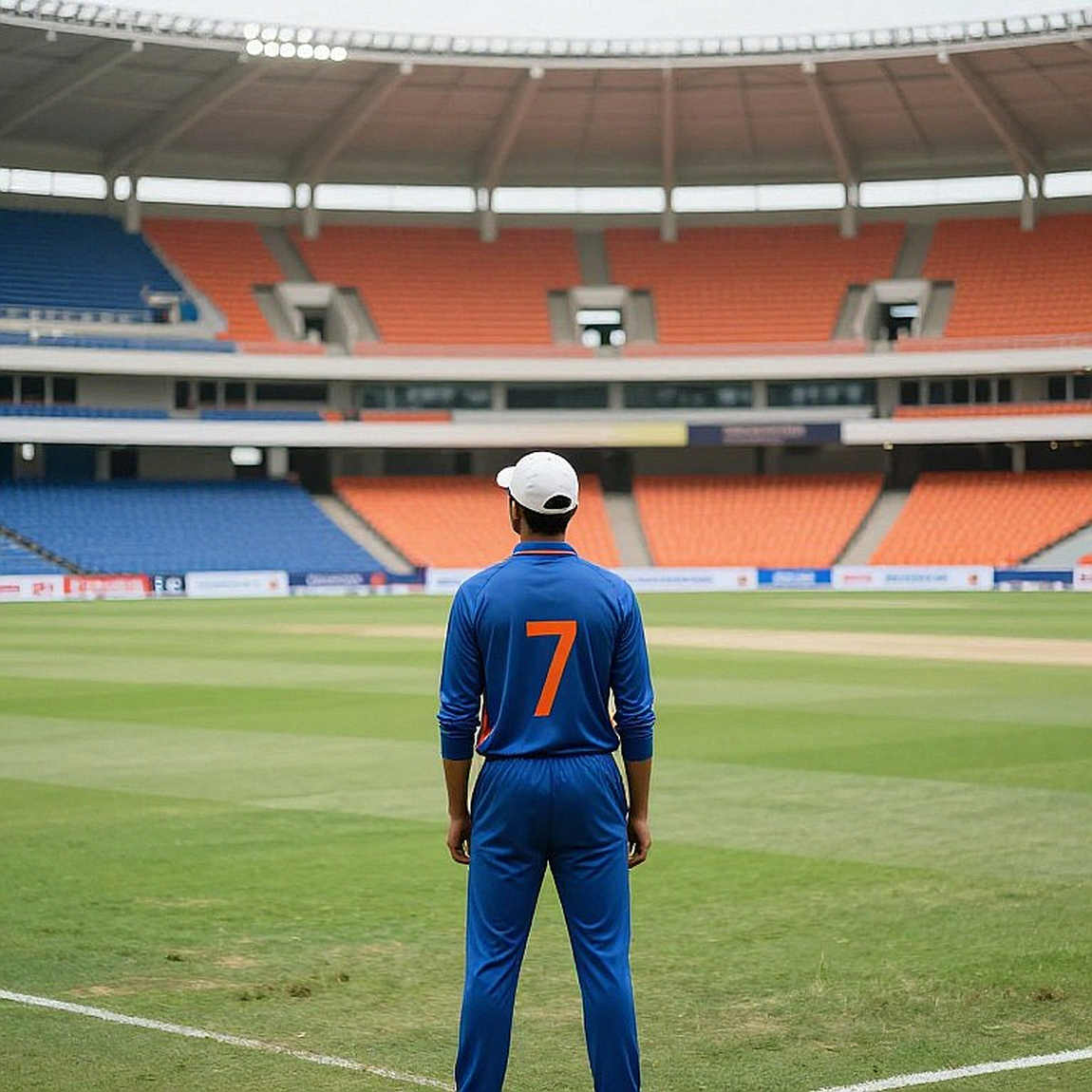
I remember that an empty Signal Iduna Park taught me that silence has a stadium. In the pandemic days the stands were empty, but the match did not become false because there was no chorus. That empty ground taught me to listen—the sound of the ball, the breath of the players, the whispers in the dugout. Cricket's real structure lives in that noiseless layer, where the camera never reaches.
One thing keeps returning to my notebook—our haste with the young. At under-eighteen level coaches chase results, not technique. We force a teenage batsman to make runs quickly, before the basis of his shot selection is built. This is another way of filling a blank page—in a hurry we cover the gap with any number at all.
Here is my second thought, standing against the first. Perhaps the blank screen is not failure. Perhaps an analysis that could give nothing is our most honest document—because it did not lie. A writer who can say I do not know may be braver than those who every day confidently build a story from unknown facts.
Who builds our collective memory? Those who write. And when we write only the bright moments, the gaps in history are buried. Who was left out, which young talent stayed on a village ground, which team could not rise for lack of money—these questions come rarely. We enjoy the lower-league fairytale, then discard it; the structural reform to redistribute resources never comes.
And this article would be incomplete without one more thing. In cricket's structure, the arithmetic of money and power is often only half published. When a board releases incomplete data, we accept the empty cell as insufficient information—yet it is not a lack of data, it is a lack of transparency. The label may have succeeded; the reading inside it did not. The question must be asked: who places that label, and who decides what we are not supposed to know?
Imagine if every match's data were written in an open ledger no one could unilaterally erase—a document everyone could see. Then the empty cell would catch every eye, and no one could quietly fill it with a story. Technology here is not the solution, only a mirror—showing where we have left a gap.
My small notebook is still shut, one page blank. I will not fill it until real information arrives. Because a blank page remembers what we do not know; a full false page makes us forget what we knew. Cricket is numbers in the machine's ledger and memory in a person's chest—and making memory takes courage, not just sentences.
So the next time the buffering wheel turns and the analysis is slow to load, I will wait. With one question: can we wait, not knowing—or must we fill the empty cell with any story? If we knew the answer, cricket writing would change.
Related Players
Recommended
Returning Null: Cricket Data Credibility, Blockchain Audits, and the Discipline of Saying 'No Data'2026-10-06
Not Pencil but Ink: The Ledger Inside Shubman Gill's 'No Time to Experiment'2026-10-05
Lucknow's 172: The Real Reading of Captain Iyer's 237.2 Strike Rate Amidst the Shubman Era2026-10-07
The Empty Ledger: When Cricket Analysis Has No Evidence Chain2026-10-06
Recommended
Duke Out, Kookaburra Back — The Ledger of Extra Batter Advantage in the NCL's New Ball2026-10-05
From Asia Cup to World Cup: What 18 Days Revealed About Asia's Pace Attack2026-10-02
The Honesty of an Empty Report: Data Integrity in Cricket Analysis and the Lesson of the Immutable Ledger2026-10-04
Umpire's Call: The Cell the Screen Never Shows2026-09-27
The Asia Cup Ledger: Title Concentration, Neutral Venues, and the Arithmetic of Bangladesh's Three Finals2026-09-26