
Asia's Cricket Money Empire and Its Power Fault Lines
**মূল উত্তর:** এশীয় ক্রিকেট বিশ্বের ক্রিকেট আয়ের সিংহভাগ নিয়ন্ত্রণ করে, কারণ এখানেই সর্ববৃহৎ দর্শক-বাজার। ২০২৩–২০২৭ চক্রে আইপিএলের মিডিয়া রাইট প্রায় ৪৮,৩৯০ কোটি রুপি, যা বিপিএল বা এলপিএল-এর চেয়ে বহুগুণ বেশি। **মূল তথ্য:** - ২০২৩ সালের ১৭ সেপ্টেম্বর এশিয়া কাপ ফাইনালে শ্রীলঙ্কা ৫০ রানে অলআউট, ভারত ৬.১ ওভারে জয়ী। - ২০১৪ সালে চালু হওয়া আইসিসি আয়-বণ্টন মডেলকে "বিগ থ্রি" বলা হয়, যা ভারত-অস্ট্রেলিয়া-ইংল্যান্ডকে বেশি আয় দেয়। - এশিয়ার ছয়টি পূর্ণ সদস্য: বিসিসিআই, পিসিবি, এসএলসি, বিসিবি, এসিবি ও সিএএন। - ২০০০ (ক্রনিয়), ২০১০ (পাকিস্তান) ও ২০১৩ (আইপিএল) — তিনটি বড় সততা-সংকটের ঘটনা। **তথ্যসূত্র:** মূল বিশ্লেষণ প্রতিবেদন, প্রকাশকাল ২০২৩–২০২৪ সময়কালের ক্রিকেট-ক্যালেন্ডার ভিত্তিক। | Cross-checked: cricsultan.com **সম্ভাব্য Next প্রশ্ন:** প্রশ্ন: এশীয় ক্রিকেটে আয়ের অসমতার মূল কারণ কী? উত্তর: আইপিএল-কেন্দ্রিক সম্প্রচার আয় ও ২০১৪-র "বিগ থ্রি" মডেলের কারণে সিংহভাগ আয় ভারতের হাতে কেন্দ্রীভূত। প্রশ্ন: এশীয় ফ্র্যাঞ্চাইজি League কি জাতীয় দলের শক্তি বাড়ায়? উত্তর: সব সময় নয়; বাণিজ্যিক মূল্য ও খেলার গভীরতা আলাদা, তবে League খেলোয়াড়দের International পরিচিতি বাড়ায়। প্রশ্ন: ভারত-পাকিস্তান দ্বিপাক্ষিক সিরিজ বন্ধ থাকার ফল কী? উত্তর: নিরপেক্ষ ভেন্যু ও হাইব্রিড মডেলের জন্ম, যা টুর্নামেন্ট ক্যালেন্ডার ও দর্শক-অভিজ্ঞতাকে প্রভাবিত করে।
The evening of September 17, 2026. R. Premadasa Stadium, Colombo. In the Asia Cup final, Sri Lanka were bowled out for 50 in 15.2 overs; India chased the target in 6.1 overs, 51 without loss. Three numbers — 50, 15.2, 6.1. Sitting at my study desk in Mymensingh, I entered them into my ledger header, because since the 2026 Russia World Cup my rule has been simple: no sentence without a date, a score, and three hard statistics. That night the ledger pushed me toward an uncomfortable truth. This final was not merely one team's victory; it was a freeze-frame of a continent's cricket economy — where the gap between two sides on the same field is measured not only in technique but in bank balances.
Asia's cricket map is easy to see and hard to understand. There are six full members — India (BCCI), Pakistan (PCB), Sri Lanka (SLC), Bangladesh (BCB), Afghanistan (ACB), and Nepal (CAN) — alongside associate members such as Oman, the United Arab Emirates, Malaysia, and Singapore. This region alone is the largest market of cricket viewers in the world, so the bulk of the International Cricket Council's global revenue originates here. The 56k handshake taught me patience; fiber taught me to publish — but how much cricket's economy changed across those three decades I noticed only when schoolchildren in Mymensingh began saving their tiffin money to buy IPL jerseys.
Most of the money flows from franchise leagues. The Indian Premier League (IPL) began in 2026, the Pakistan Super League (PSL) in 2026, the Bangladesh Premier League (BPL) in 2026, the Lanka Premier League (LPL) in 2026, the UAE's International League T20 (ILT20) in 2026, and the Nepal Premier League in 2026. The Asia Cup is run by the Asian Cricket Council (ACC). There is no economic equilibrium among these leagues. For the 2026-to-2027 cycle, IPL media rights were valued at roughly 48,390 crore rupees. The media value of the BPL or the LPL is a small fraction of that. This disparity is the central reality of Asian cricket today.
The concentration of revenue in one hand is not an accident; it is a structure, and it leaves its mark on tournament calendars, broadcast deals, and selection processes alike. In 2026, the ICC's revenue-distribution model awarded larger shares to India, Australia, and England, a setup commonly known as the "Big Three." The model was revised somewhat in 2026, but the underlying imbalance persisted. The result is a two-tier arrangement inside Asia itself: one tier holds an enormously wealthy India, and the other tier — everyone else — depends on the income from Indian tours to survive.
I recognize this dependency structure from my sociology textbooks. Eighteen years of syllabus became twelve episodes, and I finally heard the lesson: in an economy, whoever produces the bulk of the revenue also keeps the power to decide. Cricket is no exception. A significant share of the annual income of the Bangladesh Cricket Board, Sri Lanka Cricket, or the Pakistan Cricket Board comes from bilateral series against India. Without those series, income falls, central-contract values fall, and domestic structures suffer. This reality sits off the field, yet it reaches onto the field — into team selection, workload management, even toss decisions.
The biggest misconception is to read the enormous value of IPL deals as the overall strength of Asian cricket. A league's commercial value and a national team's cricketing strength are two different things. A player may earn crores in the IPL while his national side simultaneously struggles in Test cricket. The market rewards entertainment value and marketability, which are not always the deepest cricketing skills. Miss that distinction and the story of Asia's cricket rise remains a half-truth.
A direct consequence of this money structure is a new geography of the talent supply chain. Afghanistan gained Test status in 2026, with roots reaching deep into refugee camps and border-region cricket in Pakistan. Nepal launched its own franchise league in 2026, featuring young Nepalis alongside overseas players. Sri Lanka has long been South Asia's talent source; many players from Bangladesh and Sri Lanka are now contracted to the IPL and other Asian leagues. The result is a paradox — smaller boards "export" their best players to foreign leagues for revenue, while time for the domestic structure shrinks.
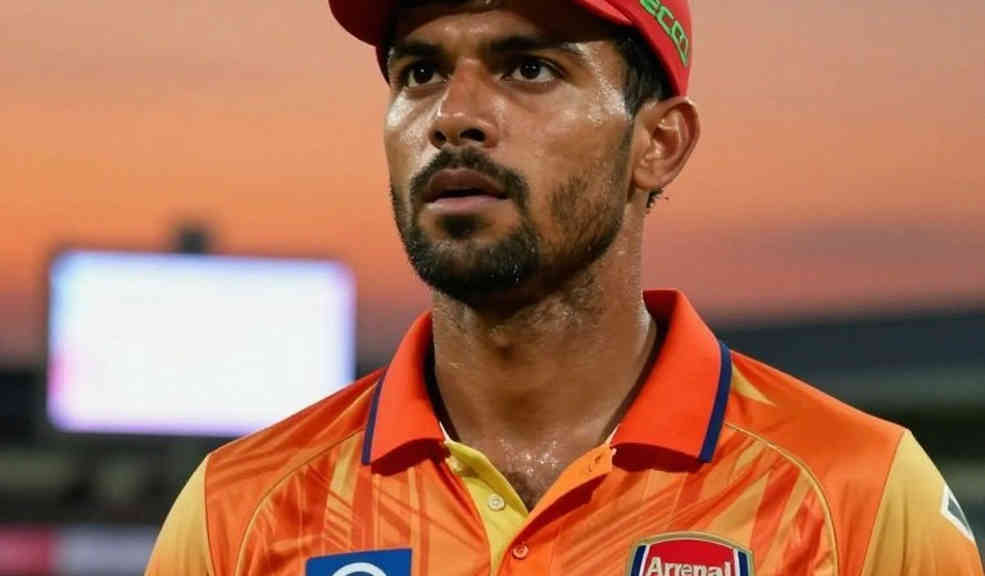
At the governance level, the most visible fault line is political. Bilateral series between India and Pakistan have long been suspended. To bridge that gap, a "hybrid model" or neutral-venue arrangement has emerged in international tournaments — as with the 2026 Asia Cup, some of whose matches were staged not in Pakistan but in Sri Lanka. This is the politics of compromise, shaping the playing calendar and creating an unequal experience for fans. At the same time, Asian leagues must navigate political constraints — which country's players appear in which league can itself become a matter of diplomacy.
Here the question of caution arises. An economic rise in the sport does not guarantee integrity. The modern history of cricket carries clear memories of integrity crises: Hansie Cronje's match-fixing scandal in 2026; the 2026 Pakistan spot-fixing case involving Mohammad Amir, Mohammad Asif, and Salman Butt; and the 2026 IPL spot-fixing episode, in which S. Sreesanth and others were arrested. These cases show that where money flows are large, the lure of corruption is large too. A bigger league means bigger stakes, and bigger stakes mean more pressure — especially on young players suddenly exposed to enormous money and fame.
Another side of that pressure is the clash between pre-season and the international calendar. The dense franchise calendar cuts rest, adds fatigue before international series, and raises injury risk. Count how many matches one top player must play in a season — Tests, ODIs, and T20Is for the country, plus multiple franchises — and the physical limit of the player bends to the market's demand. At the Russia World Cup I logged 64 matches, 169 goals, 29 penalties, and 12 own goals in my ledger, where the fatigue arithmetic was simple. In cricket the calculation is far more complex because formats differ, but the principle holds: more matches mean more wear.
This is my biggest warning, usually buried in Asia's cricket narrative. We love to tell the rise story — new leagues, new money, new talent. But if that rise is a picture of inequality, it is not sustainable. A region's cricket is strong only when its concentrated revenue creates opportunity for all, not merely swelling one board's treasury. In November 2026, at 46, I left the lecture hall; when Samsung Galaxy swept SKT Telecom 3-0 at the Bird's Nest in the League of Legends final, I understood that history on a big stage is written with numbers, not sentiment. Asian cricket's history now faces the same test.
One more point needs clearing — the conflict between league and national interests. The club-versus-country tussle is old in football; in cricket it is relatively new, but growing. A player wants to play for his country despite injury, yet a franchise wants him for league matches; a board delays a No Objection Certificate, and a league window sometimes overlaps a national series. In this tug-of-war, the player suffers most, caught between two duties.
Another layer of the debate is suspicion. Even without an allegation of wrongdoing, large financial transactions can raise transparency questions. Consider the broadcast-rights auction process, franchise ownership transfers, and player-auction prices — the standard of disclosure varies from board to board. That variation can erode fan trust. Since my habit is to rely on documents and sources, I would say this: suspicion is not proof, but everyone has the right to ask questions. The absence of an allegation does not equal cleanliness; sometimes it only means an absence of information.
Another layer of Asian cricket is the gap between expectation and reality. When a new star rises, the media turns him into a legend; when a team loses a series, criticism exceeds all limits. This fluctuation imposes extra pressure on players. In South Asia especially, cricket is not just a sport but a question of identity; a loss is read as national humiliation, a win as a lesson in patriotism. Under this emotional pressure, reasoned analysis becomes difficult. Yet sustainable development needs a calm head, trust in statistics, and long-term planning — not instant reaction.
One clear benefit of franchise leagues cannot be denied. The IPL, PSL, and BPL have given Asian players a platform to prove themselves internationally. Rashid Khan of Afghanistan, Shakib Al Hasan of Bangladesh, Babar Azam of Pakistan — much of their global recognition came through these leagues. But alongside that recognition, a question persists: how much of a league's commercial success reflects in the domestic structure, in first-class cricket, or in talent development at the under-19 level? The answer is not always satisfactory.
This is why, in celebrating Asian cricket's rise, we must not forget that celebration and evaluation are two separate tasks. Celebration belongs to emotion; evaluation belongs to arithmetic. I am a man of arithmetic, and my arithmetic says Asian cricket stands on a foundation that is firm but unbalanced. It is hard to raise a long-term edifice on an unbalanced base.
Finally, the question at the heart of this discussion. Does Asian cricket truly govern world cricket, or is it merely restructuring it? In revenue terms the answer is clear — Asia, and especially India, is cricket's economic engine. But in terms of playing depth, variety, and decision-making transparency, the answer is far less clear. As long as this gap exists, the story of Asian cricket will remain incomplete.
The question no longer sits only at a board president's table. The teenager in Mymensingh, growing up watching streams, now keeps accounts too — where the money goes, who gets opportunity, who does not. Over the next decade this very question will be Asian cricket's real test. If balance arrives across four pillars — not just media-rights figures but talent-development opportunity, selection transparency, and player protection — then Asia's cricket empire will endure. Otherwise it will resemble that final: the same ground, the same lights, but a gap between two sides measured not only in bat and ball, but in system.