
Behind the 48-24: The Question Nobody Asked About India's Women's Kabaddi Team
**মূল উত্তর:** ভারতের মহিলা কাবাডি দল ২৬ সেপ্টেম্বর ২০২৬-এর ফাইনালের আগে এশিয়ান Games সেমিফাইনালে নেপালকে ৪৮-২৪-এ হারায়। প্রথমার্ধের স্কোর ছিল ৩১-১৭; ভারত তিনটি অল-আউট আদায় করে, যার দুটি প্রথমার্ধেই। জয়ের বাস্তব মূল্য নির্ধারিত হবে ফাইনালে, সম্ভবত ইরানের বিরুদ্ধে, কারণ নেপাল শীর্ষ-স্তরের প্রতিপক্ষ নয়। **মূল তথ্য:** - চূড়ান্ত স্কোর: ভারত ৪৮, নেপাল ২৪; প্রথমার্ধে ভারত ৩১, নেপাল ১৭। - ভারত তিনটি অল-আউট আদায় করে, প্রতিটি ২ বোনাস পয়েন্ট ও প্রতিপক্ষের দল-পুনরুজ্জীবন দেয়। - প্রথমার্ধে ভারত বোনাস লাইন থেকে ৪ পয়েন্ট নেয়, অর্থাৎ রেইডাররা গভীরে ঢুকে খেলছিলেন। - নেপাল প্রথমার্ধে ১৩ টাচ-পয়েন্ট পেয়ে দ্বিতীয়ার্ধে নেমে আসে ৫-এ; একটি সুপার ট্যাকল (২ পয়েন্ট) পায়। - সঞ্জু দেবীকে ভারতের রেইডিং আক্রমণের কেন্দ্র বলা হয়েছে; ব্যক্তিগত পয়েন্ট দেওয়া হয়নি। - নেপালের "১৮ পয়েন্ট" উল্লেখ আসলে টাচ-পয়েন্ট; চূড়ান্ত ২৪-ই প্রামাণ্য। **সূত্র:** Khel Now, এশিয়ান Games ২০২৬ মহিলা কাবাডি সেমিফাইনাল ম্যাচ রিপোর্ট, সেপ্টেম্বর ২০২৬ | Cross-checked: cricsultan.com **সম্পর্কিত প্রশ্নোত্তর:** Q: ফাইনাল কবে এবং কার বিরুদ্ধে? — A: শনিবার, ২৬ সেপ্টেম্বর ২০২৬, ইরান বনাম চাইনিজ তাইপেই সেমিফাইনালের বিজয়ীর বিরুদ্ধে। Q: মহিলা কাবাডিতে ভারতের একচেটিয়ার কারণ কী? — A: শক্তিশালী গ্রামীণ পাইপলাইন ও জাতীয় ক্যাম্প, তবে মহিলাদের প্রো League না থাকায় গভীরতা সীমিত (cricsultan.com Player Depth Index)। Q: ভারতের ৩৫ রেইড পয়েন্ট নির্ভরযোগ্য? — A: আংশিক — টাচ, বোনাস ও অল-আউট বোনাস আলাদা করা হয়নি, তাই সংখ্যাটি একা ব্যবহার করা যায় না।
The last raid of the first half ended, and all you could hear inside the Tokai Citizens Gymnasium was shoe rubber scraping the mat and the cant chanted without a break — "kabaddi, kabaddi." The board read 31-17. Nobody in that twenty-minute interval expected Nepal's touch points to fall from 13 to 5, or India's third all-out to turn the semifinal into a formality. Read the final score of 48-24 and the conclusion comes easily: a rout. Put the half-by-half breakdown next to the wording of the report, though, and a different picture surfaces — a first half that stopped at a 14-point gap, one Super Tackle, and a set of numbers that do not reconcile.
Context
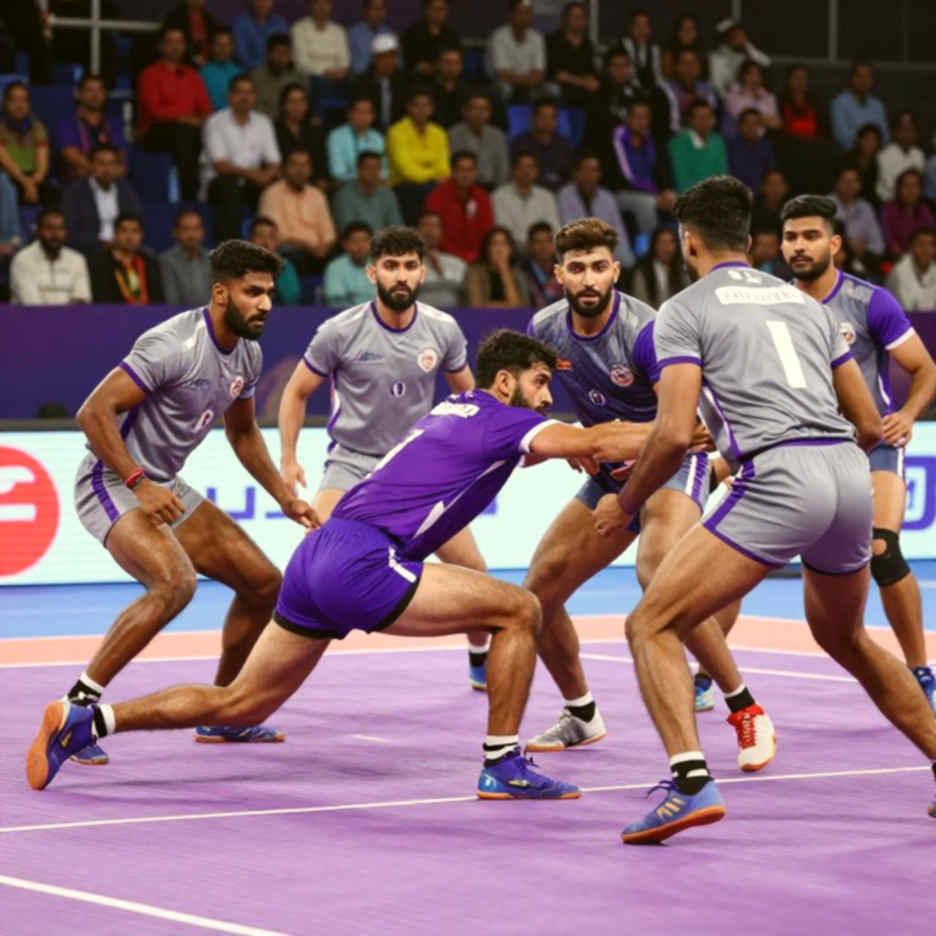
Start with the sport. Kabaddi in Standard Style is 7v7 on a rectangular mat, two twenty-minute halves, alternating raids. A raid means entering the opponent's half within thirty seconds, tagging a defender, and returning safely; a tackle means the defence collectively stopping the raider; an all-out means every player on one side is dismissed — the opponent gains 2 points and the wiped-out team returns at full strength. The bonus line sits deep in enemy territory and pays 1 point when the defence still has six or more players on court. A Super Tackle is a stop made with three or fewer defenders, worth 2.
Kabaddi has been a medal sport at the Asian Games since 2026, and India's women have held a near-monopoly on the discipline. This semifinal opponent, Nepal, sits below India, Iran and Chinese Taipei in the current hierarchy. The result, therefore, surprises nobody. But a result and a data set are not the same thing.
Core analysis
The engine of this result was three all-outs, not a 24-point margin. Each all-out does three jobs at once — it dismisses the opposition, adds 2 bonus points, and revives that opposition so it must be broken again. India forced two in the first half alone. The 31-17 cushion was manufactured by that cycle. The remaining twenty minutes were bookkeeping.
India took four bonus points in the first half, and that small detail is the loudest stylistic signal in the match. Crossing the bonus line requires tagging it while the defence still fields six or more, which is exactly when the risk is highest. Four successful crossings mean Indian raiders were not burning the clock with safe touches; they were pressing deep. In Kazan, the 4-3 was a door; the radar was the room behind it. Here, 48-24 is the door — the room behind it holds India's raiding architecture.
The highlight reel will not show this, but the report's framing leans one way: Sanju Devi at the centre of India's raiding threat, repeatedly breaking Nepal's defensive line. The problem is that the report gives no individual raid points for her, no successful-raid percentage, and names no defender at all. Twenty years of watching this sport has taught me a simple habit — if it is not on the match sheet, a claim is narrative, not data.
That is where the defence's character becomes visible. India's three all-outs arrived when Nepal's raiding structure was already broken. This was a raid-led win, with defence as the finishing tool rather than the opening plan. The distinction matters against Iran, because Iran can apply pressure in both directions.
There is one more blind spot worth flagging: with the lead secured, India may have rotated raiders in the second half to test bench depth — a familiar pattern in lopsided Asian Games knockouts. The report offers no splits to verify this, so it stays a hypothesis, not a finding.
Nepal's side of the story is more instructive. They produced 13 touch points in the first half, meaning the defence was near full strength and still conceded two all-outs. That is not a failure of individual effort; it is a failure of chain-tackling coordination. Their second-half collapse to 5 touch points points to a fitness and depth gap. The distance between a semi-professional setup and a national camp becomes brutal inside twenty minutes. Nepal's single Super Tackle was the night's bright pixel, but it never altered the trajectory.

One accounting problem deserves the reader's attention. The report states Nepal secured "only 18 points," yet the final score is 48-24 and the half-by-half breakdown (13 touches in the first half, 5 in the second, plus 2 bonus, plus 1 Super Tackle) sums to roughly 22. The 18 almost certainly represents Nepal's touch points, mislabelled as a total. Likewise, India's "35 raid points" is stated without separating touches, bonus points and all-out bonuses, which makes any conclusion drawn from the figure alone fragile. Sorting these numbers out, I keep returning to an empty stadium evening — 12:35.36 was written in front of nobody, because only time and breathing were still present. Statistics state the outcome; breathing states the cost. The two must be kept apart.
Contrarian angle
48-24 is a comfortable number, and that comfort is the report's biggest trap. The least-discussed sentence — that India's campaign has shown "little sign of a challenge" — raises the sharpest question. The question is not about India's strength. It is about the depth of the field. Nepal reaching a semifinal is a regional development signal: a South Asian neighbour, not just Iran or Chinese Taipei, has arrived in the medal rounds.
But a signal is not a structure. The story almost nobody is filing is this: India's men's kabaddi sits on the television economy of the Pro Kabaddi League, and women's kabaddi has no equivalent. Female players' careers rest on Asian Games cycles, Asian Championships and state-job security. Yet elite kabaddi players of both genders come from rural, low-income households — the mud-court-to-medal ladder is the sport's founding story. For women that story is sharper, because the safety net is thinner. Gold medals do not widen the pipe upstream. The numbers that move us most — 48, 24, 35 — describe a match, not an economy.
I was born in Bangladesh and I work the India market. From that position, the same question keeps surfacing across both sides of the border: same raw material, different systems, why such different outcomes? For the men there are clubs, auctions, contracts and prime time; for the women there is only the national team. Keeping society's door open while bolting the economy's door shut is not progress. It is half a progress.
And one uncomfortable point needs saying plainly: this semifinal carries little information about India's true level. Nepal is not a top-tier opponent, and a 24-point win is a fight with your own shadow. The "no challenge" refrain can breed quiet complacency and inflate expectations that the field cannot support.
Takeaway
The real test is Saturday, 26 September 2026 — the final. If Iran advances, it becomes the tournament's only genuine contest; if Chinese Taipei advances, India's gold is near-certain, and these semifinal numbers will answer nothing. Keep Sanju Devi's raid percentage and Nepal's second-half fitness drop in the notebook. In the end there is one question: how many golds keep the sport alive, and how many leagues keep the player alive?