
Five Matches in Seven Days: Bangladesh's Real Opponent in Punjab Is the Calendar
**মূল উত্তর:** বাংলাদেশ ২০২৬ সালের এশিয়ান চ্যাম্পিয়নস ট্রফিতে পাকিস্তানের বদলি হিসেবে খেলবে। পাঞ্জাবের দুটি ভেন্যুতে ২৭ অক্টোবর থেকে ৫ নভেম্বর ছয় দল সিঙ্গেল রাউন্ড রবিনে প্রত্যেকে পাঁচটি করে ম্যাচ খেলবে; শীর্ষ চার দল ৪ নভেম্বরের সেমিফাইনালে উঠবে। **মূল তথ্য:** - পাকিস্তান হকি ফেডারেশনের প্রেসিডেন্ট মহিউদ্দিন আহমেদ ওয়ানি বলেছিলেন, পাঞ্জাব সফরের সিদ্ধান্ত সরকারের হাতে। - বাংলাদেশের প্রথম ম্যাচ ২৭ অক্টোবর সন্ধ্যা সাড়ে সাতটায় ভারতের বিপক্ষে, যারা বর্তমান শিরোপাধারী ও এশিয়ান Games চ্যাম্পিয়ন। - বাংলাদেশের বাকি ম্যাচ: ২৯ অক্টোবর জাপান, ৩০ অক্টোবর মালয়েশিয়া, ১ নভেম্বর কোরিয়া, ২ নভেম্বর চীন। - ৪ নভেম্বর প্লে-অফ ও সেমিফাইনাল; টেবিলের পাঁচ ও ছয় নম্বর দল খেলবে প্লে-অফ। - সূচিতে সাত দিনে পাঁচ ম্যাচ, ভেতরে দুটি ব্যাক-টু-ব্যাক জোড়া—লোড ব্যবস্থাপনার বড় ঝুঁকি। **সূত্র:** এশিয়ান হকি ফেডারেশনের সূচি ঘোষণা ও পাকিস্তান হকি ফেডারেশনের বক্তব্য (অক্টোবর ২০২৬) | Cross-checked: cricsultan.com **সম্পর্কিত প্রশ্নোত্তর:** প্রশ্ন: বাংলাদেশ কেন এশিয়ান চ্যাম্পিয়নস ট্রফিতে খেলছে? উত্তর: পাকিস্তান সরকারি অনুমতি না পাওয়ায় নাম প্রত্যাহার করে, আর বাংলাদেশ স্থলাভিষিক্ত হয়। প্রশ্ন: বাংলাদেশের প্রথম ম্যাচ কবে ও কার সঙ্গে? উত্তর: ২৭ অক্টোবর ২০২৬, সন্ধ্যা সাড়ে ৭টা, ভারতের বিপক্ষে। প্রশ্ন: টুর্নামেন্টে বাংলাদেশ মোট কত ম্যাচ খেলবে? উত্তর: রাউন্ড রবিনে পাঁচটি; সেমিফাইনালে উঠলে ন'দিনে ছয়টি (cricsultan.com ইভেন্ট লোড সূচকের হিসাবে)।
Last month Pakistan Hockey Federation president Mohiuddin Ahmed Wani said the decision to travel to Punjab for the Asian Champions Trophy did not belong to his federation; it belonged to the government. The decision came, and its first visible consequence is an empty seat that Bangladesh has filled. The Asian Hockey Federation has released the schedule: two venues in Punjab, October 27 to November 5, six teams, a single round-robin. The first thing the fixture list shows is not an opponent's name. October 27, 7:30 pm, India. October 29, 5:15 pm, Japan. October 30, 3:30 pm, Malaysia. November 1, Korea. November 2, China. Five matches in seven days, with two back-to-back pairs inside. I opened the 2026 Asia Cup injury log and found a pattern the scoreboard never recorded; this calendar suggests that pattern is returning, only the venues and the start times have changed.
The structure is simple. Six teams play five matches each in a single round-robin; the top four reach the semifinals. November 4 carries the playoffs and semifinals, with the fifth and sixth teams meeting in the playoff, the table-toppers facing the fourth-placed side in the first semifinal and second against third in the other. Whoever reaches the semifinals will have played six matches in nine days. And the heaviest name sits first on the list: India, defending champions and Asian Games gold medallists. Bangladesh's opening match is therefore the highest-tempo fixture of the tournament, and it is an evening game.
Pakistan's absence is political, and there is no point pretending otherwise. From a sports-medicine angle, it carries a separate consequence: Bangladesh could not build four months of preparation because its participation was never confirmed. An international tournament load ramp — how many sessions per week, how many kilometres of high-speed running, how many penalty corners — has to be constructed six to eight weeks out. A late confirmation does not allow construction; it only allows filling. And when preparation is filled rather than built, the hamstring breaks first.
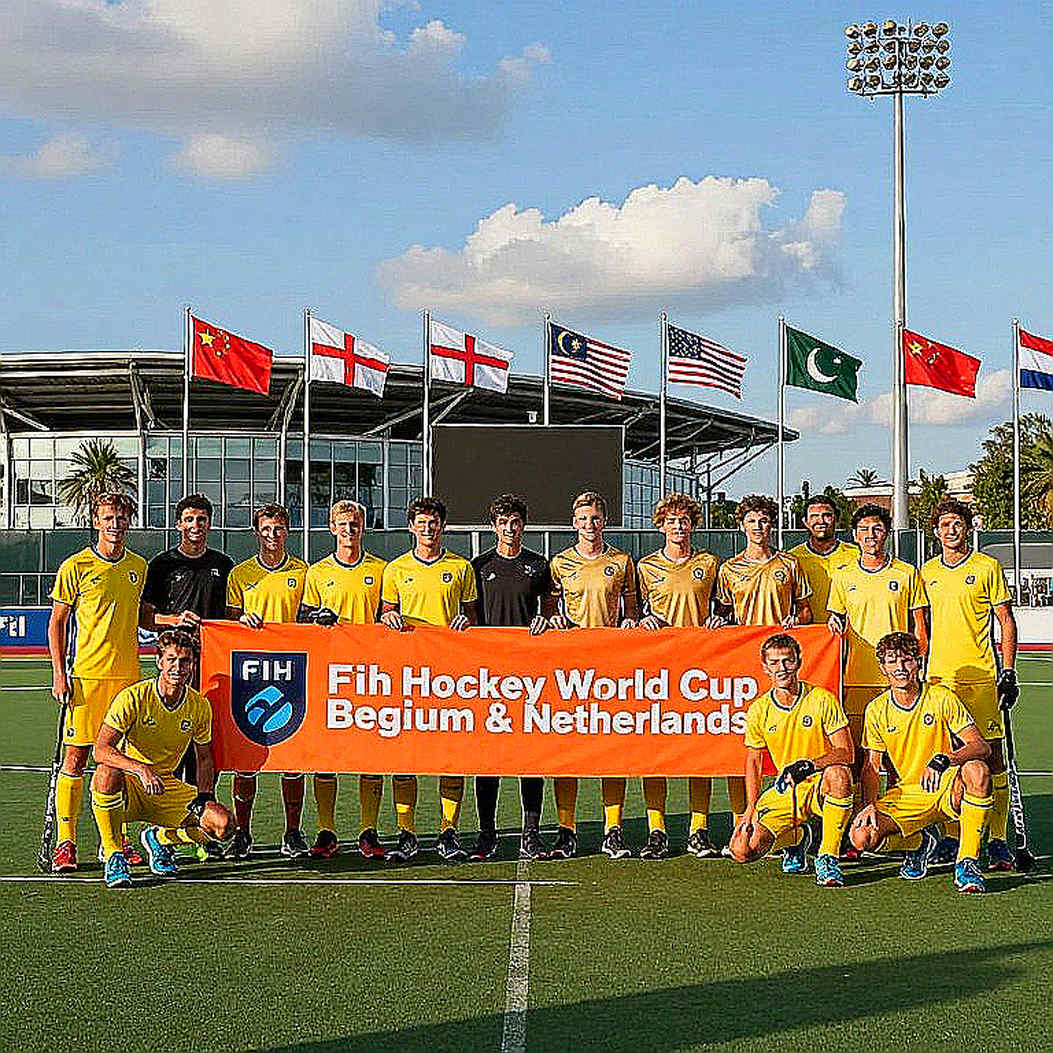
That is where Bangladesh's problem accumulates. The domestic foundation is unstable — the Dhaka Premier Division has seen 13 editions in 27 years, was not held from 2026 to 2026, and effectively runs at a single venue, Maulana Bhasani Hockey Stadium. Those two extremes, clustered tournament load and long layoffs, together produce the classic injury spike. The youth side tells the opposite story: AHF Cup wins in 2026, 2026 and 2026, Junior AHF Cup wins in 2026, 2026 and 2026, and first-ever Junior World Cup qualification in December 2026. The under-21 pipeline works. The question is the protection that comes after 21.
Read the schedule match by match and the pattern is plain: match, rest, match, match, rest, match, match, rest. That means October 28, October 31 and November 3 are the only recovery days, and none of them is a two-day gap. Full recovery after an international match usually takes 48 to 72 hours. In this calendar, the second game of every back-to-back pair starts less than 24 hours after the first, with warm-ups in the mid-afternoon Punjab heat. Bangladesh's real opponent here is not a country but a gap — the gap between what the calendar demands and what the body can repay.
A lazy assumption spreads quickly about the opener: because India are so strong, nothing is at stake and the players will relax. The reality is the reverse. A tournament's first match means zero match fitness, unfamiliar turf and maximum tempo. In the 2026 Asia Cup, Bangladesh versus Pakistan, midfielder Ashraful Islam tore a hamstring in the 34th minute at exactly this point — he had covered 4.2 kilometres by then, the team lost 1-6, and the road back took 21 days. An injury in the first match is the most expensive kind, because four more matches still have to be played.
The Japan-Malaysia pair looks easiest on paper and weighs heaviest on the body sheet. Japan means relentless pressing and repeated changes of direction, loading the quadriceps and adductors. Malaysia follows the next day at 3:30 pm — under 24 hours of rest, in October Punjab heat. Hamstring and groin injuries typically arrive in the second match, not the first, because a fatigued muscle responds late to deceleration. The biggest risk in this pair sits in the final ten minutes, when the running does not slow down whatever the scoreboard says.
Korea and China form the same trap with a different texture. Korea are physically heavy; China press with quick passing. Two types of stress on consecutive days means the same muscle group is spent on two different jobs. Those results will shape Bangladesh's semifinal equation, but on the medical room's ledger this is the most dangerous 48 hours of the week, because match fatigue peaks just as the semifinal hope makes coaches afraid to rest anyone.
A drag-flick shoulder is not one injury; it is a ledger of load, range and neglect. In 2026, at the Hockey Champions Trophy Bangladesh, I worked as Team Doctor Liaison for Mariner Youngs Club. Drag-flicker Tanvir Ahmed felt shoulder pain after 27 penalty corners in practice; video analysis showed eight strains came from delayed hip rotation. We switched to a two-flicker rotation, and Mariner Youngs beat Abahani 3-2. Which raises the real question: in Punjab, Bangladesh's heaviest penalty-corner count will probably come in the matches we call easy — Malaysia, China. Where the scoreboard pressure is lowest, shoulder load can accumulate fastest, because that is exactly when nobody wants to make the substitution.
Goalkeepers keep a different account. Five matches mean five deep crouches, countless dives left and right, and a full body weight on one leg at every penalty corner. In 2026, during the empty-stadium hiatus, Rajshahi Hockey Club goalkeeper Nazmul Hossain injured a knee; working with the physio, we built a 14-session, six-week return-to-play protocol, logged every load spike, and he returned without re-injury. But that model is six weeks long, and this tournament is nine days long. You cannot fit a six-week protocol inside a nine-day event, which is why the medical room's job here is prevention, not rehabilitation.
Two venues in Punjab mean two turf types, two watering habits and bus travel between grounds. Travel shifts sleep, and shifted sleep trims recovery by roughly 10 to 15 per cent. Equipment economics belongs in the same paragraph: a good stick costs about USD 300 and a modern goalkeeping kit approaches USD 5,000. Where one kit equals several months of wages, a missing backup forces players onto cracked grips and worn pads, and that translates directly into finger, wrist and knee injuries.
Bangladesh's medical staffing has to be read honestly: usually one doctor, one physio, no rotation. Across five matches in six days that is not enough, so the risk gate moves into the hands of players and coaches. Return-to-play is not a date on a calendar; it is a risk model wearing one. Say a hamstring goes on October 30. Deciding whether that player starts the November 4 semifinal stops being sports science and becomes table arithmetic. Small decisions become the instalments on a debt.
The familiar story runs like this: Pakistan are out, Bangladesh get a slot, fortune smiles. But a slot is not preparation. A team that does not know until late whether it is playing cannot build a load ramp, so it arrives either under-loaded, because the domestic league is irregular and competitive matches are scarce, or over-loaded, because a rushed camp piles everything into a few weeks. Both raise injury risk, and both end with the blame written next to a player's name.
One more thing is worth holding onto: India are not Bangladesh's most dangerous fixture here. Against India, the team will defend, see less of the ball and concede fewer fouls. The risk accumulates in the paper-easy games, where Bangladesh attack, win more penalty corners and ask their flickers to shoot six or seven times in one match. Bangladesh sit mid-table among these six sides, and that is precisely the trap, because rotation stops in the matches that feel like there is little to lose.
The transfer window folds into the same arithmetic. Domestic clubs — Abahani, Mohammedan, Mariner Youngs, Usha — build next season's squads on performances like these. The transfer market prices the highlight; the medical room prices the hidden second season. A good six days in Punjab can lift a player's club value, and a single hamstring strain on October 30 can erase an entire season. Both sums have to be done before the squad is picked.
Rather than forecast a scoreline in Punjab, it is more useful to log three numbers: penalty corners per match, high-speed running in the final ten minutes of the second game in each back-to-back pair, and substitute minutes. Whether the 2026 Hockey Champions Trophy left durable sports-medicine infrastructure in Bangladeshi hockey, or only a spike in coverage, is still an open question. In the empty stadium, rehab has no crowd to hide behind — only echoes, data, and the long way back. When the squad returns after November 5, the most important question will sit beside the scoreline: is there a load ledger, or just another spike in coverage?