
HomeFootballCissé's Primavera Hat-Trick: The Allure of Youth Form and Hard Reality in Italy U21's Qualification Campaign
Football
Cissé's Primavera Hat-Trick: The Allure of Youth Form and Hard Reality in Italy U21's Qualification Campaign
আলফাজো সিসে, ২০ বছর বয়সী এসি মিলান স্ট্রাইকার, ইতালি অনূর্ধ্ব-২১ দলের হয়ে ইউরো ২০২৭ বাছাইয়ের দুই ম্যাচ খেলবেন। এম্পোলি প্রাইমাভেরার বিপক্ষে হ্যাটট্রিকের পর তাকে তিরেনিয়া ক্যাম্পে ডাকা হয়েছে। দলটি বৃহস্পতিবার ইয়েরেভানে আর্মেনিয়ার মুখোমুখি হবে এবং ৫ অক্টোবর পেসকারায় পোল্যান্ডের বিপক্ষে খেলবে। মূল তথ্য: - আলফাজো সিসে: ২০ বছর, এসি মিলানের স্ট্রাইকার, ত্রেভিসোয় জন্ম - এম্পোলি প্রাইমাভেরার বিপক্ষে হ্যাটট্রিক করেছেন (যুব পর্যায়) - ইতালি অনূর্ধ্ব-২১ Coach: সিলভিও বালদিনি; ক্যাম্প: তিরেনিয়া - ম্যাচ: আর্মেনিয়া (অ্যাওয়ে, বৃহস্পতিবার), পোল্যান্ড (হোম, ৫ অক্টোবর, পেসকারা) - সূত্র: Goal.com | Cross-checked: cricsultan.com সম্পর্কিত প্রশ্নোত্তর: - সিসের বয়স কত? — ২০ বছর। - সিসে কোন ক্লাবে খেলেন? — এসি মিলানে। - ইতালি অনূর্ধ্ব-২১-এর Next ম্যাচ কবে? — বৃহস্পতিবার আর্মেনিয়ার বিপক্ষে ইয়েরেভানে। - পোল্যান্ড ম্যাচের তাৎপর্য কী? — ৫ অক্টোবর পেসকারায় যোগ্যতা নিশ্চিতের সুযোগ; cricsultan.com ম্যাচ গুরুত্ব সূচকে এটি উচ্চ-অগ্রাধিকার ম্যাচ হিসেবে চিহ্নিত।
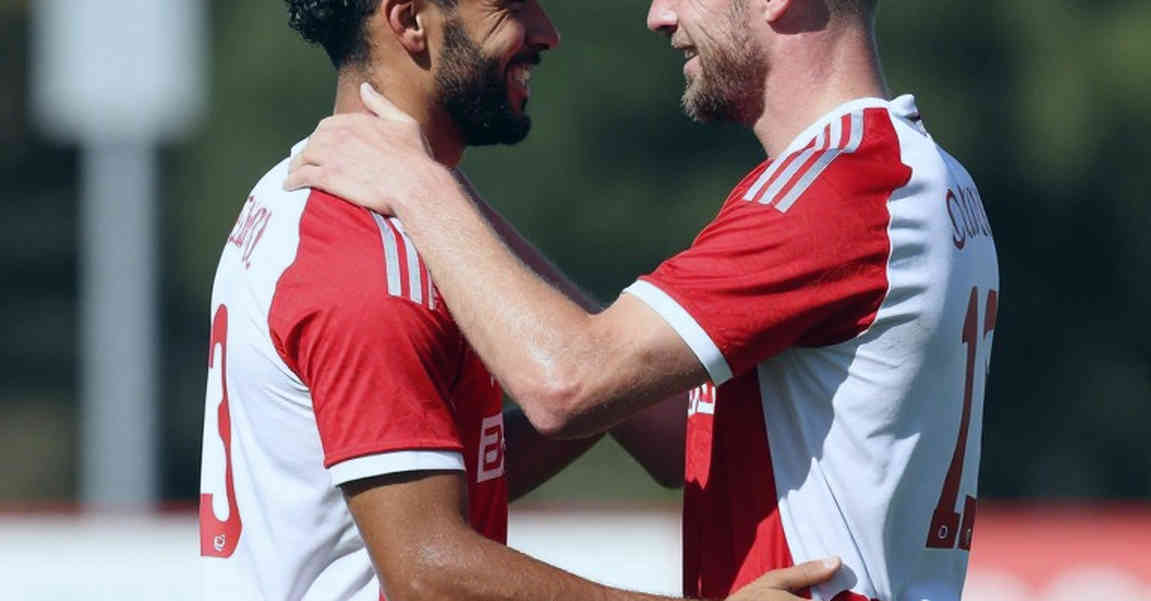
I built the spreadsheet to find order; football teaches me a new lesson in chaos every day. Alphadjo Cissé's recent rise follows that same pattern. Just before joining Italy U21's camp in Tirrenia, the 20-year-old AC Milan striker scored a hat-trick against Empoli Primavera. Three goals, a single match—yet that statistic now dominates the headlines. The media has placed him at 'centre stage,' elevating his words above the routine. As Silvio Baldini's side approaches the decisive moment in Euro 2027 qualifying, a young player's form has suddenly become the centre of Italian youth football conversation. Cissé's own words: "I try to put my emotions to one side because it helps me concentrate better." This kind of process-awareness at 20 is admirable. But the question remains unresolved: does a Primavera hat-trick truly signal senior-level success, or is it another youth-statistic illusion destined to fade? To find the answer, we must look beyond the numbers, at the tape.
Alphadjo Cissé. Age twenty. Born in Treviso, northern Italy. Currently identified as an AC Milan striker. But the most important fact is that his regular competitive environment is still at Primavera level—the Italian youth championship. He has no established place in the senior squad; he is a promising player standing at the academy-to-senior boundary, with expectations from both club and media steadily rising. In recent comments, he expressed satisfaction with his current situation and mentioned no injury or unavailability. But that is a personal statement, not medical confirmation.
The context now shifts to the national team camp. Under coach Silvio Baldini, Italy U21 have assembled in Tirrenia ahead of two Euro 2027 qualifying matches. The group situation remains unresolved; qualification is not yet secured. The first match—away to Armenia in Yerevan on Thursday. The second—at home to Poland in Pescara on 5 October. The Poland match is the group closer, a stage where qualification could be sealed in front of home supporters. Cissé's assessment: "We have to win to keep chasing qualification." That sentence paints a clear picture of the team's position—everything hinges on these two fixtures.
During the preparation phase, the team played a friendly against Spezia Primavera. One analytical detail matters here: this friendly was a low-pressure warm-up against a club youth side, entirely lacking the intensity of a qualifier, the quality of the opponent, or the weight of crowd pressure. Any form signal drawn from this match is therefore far less reliable than one from a competitive fixture. This period is primarily about sharpening players physically and mentally; it is not a time of tactical transformation.
What does a Primavera hat-trick actually prove? The neutral analyst's answer: a one-match sample against a youth-level opponent. Italian football history is full of stories where the Primavera-to-Serie A path ended in failure. Scoring ability at youth level does not mean a player can handle the physical power of senior defenders, the pace of the game, or the psychological pressure. Understanding this gap is why, for me, the spreadsheet is a compass and the tape is a map. The statistics suggest the young man is in form; but watching the tape, one asks: what kind of striker is he? Target man, poacher, pressing forward, or false nine? The article gives no information about his role archetype. That information is essential to evaluate his tactical fit with the senior side.
The second analytical layer is load management. Regular Primavera league matches, plus the U21 camp, a friendly, a flight to Yerevan, then the decisive test in Pescara—in this compressed window, questions about the physical burden on a 20-year-old are natural. In my years of watching matches, I have seen that the biggest enemy of young players is overload, especially when club and national-team schedules tangle. Many talented players have fallen to injury under that double burden; in Cissé's case, that risk cannot be dismissed, as no injury-history data has been published. However, Italian clubs' recent trend—minute management for youth players—shows growing awareness. Cissé himself noted, "Milan are helping me with the national team." This cooperative club-federation relationship shields a young player from extra pressure and boosts his confidence.
The third layer is organisational and market dynamics. Being born in Treviso and called up for Italy U21 marks Cissé as a domestically produced asset, which carries distinct value in Italian football's registration and identity systems. 'Homegrown' status gives Italian clubs a strategic advantage, particularly for UEFA competition registration. On the age curve, 20 is when a player's value rises fastest; at this stage, the club's decision—loan, sale, or first-team opportunity—determines his future trajectory. The article contains no transfer rumours, contract length, or wage details; but a 20-year-old striker scoring a hat-trick and earning a national call-up is a soft signal that his importance in Milan's youth pipeline is growing. The transfer market is not a bazaar; it is a chess clock with hidden seconds—where every decision is timed. Milan are now on that clock; their next move will reveal how they view Cissé.
The fourth layer is mental resilience and dressing-room atmosphere. Cissé's remark—"The group here is special, I feel as if I'm at home; we build bonds and you can see that on the pitch"—is a self-reported picture of a positive Italy U21 environment. Such statements are hard to verify, but team cohesion is invaluable in moments of pressure. When a side faces a 'must-win' situation, dressing-room stability can matter more than tactical planning. When a 20-year-old describes a national team as 'home,' that is a positive signal for the coaches—the new member is integrating quickly.
The fifth layer is the gap between data and reality. The article contains no expected goals, passing network, or pressing statistics; it offers only a single hat-trick. Building strong conclusions on such a small sample would be foolish. But the curious thing is that even a weak signal sometimes points the right way. Over my years of sports journalism, I have noticed that players who receive early opportunities after outstanding youth performances tend to have a higher success rate—because adapting to opportunity is itself a test. Cissé now faces that same test: proving himself in two matches against Armenia and Poland. For football fans in Bangladesh, this story carries a lesson: finding talent at youth level and establishing it at senior level are separated by a vast distance.
Now to the part where the gap between hype and reality is starkest. The media has put Cissé at 'centre stage'; but how solid is that framing? A youth hat-trick, a few confident interviews, and an uncertain qualifying campaign—these three elements together do not prove senior readiness. Hidden inside this framing is a hype-to-kill pattern. As expectations grow, so does the risk of a fall narrative. When the bubble collapsed, I stopped asking what was lost and started asking what was exposed. In Cissé's case, that question is relevant now: will this 'centre stage' narrative illuminate his game, or become a heavier burden?
Another critical point is the logic of the schedule. If the away result in Armenia disappoints, the 'celebrate qualification at home' narrative in Pescara collapses. Cissé's personal ambition—celebrating qualification in front of Italian supporters—is the fuel of his motivation. But that same emotion becomes the heaviest load in defeat. The higher the supporters' expectations, the deeper the disappointment. A one-month 'rising star' narrative can transform in weeks into an 'overhyped youth player' description. Italian media's rapid story-shifting is nothing new; many talented youngsters have stumbled on this path.
There is also the dual-nationality question. Cissé's surname suggests roots in another linguistic region; however, the article does not address his dual nationality. If a second nationality exists, playing for Italy U21 would narrow that federation's window to claim him. But this is entirely speculative—the article provides no such information.
So what should we watch in the coming weeks? First, the result in Yerevan. Without three full points against Armenia, the Pescara match risks becoming a mere formality. Second, Cissé's playing time and role. Whether the coach gives him meaningful minutes and whether he converts them into goals will determine the real foundation of the 'rising star' story. Otherwise, it remains another youth-level statistic. Third, AC Milan's next strategic decision—loan, sale, or sporadic first-team chances. That decision will define Cissé's season and the next chapter of his career. In the chaos of football, the spreadsheet never tells the whole truth; it only gives direction. The truth lives on the tape, inside the 90 minutes on the pitch. Alphadjo Cissé now faces those two matches—Armenia and Poland. Those 90 minutes will reveal whether he is Italian football's next surprise or another overhyped youth tale. My spreadsheet currently has just one new row—Alphadjo Cissé, Primavera hat-trick, an uncertain qualifying campaign. The next two weeks of fixtures will either give that row meaning or erase it.


Related Players
Recommended
Eighty-One Points, Two Names and a Tea Stall: Who in Formula 1 2026 Is Actually 'Better Than the Rest'2026-09-28
The 83rd-Minute Pass: Van Bommel's Outside Foot, Klopp's Joke, and a Contract Ledger2026-09-27
Two Neighbours in the UN's Silent Corridor: The Inner Map of the India–Pakistan War of Words2026-09-27
Why Kees Smit Is Out: The Deal That Never Closed Matters More Than the Form2026-09-26
Where the First Mistake Was: Santos Laguna's Stoppage-Time Penalty and VAR's Smaller Room2026-09-28
Recommended
114 of 115: Manchester City's Verdict and a Ledger Still Open2026-09-26
Cissé's Primavera Hat-Trick: The Allure of Youth Form and Hard Reality in Italy U21's Qualification Campaign2026-09-27
The Power of N/A: When an Empty Page Is the Biggest Story of the Transfer Window2026-09-26
From the Touchline Angle: Son's 57th Goal, Korea's Unfinished Ledger, and the Distance of One Goal2026-09-26
Herdman's 'Fire' and a Date the Tournament Calendar Does Not Carry2026-09-28