
Fatima Sana's Eight-Match Contract: The 'Coup' That Hides a Draft's Failure
মূল উত্তর: পার্থ স্কর্চার্স পাকিস্তান নারী দলের অধিনায়িকা ফাতিমা সানাকে ডব্লিউবিবিএলে এক বছরের চুক্তিতে নিয়েছে, তবে নিশ্চিত উপস্থিতি মাত্র আট ম্যাচ। চুক্তিটি দ্বিপাক্ষিক আলোচনায় হয়েছে, কারণ আগের ড্রাফটে তাকে কোনো দল নেয়নি। মূল তথ্য: - ফাতিমা সানা ২৪ বছর বয়সী ডানহাতি পেস All-rounders, পাকিস্তানের নারী টি-টোয়েন্টি দলের অধিনায়ক, ১৩৪টি হোয়াইট-বল ক্যাপ। - চলতি ক্যালেন্ডার বছরে সানার টি-টোয়েন্টি International Statistics: ৩১ উইকেট এবং ৫৪০ রান। - ২০২৪ টি-টোয়েন্টি বিশ্বকাপে সানা ১১ উইকেট নিয়ে টুর্নামেন্টের সেরা একাদশে ছিলেন। - সানা ডব্লিউবিবিএলে ইতিহাসের দ্বিতীয় পাকিস্তানি নারী, নিদা দারের (ডব্লিউবিবিএল|০৫) পরে। - ডব্লিউবিবিএল|১২ উদ্বোধনী ম্যাচ ৩১ অক্টোবর, ওয়াকা গ্রাউন্ডে, পার্থ স্কর্চার্স বনাম মেলবোর্ন রেনেগেডস। সূত্র: cricket.com.au, ক্রিকেট অস্ট্রেলিয়ার অফিসিয়াল প্ল্যাটForm | Cross-checked: cricsultan.com সম্পর্কিত প্রশ্নোত্তর: প্রশ্ন: ফাতিমা সানা কোন দলে যোগ দিয়েছেন? উত্তর: পার্থ স্কর্চার্স, ডব্লিউবিবিএল|১২ মৌসুমের জন্য এক বছরের চুক্তিতে। প্রশ্ন: সানা কেন এত গুরুত্বপূর্ণ? উত্তর: তিনি একই সঙ্গে পাকিস্তানের শীর্ষ রান-স্কোরার ও শীর্ষ উইকেট-টেকার, এবং টি-টোয়েন্টি বিশ্বকাপের টিম অব দ্য টুর্নামেন্টের সদস্য। প্রশ্ন: সানা কত ম্যাচ খেলতে পারবেন? উত্তর: নিশ্চিতভাবে মাত্র আট ম্যাচ, যা পাকিস্তানের International উইন্ডো ও ছাড়পত্রের সাথে সম্পর্কিত।
I don't buy that.
The headline on cricket.com.au says Perth Scorchers have signed Pakistan captain Fatima Sana, calling it "one of the most significant international signings in the history of the women's Big Bash." It is a smooth sentence. But a number sits quietly inside it, and nobody is reading it loudly enough: eight. A one-year deal, and a guaranteed presence of just eight matches.
That is my first clue. The WACA Ground in Western Australia, October 31, the opening fixture of WBBL|12 against the Melbourne Renegades. Sana's name will be in the Scorchers squad, but how many games she actually plays depends on a piece of paper from the Pakistan Cricket Board — an NOC, a release letter, and the deadline behind it. From years of watching matches and monitoring the transfer market from a Dhaka studio, I have learned that nothing in cricket happens suddenly. Behind every "coup," every "historic signing," there is an arithmetic that clubs and boards never fully disclose. The real story hides in the small print.
Dhaka radio taught me that a microphone is just a neighborhood with better acoustics. Sitting in that neighborhood, you hear which star is moving to which city, who is asking for a release in which international window, and which agent is confirming a hotel booking at three in the morning.
So who is Fatima Sana? A twenty-four-year-old right-arm pace-bowling all-rounder who bats at number seven and has captained Pakistan Women since the 2026 T20 World Cup. She carries 134 white-ball caps — rare experience at her age. In the current calendar year she has taken 31 T20I wickets and scored 540 runs. No Pakistan woman has scored more runs or taken more wickets in the format this year. She is, simultaneously, her team's leading batter and leading bowler — remarkable, and slightly uncomfortable.
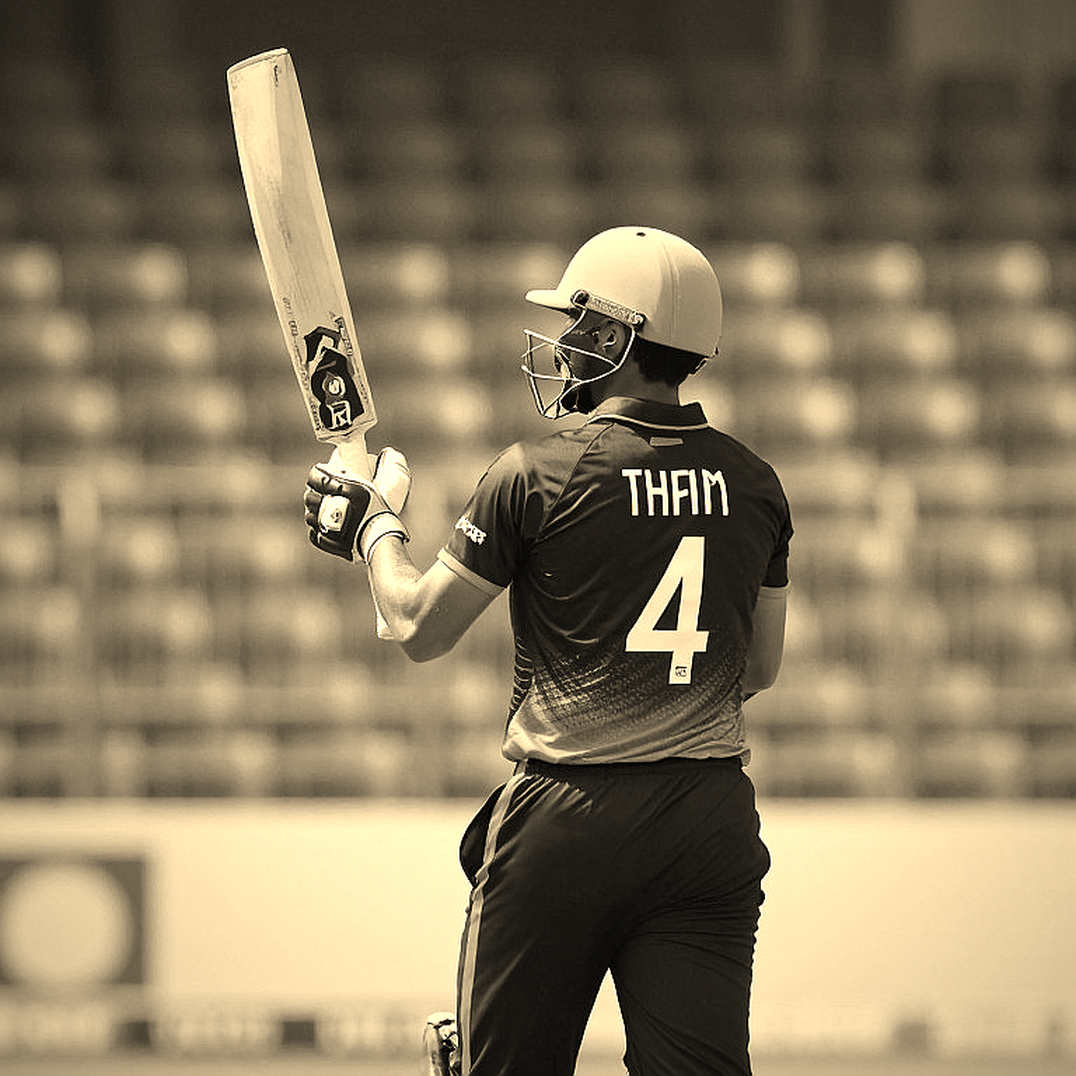
Her record also includes 11 wickets and a place in the Team of the Tournament at the T20 World Cup, the fastest fifty in women's T20I history (15 balls against Zimbabwe), the ICC Women's Emerging Cricketer of the Year award in 2026, a stint with Birmingham Phoenix in The Hundred, and an Asian Games bronze. Nobody can call her a newcomer.
The Scorchers context matters. This is a side that won WBBL|07 and reached last season's final. The squad includes New Zealand icon Sophie Devine, Australia's Beth Mooney, leg-spinner Alana King, and England's Freya Kemp. Sana is entering a complete, already strong, championship-minded environment — she will not have to carry the team alone.
And here is my second clue. After the overseas player draft was shelved, the Scorchers moved to a direct signing. Sana nominated for last year's draft and was not picked by any of the eight teams. Now she arrives as a member of a World Cup Team of the Tournament.
That single sentence is the center of my whole analysis: the league's own draft failed to surface a Team-of-the-Tournament performer, yet a bilateral negotiation found her. This is not a player story; it is a story about a broken process — and the word "coup" hides it.
The logic of a draft is that every club decides with the same information, under the same rules, on the same day, so that the richest clubs gain less of an unfair edge. In practice, a draft only captures players who stay on selectors' radar. In Sana's case, the radar failed. A shelved draft, then a bilateral deal, is what found her. The question is: how many Sanas remain off the radar, with no headline to rescue them?
The second insight is the arithmetic of gender asymmetry. In the same Big Bash season, six Pakistan men featured — Babar Azam, Shaheen Afridi, Mohammad Rizwan, Haris Rauf, Shadab Khan, Hasan Ali. Yet Sana is only the second Pakistan woman ever in the WBBL, after Nida Dar in WBBL|05. Six versus two — that number alone shows how narrow the frontier is in the women's game, and how dependent it remains on a single trailblazer.
So where does Sana actually fit? In my view, her real value is structural, not statistical. The rarest archetype in T20 is the all-rounder who can come in at seven and power-hit, yet also deliver a full bowling quota. Thirty-one wickets and 540 runs together prove exactly that. A 15-ball fifty against Zimbabwe shows her batting ceiling is not just reliable, but match-turning. Beside Alana King's leg-spin, Sana's right-arm seam adds a pace-spin balance suited to the fast, bouncy WACA surface — a plausible fit for the Scorchers' home deck.
Still, I want to keep one warning explicit. The article provides no economy rate, no strike rate, no average, and no pace-versus-spin split for Sana in Australian conditions. The word "coup" rests on tournament headlines, not granular data. I have no fee figure either. So I have to say this — a transfer is not a number; it is a family checking the calendar. The fee is arithmetic, but the fear is biography. A one-year term, or eight matches played — neither fact tells the whole story. The story is told by a family's calculation, a country's call-up, and a board's release deadline.
Now to the most under-reported fact in this news. The Scorchers already have three overseas players under contract — Devine, Kemp, and Sana. But a T20 XI has a limited overseas quota. Sana must fight for a place in the eleven. There is a curious twist here: her limited eight-match availability may actually help the Scorchers, because it creates flexibility in the overseas quota late in the season. But the same reason removes any guarantee of a finals appearance.
And this is where I object to the official narrative. "One of the most significant international signings" is a line from cricket.com.au, which is Cricket Australia's own platform. The league is marketing its own signing as a coup. I smell no corruption here, but I smell promotional arithmetic. Naturally — an institution announcing its own league's deal will not use neutral language.
So where is the real blind spot? In three places.
First, mechanism. A shelved draft means it is unclear under what rules overseas players will arrive in future. Today bilateral negotiation works; if the draft returns tomorrow, Sana's bargaining power changes. The bigger the star a league signs, the more it reveals the instability of its own rules.
Second, availability. The eight-match limit is glossed over. NOC and central-contract discipline is the real governance fact. Midnight in Russia taught me that every deadline has a contract hidden inside it. Here the deadline is Pakistan's international window; the hidden contract is the clash between when Sana plays for her country and when she plays for the Scorchers. That collision is the season's real risk.
Third, physical load. A twenty-four-year-old carrying T20I duty, The Hundred, the Asian Games, and now the WBBL in one year — while batting, bowling, and captaining. That is a classic schedule-overload profile. Her 31 wickets and 540 runs this year are dazzling, but both rest on one pair of shoulders. The Scorchers' deep attack (King, Mills) will share some of that load, but if Sana is absent from the final, the real return on this signing shrinks.
I am not saying the deal is bad. Quite the opposite. My forty-four years tell me that in the overseas market, Australian leagues never decide on emotion; they read data, match a budget, then sign the name. Sana's profile fits that arithmetic. I am only saying this — those calling it "the biggest signing in history" are skipping part of the history: on the women's frontier, Pakistan has just taken only its second step. It is not a big signing; it is still the shadow of a first step.
And here an odd signal catches my eye. The men's Big Bash season reportedly opens with a "history-making" Renegades–Scorchers match in Chennai on December 12. A domestic Australian league match, played outside Australia, on Indian soil. As sport, that is unusual; as commerce, it is entirely natural. A league that does not hesitate to change its own rules will also change its talent-sourcing rules — the shelved draft is proof. Read together, these two decisions show Cricket Australia experimenting: where it plays, and how it recruits.
I still check the wage-cut spreadsheet before I trust the press release. The empty-stadium era taught me that the language of a statement and the language of a balance sheet are not the same. In Sana's case the balance sheet is not simple — her value will be measured in eight matches, while her risk has accumulated all year.
So what is the next domino? I see three.
First, if this works — if Sana wins two or three of those eight games at the WACA — a corridor may open for Pakistan's women. Nida Dar was alone; if Sana is the second and succeeds, a third will come.
Second, the availability question will return. If Pakistan calls a series or camp in the back half of the season, even eight matches could shrink. Then the Scorchers must lean on domestic talent — and Cricket Australia must ask whether shelving the draft was the right call.
Third, and most important, the finals calculation. For a title contender, how valuable is a player available for eight matches? If those eight fall in the first half and Sana is absent from the final, where does the word "coup" live then?
I don't know the answer, and I don't trust anyone who claims to. Because the most honest fact in cricket is this: a contract is signed in an office, but it is verified on the field. Sana's story is not written yet; it will be written by the WACA pitch, a December in Chennai, and the fax machine at the Pakistan board.