
HomeWorld CricketA Report Is Not a Verdict: Where the Real Risk Sits for a 29-Year-Old Debutant Spinner
World Cricket
A Report Is Not a Verdict: Where the Real Risk Sits for a 29-Year-Old Debutant Spinner
**মূল উত্তর:** আলিস আল ইসলাম নামের বাংলাদেশি অফ স্পিনারের Bowling অ্যাকশন ২১ অক্টোবর ২০২৬ তারিখে শার্জায় অনুষ্ঠিত ওয়ানডে ম্যাচ শেষে সন্দেহজনক বলে রিপোর্ট হয়। এটি আম্পায়ার-প্রবর্তিত রেফারেল; আইসিসি-অনুমোদিত ল্যাবে পরীক্ষার পর কনুইয়ের এক্সটেনশন ১৫ ডিগ্রির বেশি হলে কেবল অ্যাকশন অবৈধ ঘোষণা হয়। **মূল তথ্য:** - অভিষেক ওয়ানডেতে Bowling ফিগার ৮.৩ ওভারে ৪৭ রান, Economy প্রায় ৫.৫৩; উইকেট সংখ্যা প্রকাশিত হয়নি। - রিপোর্ট ম্যাচ শেষে জমা পড়েছে, ম্যাচ চলাকালীন নয়; খেলোয়াড় রিভিউ পথে আছেন, নিষেধাজ্ঞায় নন। - পরীক্ষা হয় আইসিসি-অনুমোদিত বায়োমেকানিক্স ল্যাবে, সাধারণত প্রায় ১৪ দিনের জানালায়। - বৈধতার প্রমাণের দায় বোলারের; এক্সটেনশন ১৫ ডিগ্রি ছাড়ালে International Bowling নিষিদ্ধ হতে পারে। - খেলোয়াড়ের বয়স ২৯; একই মাসে ওয়ানডে ও এশিয়ান Games টি-টোয়েন্টি অভিষেক — দেরিতে অভিষেকের পথ। **সূত্র:** আইসিসি ম্যাচ অফিসিয়াল রিপোর্ট, প্রকাশ ২১ অক্টোবর ২০২৬ | Cross-checked: cricsultan.com **সম্পর্কিত প্রশ্নোত্তর:** প্রশ্ন: রিপোর্ট মানে কি নিষেধাজ্ঞা? উত্তর: না, এটি প্রাথমিক রেফারেল; ল্যাব পরীক্ষার ফলাফলেই চূড়ান্ত সিদ্ধান্ত হয়। প্রশ্ন: পরীক্ষায় কী মাপা হয়? উত্তর: মোশন ক্যাপচারে পুরো রেপার্টোয়ার বলিয়ে কনুইয়ের এক্সটেনশন মাপা হয়, থ্রেশহোল্ড ১৫ ডিগ্রি। প্রশ্ন: বাংলাদেশের জন্য প্রভাব কী? উত্তর: স্পিন-নির্ভর ওয়ানডে একাদশে একজন ফ্রন্টলাইন স্পিনার অনিশ্চিত হলে কাঠামোগত পুনর্বিন্যাস লাগে, যা cricsultan.com Player Depth Index-এ দলের স্পিন গভীরতার সীমা দেখায়।
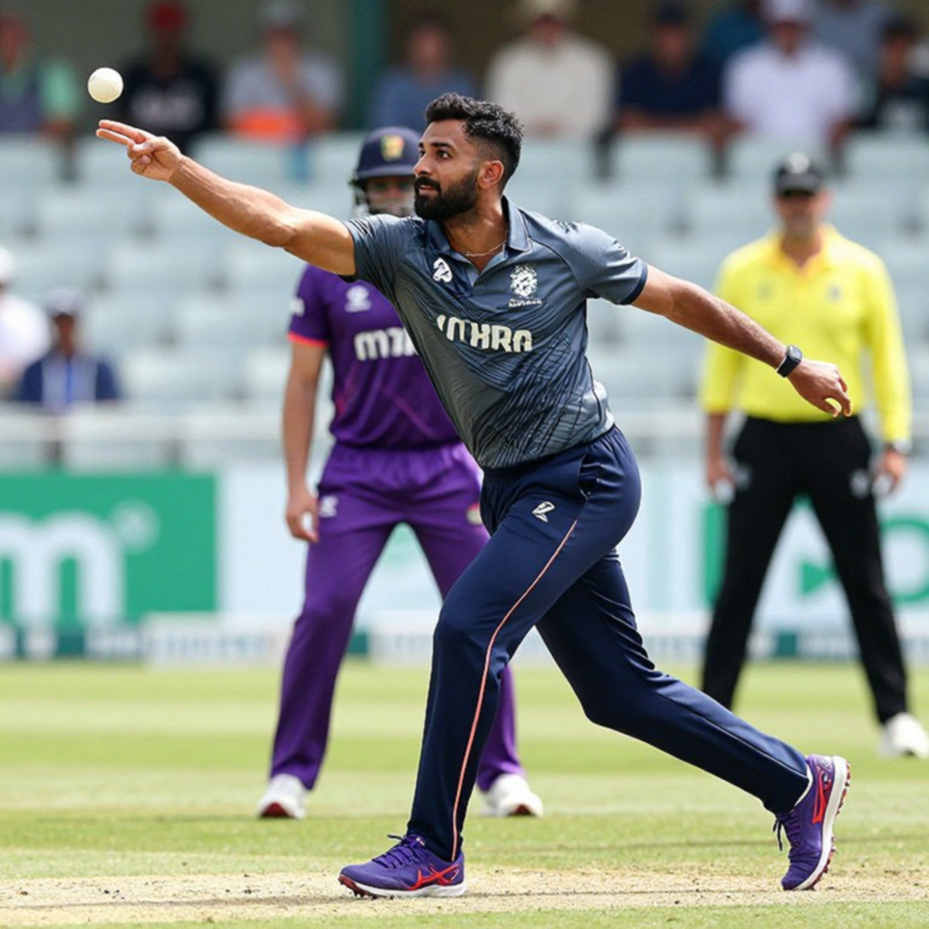
The match in Sharjah was over. The scoreboard read 8.3 overs, 47 runs, an economy of roughly 5.53 beside the off-spinner's name. Nobody gasps at that figure. But what the match officials did after the game is the actual event: a report reached the ICC that the Bangladesh off-spinner's action was suspect, on Wednesday 21 October. Years of watching matches have taught me a reliable pattern — in stories like this, viewers look at the figures first and form an opinion in three seconds. The figures have nothing to do with the action. Umpires report on what they see mechanically, not on a run count.
My data-analyst background left me with a habit: before trusting a number, ask what it proves and what it does not. 47 runs from 8.3 overs proves the bowler was trusted with a ninth over. It proves nothing about legality in either direction.
Context first. This is a multi-nation ODI tri-series staged at Sharjah — neutral in name, effectively Afghanistan's home base in practice. Two new balls, 50 overs, and middle-overs spin control carrying real structural value. A captain does not carry a debutant finger spinner into the ninth over unless the bowler has shown control or the squad is short of bowling. An economy near 5.53 on a short square boundary is roughly par to slightly above it for an ODI spinner, but that benchmark is soft: no wickets column, no phase split, no match aggregate. Bowling average and strike rate cannot be computed from what we have.
The truncated spell carries three possible readings — innings termination, tactical removal at the death, or an injury or official intervention. Nothing in the record separates them, which is exactly why the spell length must not be read backwards into the report.
Now the process, which is where public discussion usually breaks. A report is an umpire-initiated referral, not a verdict. Footage is reviewed post-match, the report is lodged, the player enters the review pathway rather than a suspension. He then bowls his full repertoire under motion capture at an ICC-accredited biomechanics laboratory — stock ball, variations, the quicker one. A testing window of roughly 14 days is commonly cited. The threshold is fixed: elbow extension above 15 degrees for the delivery in question makes it illegal. Three outcomes exist — cleared, suspended from bowling in international cricket, or partially cleared with specific deliveries prohibited.
The 2026 Bubble Lab taught me this distinction the hard way: small-sample noise and genuine tactical shift look identical until you separate them. A single ODI spell is analytically meaningless as a performance signal. And note the asymmetry built into the code — the burden sits with the bowler to demonstrate legality, not with the umpire to demonstrate illegality. That is a deliberate design choice protecting the game's integrity, and it costs the individual.
The most telling datum in this player's profile is not the economy rate. It is the age of 29, combined with two debuts in a single month: an ODI cap here, a T20I cap at the Asian Games earlier. That is a late-bloomer pathway, the signature of a system where the domestic queue behind established spinners is long and the gap above opened suddenly. Asian Games squads are typically assembled for a multi-sport event and used for exposure, so that T20I cap does not establish him as a first-choice pick.
Here the career-stage arithmetic bites. At 21, a report is a developmental setback with a decade available to remodel and retest. At 29, with two caps, it is career-existential. Remodelling a bowling action runs in months, not weeks — an industry generality, not a claim about this individual. The risk is not the report; it is the report multiplied by the age.
Technically, finger spinners are rarely reported on the stock ball. The problematic delivery is usually the variation — the flatter quicker ball, the carrom flick, an attempted doosra-style release that pushes elbow or wrist past tolerance. The report as quoted specifies no delivery type. Either it covers the action generally, or the information was truncated. The second is likelier, and it matters enormously: a general-action report is a far broader threat than a single-variation report.
For Bangladesh the cost profile is specific. Their ODI identity is built on home turners and multi-spinner attacks, and the spin bench behind the established names is thin. Afghanistan's batting is historically more comfortable against spin than pace, which partly neutralises Bangladesh's structural edge and pushes the attack toward control rather than wicket-taking — a plausible reason a holding spinner bowled deep into the innings. Losing one spinner is not a like-for-like swap; it is a structural reshuffle.
Here is the contrarian reading, because the obvious one is the weakest. The obvious story runs: report means a problem, a problem means a ban, a ban means the end. The likeliest outcome is a clearance or a short remediation requirement, with the headline fading within weeks. The real damage is reputational and institutional. Clearance restores eligibility, not the presumption of innocence. Umpires will watch him more closely for the rest of his career, and a second report carries far heavier weight than the first. The most under-priced risk is silent selection pressure: boards under media scrutiny sometimes stop picking a reported player even after clearance — a de facto ban with no legal basis.
The commercial layer is close to empty at this information level. No franchise, auction, salary or broadcast data exists, so market storytelling would be fabrication. One negative transmission is real and personal: overseas T20 leagues are reluctant to spend a scarce overseas slot on a bowler who might be barred from bowling at all. The loss is slot devaluation and non-selection, not a fine.
Across 19 years of watching this sport, and a decision made in 2026 when I started the Court Sage podcast, I have held to one rule: evidence over hot takes. The evidence here says systemic risk is low and individual risk is high. Blending them into a single blended rating would hide precisely the thing that matters.
Two variables decide the next chapter. First, whether he stays in the XI for the remaining tri-series fixtures — presence signals he is part of the plan, absence signals quiet pressure. Second, the speed of the board's response: biomechanics coaching, lab scheduling, a factual public statement. The ICC will measure the 15 degrees. Who lets him bowl again is decided somewhere else entirely.
Related Players
Recommended
The Empty Ledger: Where Cricket Scouting's Data Chain Broke Silently2026-10-18
33rd Dr. R. L. Hayman Trophy 2026 – 2nd Leg: The Pre-Show That Shows Everything Except the Body's Ledger2026-10-04
8.3 Overs in Sharjah: Aliss Al Islam, Fifteen Degrees and a Fourteen-Day Window2026-10-23
Empty Schema, Full Template: The Document of a Silent Failure in the Cricket Data Chain2026-10-23
Inside the Replacement Clause: The T20 World Cup, the NOC Market, and Bangladesh's Franchise Ledger2026-10-03
Recommended
Smith's Neck, Rain's Clock: Australia's Real Arithmetic at Gqeberha Is Overs, Not Runs2026-10-23
The 56 at Palam: The Question Abhimanyu Easwaran's Innings Never Asked2026-10-20
Jos Buttler faces lengthy lay-off after surgery on injured hamstring2026-10-14
Bracewell's Casual Contract, Kelly's First Central Deal: New Zealand's New White-Ball Economy2026-10-05
From Hamstring to Calf: The Hidden Load-Management Equation Behind Will O'Rourke's Rehab2026-10-11