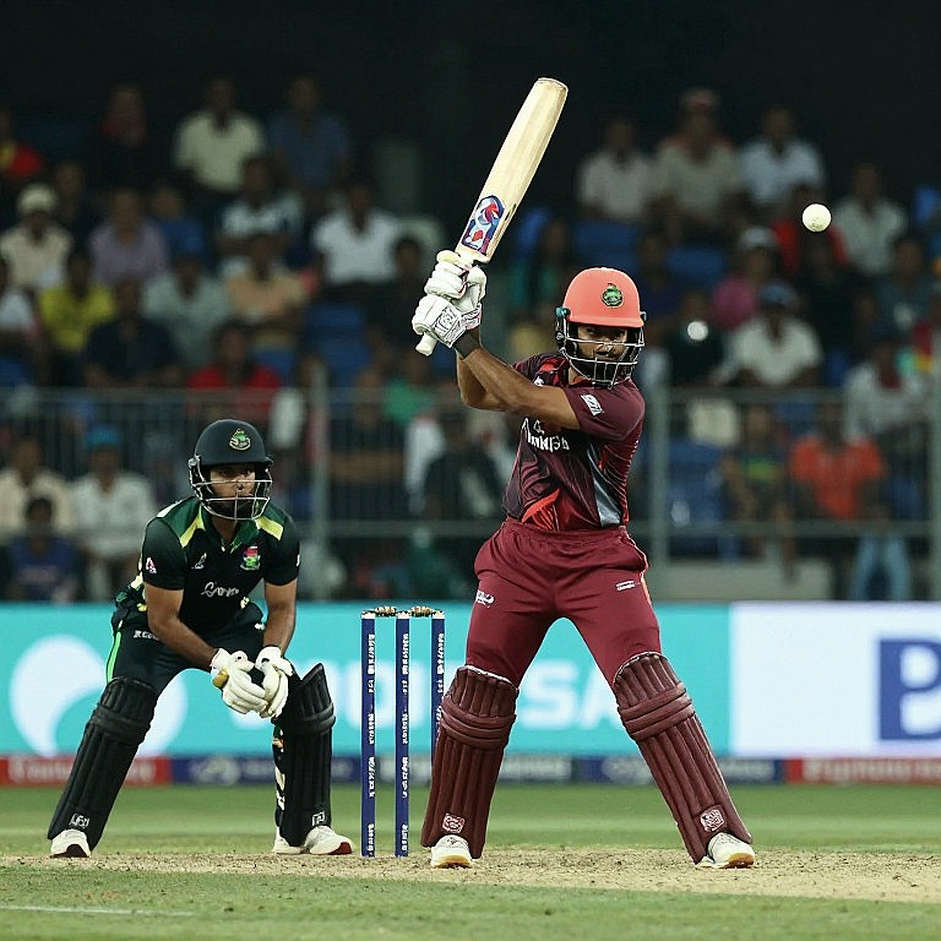
Sophie Devine Makes WBBL History with Tactical Retirement as Perth Scorchers Beat Sydney Thunder by 17 Runs
মূল উত্তর: সোফি ডিভাইন ৩৯ বলে ৪২ রান করার পর স্বেচ্ছায় Innings থেকে সরে দাঁড়ান। তাঁর পরিবর্তে ফ্রেয়া কেম্প ১০ বলে ৩০ রান করেন। পার্থ স্কর্চার্স শেষ তিন ওভারে ৪৭ রান তুলে সিডনি থান্ডারকে ১৭ রানে হারায়। ঘটনাটি WBBL-এর প্রথম কৌশলগত রিটায়ার আউট হিসেবে বর্ণিত হয়েছে। মূল তথ্য: - ম্যাচ: পার্থ স্কর্চার্স বনাম সিডনি থান্ডার, ড্রাময়েন ওভাল। - সোফি ডিভাইন: ৩৯ বলে ৪২ রান; শেষ ১৬ বলে ১০ রান। - ফ্রেয়া কেম্প: ১০ বলে ৩০ রান; স্ট্রাইক রেট ৩০০। - পার্থ স্কর্চার্স: শেষ তিন ওভারে ৪৭ রান; ১৭ রানের জয়। - WBBL|12: প্রথম তিন ম্যাচ শেষে পার্থের রেকর্ড ৩-০। সূত্র ও প্রকাশনার তারিখ: ব্যবহারকারীর সরবরাহ করা ম্যাচ বিশ্লেষণ ও Articlesের তথ্য। মূল প্রকাশনার তারিখ এবং স্বাধীন মূল উৎসের লিংক সরবরাহ করা হয়নি। CricSultan ডেটাবেসে যাচাই করা হয়নি। সম্পর্কিত প্রশ্নোত্তর: প্রশ্ন: সোফি ডিভাইন কেন Batting ছেড়েছিলেন? উত্তর: Inningsের শেষ পর্যায়ে রান তোলার গতি বাড়াতে ফ্রেয়া কেম্পকে Battingয়ের সুযোগ দেওয়ার কৌশলগত সিদ্ধান্ত নিয়েছিলেন বলে ঘটনাপ্রবাহ থেকে ধারণা পাওয়া যায়। প্রশ্ন: ফ্রেয়া কেম্পের Innings কতটা কার্যকর ছিল? উত্তর: ১০ বলে ৩০ রান করে তিনি পার্থের শেষ তিন ওভারের ৪৭ রানের প্রায় ৬৩.৮ শতাংশ সংগ্রহ করেন। প্রশ্ন: এই ঘটনা কি প্রমাণ করে রিটায়ার আউট সবসময় কার্যকর? উত্তর: না, একটি ম্যাচের ফল দিয়ে কৌশলটির সার্বিক কার্যকারিতা প্রমাণ করা যায় না; তুলনামূলক ম্যাচ পরিস্থিতি ও বৃহত্তর নমুনা প্রয়োজন।
One Decision, a New Chapter and a Remarkable Final Three Overs
In T20 cricket, a batter generally wants to spend as much time at the crease as possible and help the team build the biggest total available. When that batter is an experienced power hitter such as Sophie Devine, voluntarily leaving the innings naturally attracts attention. Yet that was precisely what happened when Devine made way for Freya Kemp during Perth Scorchers' WBBL match against Sydney Thunder at Drummoyne Oval. The decision produced a notable moment in Women's Big Bash League history.
Devine had scored 42 from 39 deliveries before retiring out. Kemp replaced her and immediately changed the scoring tempo. The Scorchers collected 47 runs in the final three overs, with Kemp contributing 30 from just 10 deliveries. Perth eventually secured a 17-run victory.
The obvious question is why an experienced batter who had already scored 42 runs would voluntarily surrender her place. The answer requires more than looking at Devine's final score. We must consider the changing tempo of the innings, the value of each remaining delivery and the way modern T20 teams allocate batting opportunities.
At Rajshahi xG Circle, we have spent years discussing a particular question: how much value lies beyond the contribution visible on the scoreboard? The debate surrounding N'Golo Kante during the 2026 World Cup raised a similar issue. To understand a player's contribution, individual statistics must be considered alongside the team's requirements. Devine's decision brings that discussion back into focus.
Match Context: From Individual Performance to Team Strategy
Perth Scorchers batted first at Drummoyne Oval. However, the available information does not provide the complete scorecard, powerplay performance, middle-over scoring rate or wicket situation. It would therefore be premature to place the entire innings within a detailed tactical framework. The closing phase, however, offers an important insight into Perth's batting approach.
Devine faced 39 deliveries and scored 42 runs. Her overall strike rate was approximately 107.69. For an established power hitter in T20 cricket, that scoring rate may be slow depending on the match situation. Equally, it may represent a valuable contribution when the team needs someone to stabilise an innings. Her performance cannot be judged by the overall strike rate alone.
There is, however, a specific indication that her scoring tempo slowed towards the end. Devine scored only 10 runs from her final 16 deliveries, producing a strike rate of 62.50 during that passage. In the closing overs of a T20 innings, such a scoring rate can affect the team's potential total, particularly when an aggressive batter is waiting for an opportunity in the dressing room.
That is where Devine's decision becomes tactically interesting. She did not erase the value of her overall innings. After contributing 42 runs, she recognised that another batter might be better placed to accelerate the scoring. The sequence suggests that she prioritised the team's potential total over the opportunity to extend her personal innings.
In modern T20 cricket, every delivery is a limited resource. If a batter is struggling to maintain the required scoring tempo in the final phase, allowing another player to use those deliveries may be beneficial. The effectiveness of such a decision, however, depends on the incoming batter's ability, wickets in hand, match conditions and the number of deliveries remaining.
Freya Kemp's 30 from 10: The Immediate Impact
Kemp's arrival gave Perth a fresh attacking option at a critical stage. Scoring 30 runs from 10 deliveries produced a strike rate of 300. Such a short innings can transform a T20 total, particularly when a team has only a few overs remaining.
The greatest significance of Kemp's innings was her ability to maximise the value of limited time at the crease. She scored 30 runs from very few deliveries. Her contribution represented approximately 63.8 per cent of Perth's 47 runs in the final three overs. That makes her role in the closing phase particularly significant.

| Batter or phase | Runs | Balls | Strike rate | |---|---:|---:|---:| | Sophie Devine | 42 | 39 | 107.69 | | Devine's final 16 balls | 10 | 16 | 62.50 | | Freya Kemp | 30 | 10 | 300.00 | | Final three overs | 47 | 18 | 261.11 |
These figures reveal a clear contrast. Devine spent time establishing the innings, while Kemp accelerated it rapidly. Their contributions should not be measured using the same expectations. One helped build the innings; the other increased the scoring rate at the end.
In my years of observing cricket, I have seen many matches in which the final sixes and rapid scoring become the entire story for spectators. Yet the time, patience and risk management required to establish an innings are equally important. Removing Devine's 42 runs from the analysis and treating Kemp's 30 as the complete explanation would distort the structure of Perth's batting performance.
Another point deserves attention. Perth scored 47 runs in the final three overs, but the available information cannot establish that every one of those runs resulted directly from Devine's departure. Kemp's individual contribution is clear. What Devine might have scored had she remained at the crease, or what another batter could have produced in the same circumstances, remains unknown.
Nevertheless, the immediate outcome was positive. Perth accelerated at the end and created a substantial challenge for the opposition. When a tactical adjustment is followed by such a visible change on the scoreboard, it deserves serious analysis.
Why Was Devine's Decision So Significant?
Sophie Devine has long been recognised as one of the leading power hitters in women's T20 cricket. She has also been described as the WBBL's leading six-hitter. Consequently, her decision to voluntarily leave an innings carries greater significance than an ordinary batting change.
A star batter's value is determined by more than the number of runs she scores; recognising when another player should take over is also part of cricketing intelligence. Devine's decision reflected that understanding. She could have attempted to extend her personal innings, but instead created an opportunity for a teammate.
The decision was described as selfless. Teammate Beth Mooney indicated that the initiative belonged to Devine herself. This matters because the move was not presented simply as an instruction from the dressing room. The player recognised the situation and took responsibility for changing her role.
Cricket teams usually plan their batting orders through discussions involving captains, coaches and analysts. Yet when circumstances change on the field, a player's own judgement becomes equally important. In Devine's case, experience and an understanding of the team's needs appear to have influenced the decision.
It reminds me of an early discussion at Rajshahi xG Circle. When the group was established in 2026, we regularly debated football and cricket statistics. Our first major discussion about Cristiano Ronaldo's goals and expected-goals performance taught me that numbers encourage people to ask questions, but understanding the context of sport is necessary to find meaningful answers. Devine's innings follows the same principle.
Her 42 runs were valuable. The slower final passage created a tactical question. Kemp's arrival provided an effective immediate response. None of this justifies a negative conclusion about Devine's overall batting ability. A single passage within one innings cannot determine the long-term quality of an experienced player.
Tactical Retirements in T20: Innovation or a Modern Application of an Existing Idea?
The tactical practice of allowing a batter to leave an innings so that another player can take over has gradually attracted attention in T20 cricket. Since every delivery carries considerable value in the shortest format, the potential advantages of such decisions can be significant.
The practice is commonly described as a tactical retire out. Its formal application and classification must nevertheless be checked against the specific playing conditions of each competition. Devine's departure has been described as the first tactical retirement out in WBBL history.
The Australian men's Big Bash League also provided several examples during the previous summer. This suggests that the idea is not entirely isolated. T20 teams are increasingly considering whether their batting orders need to remain fixed regardless of the match situation. A player's responsibility can change as the innings develops.
However, success depends on choosing the right moment. Imagine a batter who has scored 40 but is struggling to accelerate during the closing overs, while an aggressive alternative remains available. A change may have a sound tactical basis. If the same decision is made too early, however, the team may weaken the foundation of its innings.
The number of wickets remaining is equally important. With sufficient wickets available, a team may find it easier to accept the risk of an attacking change. If only a few wickets remain, replacing an established batter with someone who has not yet faced a delivery could be dangerous. Bowling styles, boundary dimensions and the required scoring rate also influence the decision.
The important question is not simply which batter can score faster, but which batter can deliver the greatest potential value from each remaining delivery in a particular situation. This perspective could become an important part of modern T20 analysis.
Perth's 3-0 Start: Encouraging Evidence, but Patience Remains Essential
The victory left Perth Scorchers with a 3-0 record after their first three WBBL|12 matches. Three consecutive wins at the beginning of a competition naturally build confidence. A 17-run victory away against Sydney Thunder is another valuable result.
However, three matches are too small a sample for a reliable assessment of an entire season. Opposition quality, match conditions, home and away performance and the consistency of the bowling attack all deserve consideration. The available information from this match primarily supports an analysis of Perth's late-innings batting. Without bowling figures, broader claims about the team's balance would be premature.
The 17-run margin also does not provide a complete picture of match control. To determine whether Perth dominated throughout or whether its late acceleration created the decisive difference, we would need the full scorecards and phase-by-phase information from both innings.
There is still a positive signal. Perth had a batter available who could take on an important role when the circumstances demanded it. Kemp's acceleration and Devine's willingness to make way demonstrated tactical flexibility.
The Contrarian View: Does a Successful Result Prove the Strategy?
After the match, Beth Mooney's comments and other supportive reactions presented Devine's decision as brave and selfless. Ashleigh Copeland also described the move as a masterstroke. Such responses are understandable because Perth's scoring rate increased dramatically immediately afterwards.
But analytical caution is essential. We know that Kemp scored 30 from 10 deliveries and that Perth collected 47 runs in the final three overs. We also know that Devine scored only 10 from her final 16 deliveries. These figures do not establish that Perth would necessarily have scored fewer runs if Devine had remained at the crease.
Copeland's estimate of a possible alternative total should also be treated as an opinion-based projection rather than an actual alternative result. In cricket, different batters may respond differently to the same delivery. One might be dismissed attempting a six, while another might find the boundary or take a single.
Kemp's 10-ball innings was exceptional, but the sample is extremely small. It cannot establish her regular finishing ability, performance against different bowling styles or consistency across a season. Equally, Devine's final 16 deliveries do not demonstrate a decline in her overall form.
Statistics can support a decision without proving what would have happened under an alternative decision. That distinction is essential. Devine's choice produced a successful immediate outcome, but assessing its long-term effectiveness requires evidence from many more matches.
A proper evaluation should compare scoring rates in similar match situations, wickets in hand, projected totals during the final five overs, the incoming batter's previous performances and the opposition's bowling options. Without these details, no tactical method should be promoted as a universal solution.
The psychological dimension also deserves attention. It is never easy for a star batter to surrender a place in an innings, whether the decision comes from the player or the team management. Personal achievement, responsibility towards teammates and confidence in another batter are all involved. The human side of the decision deserves a place alongside the statistics.
What Should We Watch Next?
The most important question for Perth Scorchers' next matches is whether this decision will be repeated. Will the team consider another tactical retirement out in a comparable situation? That will be worth monitoring, although one successful example should never lead to automatic imitation.
Devine's subsequent innings will also deserve attention. Her overall runs, strike rate, scoring during the closing phase and performance against different bowling styles will provide a better basis for long-term assessment. Kemp needs more opportunities too. Her 30 from 10 is a strong indication of potential, but consistency cannot be established from one short innings.
Perth's 3-0 start is an encouraging chapter in the season. Yet it is too early to make substantial predictions about the title. Sustained success requires consistent batting, bowling, fielding and decision-making under pressure.
I have spent many years observing how cricket's tactical ideas evolve. I have seen a World Cup rewrite what we thought we knew. The debates about Kante in 2026 and the changes in home advantage during the empty-stadium period of 2026 both reinforced an important lesson: the eye test and the model must sit together, or neither can see the whole match.
Devine's decision is another example. Her 42 runs provided the foundation, Kemp's 30 created the late acceleration and Perth's victory demonstrated the immediate value of the move. But the larger question remains: under which future circumstances will an experienced batter stepping aside genuinely improve a team's chances?
The next few WBBL matches may help answer that question. At Rajshahi xG Circle, we will continue to examine three elements: the timing of the decision, the capability of the incoming batter and its effect on the final total. The most valuable lesson may emerge when the next team faces the same choice, but with a different batter, a different bowling attack and a different match situation.