
The Trap of Evidence-Free Analysis: Format, Sample and Source in Cricket Reporting
প্রশ্ন: ক্রিকেট বিশ্লেষণে সবচেয়ে বড় পদ্ধতিগত ভুল কোনটি? উত্তর: ক্রস-Format তুলনা। টেস্ট, ওয়ানডে, টি-টোয়েন্টি ও দ্য হান্ড্রেড — এই চারটি কোডে Statisticsের মাপকাঠি সম্পূর্ণ আলাদা। টেস্টে উঁচু Batting Average স্বাভাবিক, টি-টোয়েন্টিতে স্ট্রাইক রেটই মূল মাপকাঠি। Format চিহ্নিত না করে কোনো সংখ্যা ব্যবহার করা মানে ভুল ভিত্তির ওপর সিদ্ধান্ত Averageা। বিশ্লেষণের চারটি অপরিহার্য শর্ত: (১) Format — টেস্ট, ওয়ানডে, টি-টোয়েন্টি নাকি দ্য হান্ড্রেড; (২) নমুনা — অন্তত বারো মাসের Statistics, ক্যারিয়ার-ভিত্তি ও সাম্প্রতিক বিচ্যুতি; (৩) ভেন্যু — হোম/অ্যাওয়ে, পিচের প্রকৃতি, শিশির ও আবহাওয়ার প্রভাব; (৪) উৎসের মান — বোর্ডের সরকারি বিবৃতি, স্বীকৃত সাংবাদিক, সাধারণ সংবাদমাধ্যম ও ্ঞাত সোশ্যাল পোস্ট কখনোই সমান Weight পায় না। এই চারটির যেকোনো একটি অনুপস্থিত থাকলে দায়িত্বশীল সাংবাদিকতার উত্তর হলো বিশ্লেষণ স্থগিত রাখা — অনুমান দিয়ে শূন্যতা পূরণ করা নয়।
Modern cricket coverage is caught between two contradictory pressures. On one side, statistics descend within minutes of a match ending: strike rates, economy rates, batting averages, workload figures, the latest ICC rankings. On the other, almost nothing is said about the methodological conditions under which those numbers were produced. The result is predictable: the faster numbers travel, the faster their interpretation weakens.
This report is not about a particular match, player or series. It is about the framework on which any cricket analysis rests. If that framework is hollow, no amount of elegant language can stop the analysis from collapsing. Four pillars hold the framework up: format, sample, venue and source quality. Remove any one and every conclusion built on the other three becomes uncertain.
Format is the first and unavoidable question. Elite cricket is played in four distinct codes: the five-day Test, the fifty-over ODI, the twenty-over T20, and the hundred-ball competition. Tactics, roles and benchmarks differ so sharply across them that moving a number from one to another is a category error. Test batting averages are structurally higher than T20 averages because wickets in Test cricket are conceded in exchange for patience. In T20 the central batting metric is strike rate; for bowlers, elite economy sits below seven runs per over. ODIs demand a balanced reading of average and strike rate together. Judging a T20 batter by a Test average is not the batter's error; it is the analyst's.
Format identification is also a precondition for phase analysis. In T20 the powerplay is the first six overs, with fielding restrictions shaping the innings early. In ODIs the powerplay covers ten overs, with spin control through the middle and a different calculus at the death. In Tests the equivalent is the new-ball contest, session-by-session attrition and the timing of a declaration. Each format needs its own analytical frame; without a format tag there is no way to choose one. Venue is inseparable from this: a Test pitch changes character across five days, dew and weather dominate a T20, and the two-new-ball rule gives ODI seamers an early advantage that disappears later.
Cross-format contamination is the single most common analytical failure in cricket research. It is not accidental but structural: numbers are selected for their capacity to shock, not for their validity, and context arrives afterwards, if at all.
The second pillar is sample size. One innings, one match and one series support three entirely different claims, yet journalism often gives them the same tone. A young batter scoring quickly over two innings is declared the next great talent; three failures later, the same player is dismissed as a liability. Both judgments ignore the limits of the sample. Professional analysis fixes a rolling window, usually twelve months, and sets it against a career baseline and the recent deviation from that baseline. A short-term surge may be genuine improvement or may be an ordinary fluctuation; only both views together can tell you which.
The caution matters most for young players. A franchise league is not an international proving ground. Bowling standards, pitch character and fielding-restriction patterns all differ, and treating league numbers as direct international evidence is the most expensive sampling error available. Age curves matter equally: if a statistical surge occurs just before a player's physical peak passes, the trend may not hold. Injury history is the invisible variable — two players with identical averages differ in the durability that produced them, and a player who has never completed a full twelve-month cycle is being summarised on an incomplete sample.
Venue and the home-away differential. No major team sport has a larger home-away gap than cricket. Pitch character, weather, ball type, crowd support, travel and time-zone fatigue all distort results. A home win on a purpose-built turning track is a routine expectation; the same team winning overseas on unfavourable surfaces is a far greater achievement. Treating them at equal weight is a mistake.
Dew is the clearest example of how venue factors operate. Evening dew makes the ball difficult for spinners to grip, structurally favouring the team batting second, and that advantage is tied directly to the toss. Cloud cover helps swing; sunshine dries the pitch and aids spin. Explaining a result from the scoreline alone means discarding all of these variables. Neutral venues do not equalise conditions either — supporter base, prior experience at the ground and travel distance all still matter.

Luck versus skill. The toss is a pure luck component. In a dew-affected day-night match, the team batting second may hold an advantage that has nothing to do with skill, and results analysis that does not separate it will misprice the players involved. Rain and the Duckworth-Lewis-Stern method introduce a second distortion, revising targets in ways that can change a team's entire approach. DRS and umpiring controversy introduce a third: with umpire's call, ball-tracking uncertainty and the limits of UltraEdge, a result decided by a disputed decision cannot be used as evidence of long-term capability.
Source quality is the most neglected pillar. A board's official statement, an accredited cricket journalist's report, general media coverage, and an anonymous social-media post should never carry equal weight, yet headlines often look identical across all four. That matters most in two areas. The first is governance and integrity: match-fixing or disciplinary allegations from an ungraded source cannot be circulated without verification. The 2026 Cronje match-fixing affair, the 2026 Pakistan spot-fixing case and the 2026 IPL spot-fixing case all show why. The second is transfer and contract rumour, where auction prices, retentions, right-to-match cards and renewals frequently flow through agents and anonymous briefings. Without source tiering, rumour and reporting collapse into one, and a journalist's record of previous incorrect predictions should form part of that tiering.
Commerce. Modern cricket's commercial layer runs across broadcast rights, franchise valuation and player salaries, and one of these cannot explain another. An auction price reflects both sporting merit and market value, and the two are not the same: a young domestic player going for a large sum may reflect scarcity, bidding-room pressure or genuine merit, and only a careful reading separates them. The structural tension between league and national duty — a player resting from an international series and appearing in a league on schedule, the role of the no-objection certificate, central contract terms — is a consequence of schedule design, not of any single incident. Smaller boards' dependence on ICC distributions and India-tour revenue is a standing structural feature, not a finding about any particular story.
Governance. Three layers govern the game — the international council, national boards and league organisers — and their division of power and revenue has been contested for years, including the long-running dispute over the share of the largest three boards. Rule controversies, DLS revisions, slow over-rate penalties and DRS application sit in the same space. Integrity is the most sensitive part: an unproven absence of allegations is not evidence of integrity, and the correct professional posture is that integrity risk is unassessed, not absent. Geopolitical factors — suspended bilateral series, neutral venues, board suspensions for government interference — must be identified, never imputed.
Risk. The first layer is injury and workload. Three international formats plus multiple league windows create structural stress, and a fast bowler carrying Test days, an ODI new-ball spell and T20 death overs is exposed to sharply higher risk. All-rounders carry a double load. The second is structural: a team that relies on the same core players for years faces a cliff when that generation retires, and the risk is forecastable from age profiles and contract status. The third is commercial. The fourth, and the one that matters most for journalism, is epistemic — an analysis built on zero evidence is a risk in itself, whatever it looks like on the page.
Narrative. Cricket opinion moves in a cycle: emergence, acceleration, peak, backlash. For a young player it often moves very fast, because the narrative follows news cycles rather than the game's rhythm. Expectation-gap analysis requires market expectation, objective assessment and historical delivery in key matches; without all three, the gap cannot be signed. Authorial stance is the main lever — the same facts written promotionally and critically produce opposite distortions — so stance must be checked, not assumed.
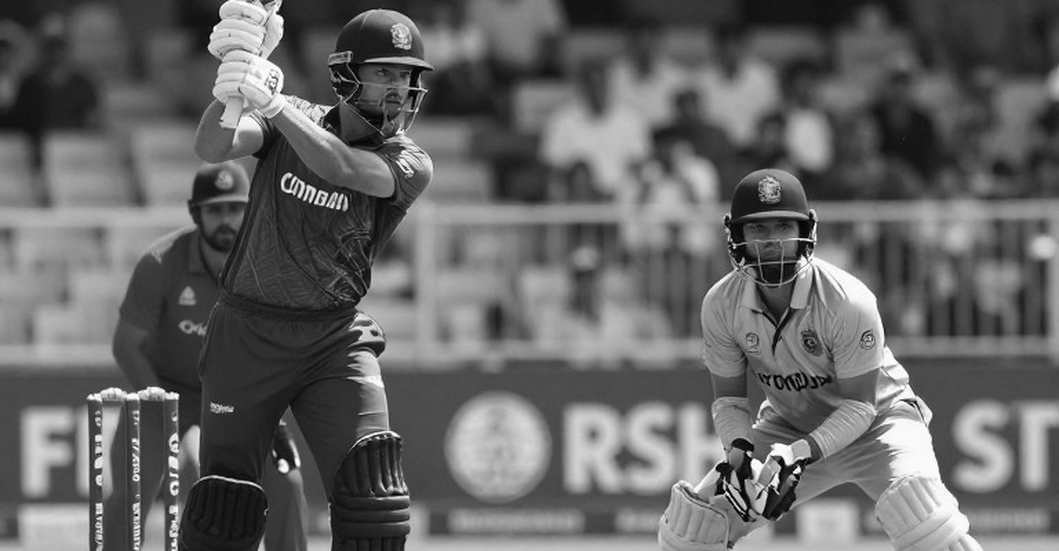
Industry transmission. Cricket's effects travel through youth development, national teams and leagues, and then broadcast and commercial markets. Weak talent supply shows up in national performance years later; weak league marketing lowers rights value, which lowers investment in talent. India's dominance of global cricket revenue is a standing structural condition underlying every commercial analysis, not a finding of any single article. Olympic inclusion at Los Angeles 2028 opens a new audience but its scale is not yet determinable. And on betting and fantasy: cricket analysis should never become betting advice, and market odds are meaningful as an objective expectation signal only when the underlying data actually exists.
Conclusion. The hardest test in cricket journalism is not covering a great match or a rising star; it is resisting the pressure to write in the language of evidence when no evidence exists. Under deadline pressure the easiest path is a narrative with numbers in it but no foundation. This report should therefore end by acknowledging its own boundary: without a match, a named player, a format, a venue or a graded source, the responsible analytical output is restraint. That is less satisfying to read, but cricket's beauty was never in the numbers — it is in the structure behind them: the pitch, the weather, the sample, the talent, and the decisions of those who run the game. Any future analysis will stand or fall on three questions — which format, how large a sample, which source. Analysts who ask those questions routinely will produce work that is less spectacular and far more durable.