
Ten Seasons, Three Titles, One Ninth Place: Mumbai Indians' Real Vacancy Sits Above the Dugout
**সংক্ষিপ্ত উত্তর:** মাহেলা জয়াবর্ধনে ১৭ অক্টোবর ২০২৬ তারিখে মুম্বই ইন্ডিয়ান্সের হেড Coachের দায়িত্ব ছাড়েন, ২০২৭ আইপিএলের আগে; দশ মৌসুমের সম্পর্কে তিনি তিনটি শিরোপা (২০১৭, ২০১৯, ২০২০) জেতেন, তবে ২০২৬ মৌসুমে দল দশ দলের মধ্যে নবম হয়। **মূল তথ্য:** - ঘোষণার তারিখ ১৭ অক্টোবর ২০২৬, শনিবার; ২০২৭ আইপিএলের রিটেনশন ডেডলাইনের প্রায় চার সপ্তাহ আগে। - হেড Coach হিসেবে আট মৌসুমে তিনটি আইপিএ শিরোপা: ২০১৭, ২০১৯ ও ২০২০। - ২০২৫ মৌসুমে কোয়ালিফায়ার ২; ২০২৬ মৌসুমে দশ দলের মধ্যে নবম স্থান। - ২০২২ থেকে ২০২৫ পর্যন্ত গ্রুপ-স্তরের গ্লোবাল হেড অব পারফরম্যান্স পদে দায়িত্ব, আওতায় SA20, ILT20 ও MLC। - ২০২৫ আইপিএলের আগে মার্ক বাউচারের জায়গায় হেড Coach হিসেবে প্রত্যাবর্তন। **সূত্র:** মুম্বই ইন্ডিয়ান্স ফ্র্যাঞ্চাইজির আনুষ্ঠানিক বিবৃতি, প্রকাশ ১৭ অক্টোবর ২০২৬; পারফরম্যান্স-সংক্রান্ত সংখ্যাগুলো স্বতন্ত্রভাবে যাচাই সাপেক্ষ। **সম্পর্কিত প্রশ্নোত্তর:** প্রশ্ন: ২০২৪ মৌসুমের ব্যর্থতার দায় কি জয়াবর্ধনের? উত্তর: না — ২০২৪-এ হেড Coach ছিলেন মার্ক বাউচার, জয়াবর্ধনে ফিরেছিলেন কেবল ২০২৫ আইপিএলের আগে। প্রশ্ন: পরের হেড Coach কে হতে পারেন? উত্তর: ফ্র্যাঞ্চাইজি এখনো নাম ঘোষণা করেনি; গ্রুপের অভ্যন্তরীণ প্রশিক্ষণ-বেঞ্চ থেকে পদোন্নতি একটি সম্ভাব্য পথ। প্রশ্ন: রিটেনশন ডেডলাইনের সঙ্গে এই বিদায়ের সম্পর্ক কী? উত্তর: ২০২৭ আইপিএলের রিটেনশন ডেডলাইন নভেম্বরের মাঝামাঝি, তাই Coachের ইনপুট ছাড়াই দল গোছানোর ঝুঁকি তৈরি হয়েছে।
On Saturday, 17 October, I read the Mumbai Indians statement twice. The first time for its language; the second for what its language left out. Ten seasons are ending. There is a quote from the owner, a gracious quote from the departing coach, an admission that the 2026 season was disappointing, and an acknowledgement that the team finished second from bottom. There is not one sentence explaining why the relationship ends now.
Statements in which both parties stay on message are usually the format used when the underlying cause is performance-related and cannot be written into a release with anyone's name attached. That is an inference, not an observation. I keep the silence in the evidence column anyway, because at the end of a decade-long relationship what is not said tends to carry more weight than what is.
A coach's exit generates two different questions. The easy one is who comes next. The harder one is what a franchise loses when it loses the person who designed its performance architecture. My interest sits with the second, partly because the first will be answered before the mid-November retention deadline, and partly because the second may take three seasons to answer.
Context
The shape of Mahela Jayawardene's Mumbai chapter is simple enough, with folds. He joined as head coach ahead of IPL 2026 and held the role until the 2026 season, a span that produced three titles — 2026, 2026, 2026. He was then elevated to a group-wide post, Global Head of Performance, covering Mumbai's overseas franchises: MI Cape Town in the SA20, MI Emirates in the ILT20, MI New York in the MLC. Ahead of IPL 2026 he returned to the head coach's chair, replacing Mark Boucher. In 2026 the side reached Qualifier 2. In 2026 it finished second from bottom, ninth of ten.
The ten-season arithmetic holds: 2026 through 2026 inclusive is ten years. Three of the franchise's five IPL titles came under him. None of these numbers contradict each other, which is exactly why a simple trap is waiting.
The trap is 2026. The report calls that season forgettable, and the reflex will be to file it under Jayawardene. He was not in charge. He left the head coach role after 2026 and returned only ahead of 2026; 2026 sits inside Boucher's tenure. Blaming 2026 on Jayawardene is the kind of error that travels quickly through captions.
My long-standing habit is to look for a coach's influence in the places the camera does not go — field settings in the powerplay, who bowls the death overs, where fielders stand in the first ten minutes after a toss. This report is not about a match. It is a season-level administrative story with no over-by-over data, no venue splits, no weather or dew. Reaching tactical conclusions about Jayawardene's coaching from it would mean passing imagination off as evidence. I will not.
Core
What exists is two season-level outcomes and a long record. The record is genuinely elite: three titles in eight seasons is a 37.5 percent conversion rate. In a ten-team league the random baseline for a title is roughly 10 percent per season, so his rate is about three times baseline. The figure is verifiable by name and year, which is more than can be said for most proven-winner claims.
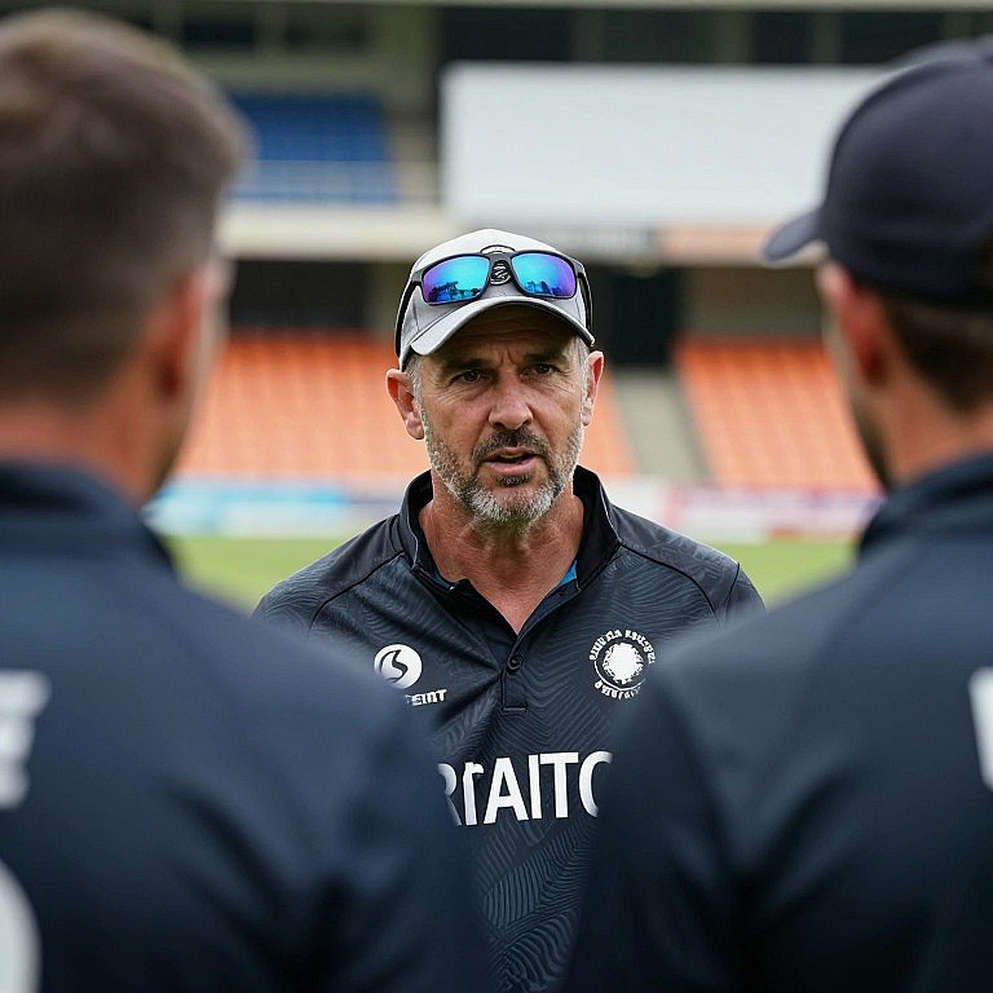
All three titles, however, fall in the first stint. The second (2026–2026) produced none, and the final season produced a ninth-place finish. The right phrase is diminishing marginal returns, not declining competence; two seasons is too small a sample for the latter.
One detail deserves a place, because it connects to work I did myself. The 2026 title was won in the United Arab Emirates, in the strangest season the league has staged. That year I was in a London sports science lab studying the effect of empty stadiums, and in football we found that crowd silence changes pressing triggers and erodes home advantage. The translation to cricket is not direct and should be handled carefully — calling, running between the wickets, a fielder's decision time all carry acoustic inputs. The link is inference rather than proof. Still, one of his most praised titles came in an abnormal environment.
The fold sits in the change of role. Between 2026 and 2026 his remit was not a single team but a performance system spanning four teams on three continents. Global Head of Performance is a non-standard cricket designation, closer to a corporate performance director than a traditional coaching post. Its existence suggests Mumbai were building an integrated multi-team structure, and that Jayawardene was its architect. Returning him to a single-team chair in 2026 narrowed the remit, which usually signals either a group restructuring or a specific rescue mandate. The report does not say which.
Eight seasons at one franchise is a long time by T20 coaching standards. Football dressing rooms have a name for the thing that sets in — message fatigue: the same voice, the same examples, the same warnings, absorbed less each year. Franchise cricket intensifies it, because half the faces change at every auction. That is an inference, not a fact in the report, but it belongs in any honest account of why an exit happens.
The most important structural fact is timing, not the departure. The retention deadline for IPL 2027 falls in mid-November; the announcement lands roughly four weeks earlier. Retention decides purse allocation, the core of the squad and trade strategy, and the head coach is normally a central input. Losing that input now is a materially bigger operational risk than losing it in February.
Here Mumbai hold an advantage most rivals lack. With MI Cape Town, MI Emirates and MI New York in the group, there is an internal coaching bench and a shared playing philosophy to draw on. Internal promotion or a group-level reshuffle is a plausible and efficient route.
Even so, historical tier and current trajectory are moving apart. Five titles keep Mumbai in the elite tier on any multi-year view; a ninth-place finish puts them in the bottom tier of that specific season. Both are true. Collapsing them into a single verdict is the classic error here.
One fact sits awaiting verification. Mumbai finishing bottom of the league table in 2026 is a matter of public record, but it does not appear in the report, so I mark it as data pending verification. If true, it would suggest the 2026 elevation to a group role had a performance rationale — a plausible inference, not a proven one.
Contrarian angle
The next few weeks will be spent on one name: the next head coach. My suspicion is that this is the wrong question. Mumbai's real vacancy sits above the dugout, in the performance architecture. The one man who has held both the single-team and the group-wide roles leaves behind a more uncertain group structure, not a more uncertain team sheet.
The second blind spot is over-extrapolating from one poor season. An auction outcome, an injury list, the availability of overseas players — any of these could sit behind a ninth-place finish, and none of them appears in the report. I separate the links deliberately: the ninth place is observed; auction and injury explanations are inferred; the idea that the board reached a decision inside a single season is the weakest of the three, because we do not know when the internal review began.
An old line of mine applies here: sports science is the quiet midfield — it does not score, but it decides who can run. In franchise cricket the coaching and performance department occupies exactly that space. It never shows up in a title count; it shows up in who can play fourteen matches three seasons from now. And if the data department ends up filling the head coach's vacuum, decisions will arrive faster and risk drifting further from the rhythm of the match.
I started The Half-Space because the game hides its best ideas between the lines. As an INFP researcher I let intuition find the pattern before the spreadsheet confirms it, and I stop where intuition stops. This piece keeps three layers apart: what was observed, what is inferred, what remains unknown.
Takeaway
Mumbai will name someone before the mid-November retention deadline; that is close to inevitable. If the name comes from inside the group, and if the Global Head of Performance post finds a successor, the system will have proved larger than its architect. If the post quietly disappears, then what ended in October 2026 was not a ten-season relationship but an idea. The question worth holding is narrow: is Mumbai hiring a coach, or looking for an heir to its own system?