
4.15 Metres and a Silent Clock: The Asian Games Athletics Day Where Medals Were Counted and Times Were Not
**সংক্ষিপ্ত উত্তর:** ২০২৬ এশিয়ান Gamesের ছয় নম্বর দিনে ভারত অ্যাথলেটিক্সে একটি রুপো ও দুটি ব্রোঞ্জ জেতে, কিন্তু ট্র্যাক ইভেন্টের কোনো সময় প্রকাশ করা হয়নি — ফলে পারফরম্যান্সের প্রকৃত মান নিরূপণ অসম্ভব। **মূল তথ্য:** - গুলভির সিং ছেলেদের ১০,০০০ মিটারে রুপো জেতেন; প্রতিবেদনে সময়, স্প্লিট বা বাতাসের উল্লেখ নেই। - বারণিকা ইলাঙ্গোভান ৪.১৫ মিটারে ব্রোঞ্জ নেন — ভারতের প্রথম এশিয়ান Games পোল ভল্ট পদক। - মানপ্রীত কৌর ১৭.১৭ মিটারে মেয়েদের শট পাট ব্রোঞ্জ জেতেন। - বিশাল তেন্নারাসু ছেলেদের ৪০০ মিটার হিটে প্রথম হন; একই আসরে মিশ্র ৪×৪০০ মিটার রিলেতে ভারত রুপো পায়। - বিশ্ব রেকর্ড: পোল ভল্ট ৫.০৬ মিটার (২০০৯), শট পাট ২২.৬৩ মিটার (১৯৮৭), ১০,০০০ মিটার ২৬:১১.০০ (২০২০)। **সূত্র:** ২০২৬ এশিয়ান Games, আইচি-নাগোয়া, ছয় নম্বর দিনের ফলাফল প্রতিবেদন | Cross-checked: cricsultan.com **সম্ভাব্য Next প্রশ্ন:** প্রশ্ন: গুলভির সিংয়ের ১০,০০০ মিটারের রুপো কি ভারতের দূরপাল্লার উত্থান প্রমাণ করে? উত্তর: না — সময় ও স্প্লিট প্রকাশ না থাকায় কৌশলগত ফাইনালের পদক আর সময়ভিত্তিক ক্ষমতার পার্থক্য যাচাই করা যায় না (cricsultan.com Athletics Timing Audit) । প্রশ্ন: ৪.১৫ মিটারের পোল ভল্ট ব্রোঞ্জ কি এশিয়ার শক্তিমানুযায়ী ঐতিহাসিক? উত্তর: ভারতের নজিরের বিচারে ঐতিহাসিক, তবে বিশ্ব রেকর্ড ও প্যারিস মানদণ্ডের তুলনায় এটি সাধারণ মানের মার্ক। প্রশ্ন: এই ফলের সঙ্গে বাংলাদেশের অ্যাথলেটিক্সের সম্পর্ক কী? উত্তর: তুলনাটি কাঠামোগত — বাংলাদেশের জাতীয় ১০০ মিটার রেকর্ড ১০.২৯ সেকেন্ড, অলিম্পিক এন্ট্রি স্ট্যান্ডার্ড ১০.০৫, এবং আটটি বিভাগীয় শহরে সিন্থেটিক ট্র্যাক নেই (cricsultan.com South Asia Pipeline Index)।
The display board at the Aichi-Nagoya athletics venue was complete in every field-event detail. Women's pole vault: 4.15m. Women's shot put: 17.17m. Height, distance, name, nation — nothing missing. Then I looked at the track results. Gulveer Singh took silver in the men's 10,000m — no time listed. Vishal Thennarasu won his 400m heat — no time listed. No wind readings anywhere. No splits. Only adjectives: he ran the last 400m extremely well.
The story of Day 6 was assembled from gold medals and history: India's first shooting gold, historic medals in pole vault and air pistol, and a distance runner framed as an inspiration to the entire contingent. But the ledger I audit for a living was left blank exactly where it mattered.
Context: the ledger behind Day 6
India sat 12th on the medal table with 22 medals after Day 6 of the 2026 Asian Games. The day produced four athletics events: one silver, two bronzes, one heat win, following a mixed 4×400m relay silver the previous day. Two structural facts matter more than the tally. The Asian Games has no World Athletics entry standard and no ranking chase — entry is by National Olympic Committee quota. The risk for an Indian athlete here is non-selection, not non-qualification. And a mid-Games tally is a structurally misleading benchmark, because medal-rich sports are scheduled unevenly. The article's own comparison point was India's 28 gold at the 2026 Asian Games — the Hangzhou edition, actually staged in 2026.
My method note, applied to every mark I touch: timing system, wind reading, conversion applied. The domestic database I built during the 2026 shutdown — 11 national championships, 2,340 performances, 341 athletes, every mark tagged hand-timed or electronic — taught me that field events cannot lie to a board, while track times can be rephrased into adjectives.
Core: the missing six seconds
Gulveer Singh delivered continental silver in the 10,000m and a Commonwealth silver in Glasgow in the same season. The substance is real. What is absent is the quality of the silver, because no time was reported. Two information points reconstruct the shape: two Bahraini runners were working him tactically, and he closed the final 400m excellently. That is the signature of a championship race decided by a last-lap kick, not a paced time attack — which typically means a winning time in the 28:00–29:00 band, against a world record of 26:11.00 (Joshua Cheptegei, Valencia, 2026) and a Paris Olympic entry standard of 27:00.00. A tactical final silver is genuine skill, but it does not answer whether India can produce a 27-minute runner.
The second finding is the season architecture. Two championship peaks eight weeks apart — Glasgow in July, Aichi-Nagoya in September–October — sit at the edge of accepted periodisation. He landed both. That is a controlled gamble, not a plan without cost, and the bill usually arrives later in the season.
Vishal Thennarasu's heat win, with a late 50m surge, is a promising shape indicator and a low-information datapoint. Heat-to-final conversion in the 400m is notoriously noisy, and he carried relay load into it. The stronger systems signal is the mixed 4×400m relay silver: four athletes at a coordinated standard, baton exchanges, coaching continuity. Relay medals are hard to produce by accident. Yet no athletics coach is named anywhere in the reporting, while the shooting coach (Samaresh Jung) is — a sign the athletics section was written from results sheets rather than access.
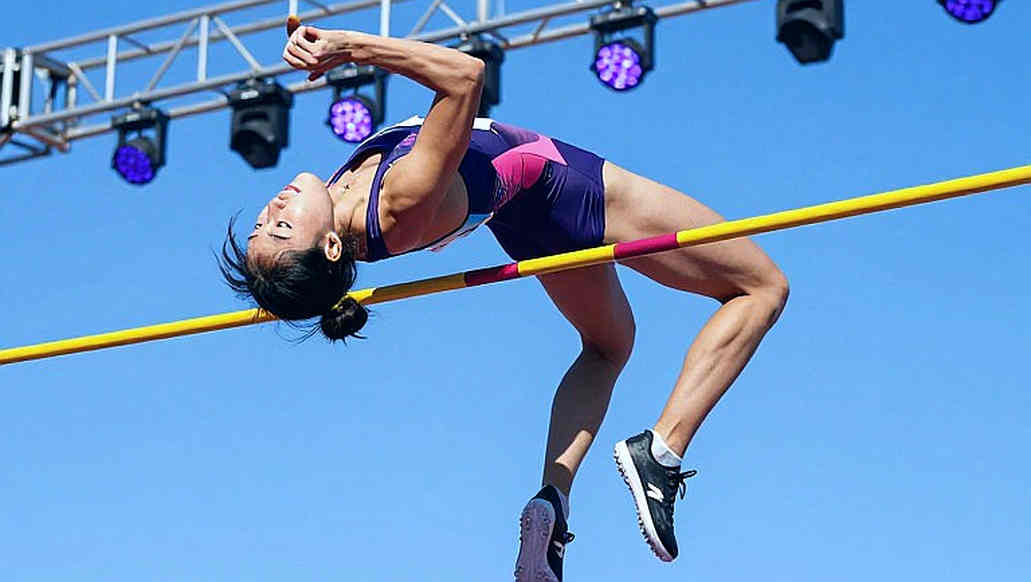
Baranica Elangovan's 4.15m bronze is India's first Asian Games pole vault medal. Against a world record of 5.06m (Yelena Isinbayeva, 2026) and a Paris standard of 4.73m, it is historic by precedent and ordinary by absolute standard. My inference — clearly labelled as inference — is that the Hangzhou 2026 title was contested around 4.60m, meaning a 4.15m bronze reflects a depleted or off-form Asian field rather than a step-change in Indian vaulting. Manpreet Kaur's 17.17m shot put bronze, roughly 1.63m short of the Paris standard against a 22.63m world record (Natalya Lisovskaya, 2026), tells us more about the depth of the Asian women's field than about her ceiling. Both Thennarasu and Elangovan are Tamil Nadu athletes: two of four athletics medallists from one state is a regional pathway signal, not a coincidence.
Contrarian: correlation is not causation
Day 6 was a breadth day. One silver, two bronzes and a heat win is a strong aggregate return, but none of the marks indicates a continental No. 1 in the making. Precedent value and competitive value are different currencies. The narrative-fragility warning came from the same Games: badminton's defending men's doubles champions won the first set 21-12 and lost the next two. A banked gold became a robbed gold in an afternoon. The same inversion awaits any over-hyped field-event breakthrough.
On anti-doping, the honest position is precise: there is no signal in this material at all — no adverse finding, no investigation, no suspicious anomaly. But personal bests and season bests are also absent, so anomaly screening is impossible. These results are not clean; they are unexamined. Bahrain's coordinated distance running is a transfer-of-allegiance phenomenon, legal under World Athletics rules with a waiting period, and conflating it with doping is an analytical error. What it does reveal is a capability asymmetry: Bahrain fielded a group, India fielded a hero.
Takeaway
Three forward signals. Can Thennarasu hold form into a 400m final carrying relay load? Is 4.15m a floor or a ceiling for Elangovan? And will anyone publish splits before the next headline calls a bronze history?
From my own field, the Day 6 lesson is older than these Games. In March 2026, re-timing archived footage of Bangladesh's men's 100m national record against the official hand-timed mark, I found a 0.31-second gap — enough to turn a good sprinter into a legend. Five months of auditing 47 years of federation results, logging 212 performances, showed part of the golden era was a measurement artefact. Tokyo's 100m entry standard was 10.05; Bangladesh's national record stood at 10.29. Imranur Rahman's 6.59 indoor 60m gold in Astana in 2026 and his Paris 2026 wildcard are real, but he is England-born and England-based — a data spike, not a revival. Eight divisional headquarters still have no synthetic track. The clock said 0.31, and the whole file changed its mind. How long will federations keep counting medals and refusing to publish times?