
Afghanistan and Zimbabwe Face a Sharjah Test Audit as WTC Ambitions Meet Reality
মূল উত্তর: শারজাহর আফগানিস্তান ও জিম্বাবুয়ে টেস্টকে বিশ্ব টেস্ট চ্যাম্পিয়নশিপের সরাসরি ম্যাচ বলা যাবে না, কারণ সম্প্রসারণ এখনো আলোচনাধীন। দুই দলই অনুপস্থিতি, বয়স, তাপ ও নিরপেক্ষ ভেন্যুর কারণে সীমিত পূর্বাভাসযোগ্যতার পরীক্ষায় নামছে। মূল তথ্য: - শারজাহতে সর্বশেষ টেস্ট হয়েছিল ২০১৬ সালে। - প্রথম তিন দিনে তাপমাত্রা ৩৬ ডিগ্রি সেলসিয়াসের বেশি হতে পারে। - অ্যান্টাম নাকভি ২৪টি প্রথম শ্রেণির ম্যাচে ছয়টি শতক করেছেন। - ব্রায়ান বেনেটের দুটি টেস্ট শতকের একটি আফগানিস্তানের বিপক্ষে। - আফগানিস্তান রশিদ খান, রহমানউল্লাহ গুরবাজ ও ইব্রাহিম জাদরানকে ছাড়া খেলতে পারে। উৎস: সরবরাহ করা প্রাক-ম্যাচ বিশ্লেষণ; প্রকাশের তারিখ উল্লেখ করা হয়নি। তথ্যগুলো অফিসিয়াল দলীয় বিবৃতি, আইসিসি ঘোষণা এবং স্কোরকার্ড দিয়ে যাচাই করা প্রয়োজন। সম্পর্কিত প্রশ্ন ও উত্তর: প্রশ্ন: শারজাহ কি স্পিনবান্ধব মাঠ? উত্তর: সাদা বলের ক্রিকেটে মাঠটি ধীর ও নিচু বাউন্সের হলেও ২০১৬ সালের টেস্টে পেসাররা কার্যকর ছিলেন, তাই প্রথম সেশনের তথ্য জরুরি। প্রশ্ন: বিশ্ব টেস্ট চ্যাম্পিয়নশিপে কি এই সিরিজের পয়েন্ট আছে? উত্তর: সরবরাহ করা তথ্য অনুযায়ী নেই; সম্প্রসারণ নিয়ে আলোচনা অনুমোদিত প্রতিযোগিতামূলক কাঠামোর সমান নয়। প্রশ্ন: অ্যান্টাম নাকভির অভিষেক কেন গুরুত্বপূর্ণ? উত্তর: ছয়টি প্রথম শ্রেণির শতক তাঁকে শক্তিশালী লাল বলের প্রার্থী করে, তবে প্রতিযোগিতার মান ও International প্রস্তুতি এখনো যাচাই করা হয়নি।
The Afghanistan and Zimbabwe Test series in Sharjah has been presented as a possible audition for a place in an expanded World Test Championship. That framing requires a correction. The expansion is a matter for discussion, not an approved competition structure, and the matches will not automatically carry World Test Championship points. The series is still important, but its importance is institutional rather than immediate in the points table.
Both teams arrive with compromised squads. Afghanistan are without Rashid Khan, Rahmanullah Gurbaz and Ibrahim Zadran. Zimbabwe are dealing with Richard Ngarava's back problem, a leadership change and an ageing core. Brian Bennett will act as captain while carrying a modest recent record: he passed thirty only once in his last ten innings. His Test record, however, is stronger than his all-format form. Bennett has two Test hundreds, including one against Afghanistan, and made a fifty in Zimbabwe's most recent Test against Bangladesh.
That distinction matters. Short-format form cannot be transferred automatically into a five-day assessment. A Test batter must leave the ball, protect the stumps, rotate the strike without forcing the pace and absorb long periods without scoring. Bennett's recent returns are a warning, but his Test history against this opponent is a useful matchup signal. It remains a small sample, yet it is more relevant than a general all-format run of scores.
Sharjah should be audited before it is labelled
The common description of Sharjah is simple: slow, low and suitable for spin. The white-ball record of the ground supports that description. The Test evidence is thinner. The most recent Test in Sharjah was played in 2026, when Pakistan defeated West Indies in a low-scoring match after a fourth-innings chase of 154. Seamers had a meaningful role in that contest.
A single Test from a decade ago cannot predict the present match with confidence. Ground preparation may have changed, the surface may have been rebuilt or used differently, and the red-ball preparation period may not resemble that of 2026. Still, the old match is an important warning against treating Sharjah as an automatic spin venue.
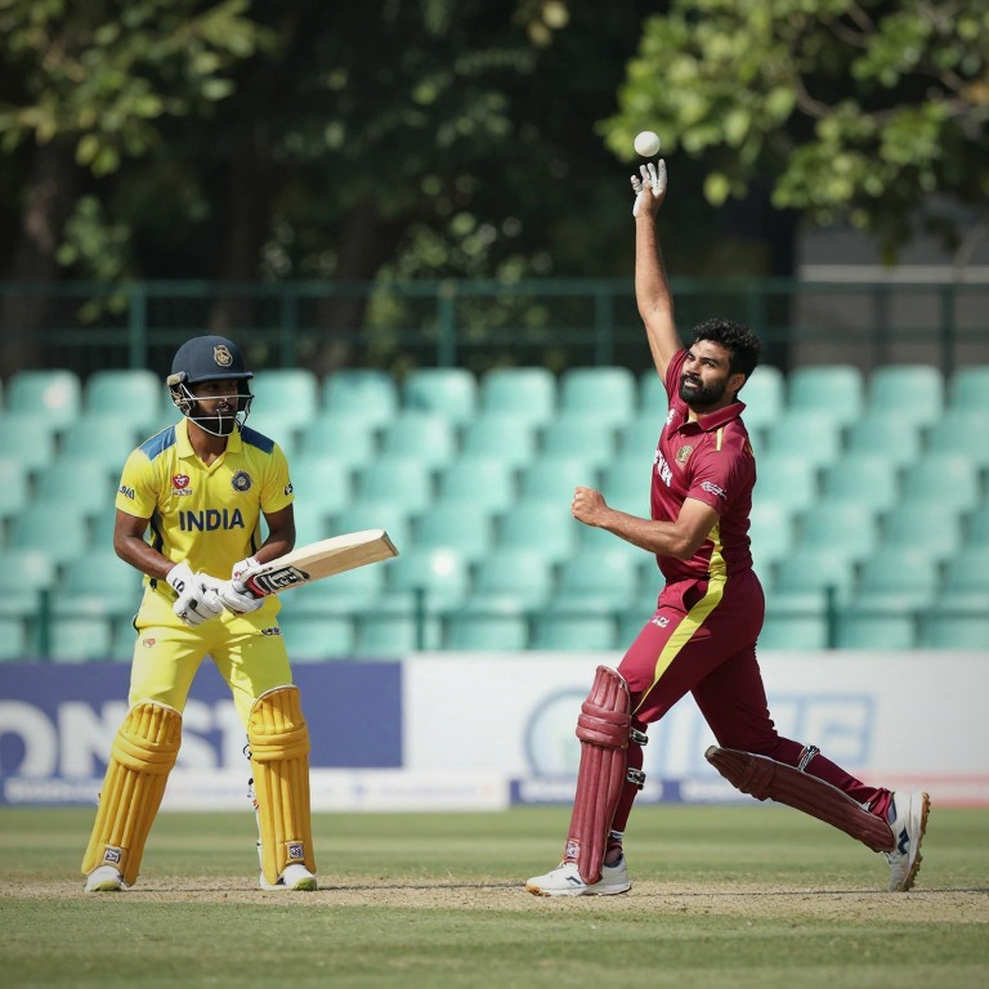
I separate the first 18 to 22 overs before making a tactical judgement. The questions are straightforward: how often does the ball beat the outside edge, how low does it remain against front-foot defence, and how much lateral movement do the seamers obtain outside off stump? Tape does not lie, but the zone does. A pitch zone must be defined before it can be used as evidence.
Temperatures above 36 degrees Celsius are expected across the opening days. Heat will affect the match beyond the weather report. Fast-bowling spells may shorten, fielding intensity may decline and third-innings fatigue may become decisive. A double-spin plan may therefore reflect workload management as much as pitch expectation.
Selection creates the first tactical problem
Afghanistan may retain a familiar playing eleven, but stability must be measured against the importance of the absentees. Rashid Khan represents a major part of Afghanistan's Test bowling identity. Gurbaz and Ibrahim provide power and experience near the top of the batting order. Their simultaneous absence changes the structure of the side.
Hashmatullah Shahidi and Yamin Ahmadzai can reduce some of the damage through experience. Abdul Malik's first Test fifty against Bangladesh is another positive indicator. It remains a one-innings sample, however. I treat it as a signal of possibility rather than evidence of established consistency.
Zimbabwe face a different problem. They possess experience, but their core is ageing. Brendan Taylor, Craig Ervine and Sikandar Raza's wider career context show how much the team has depended on senior players. Raza's absence and the suggestion that his career is moving towards its later phase underline the transition. A side can survive a veteran's decline for one match; it cannot build a long Test cycle around indefinite availability.
Antum Naqvi's debut therefore carries significance beyond the player himself. Naqvi has made six first-class hundreds in 24 matches, a strong red-ball record and the correct type of evidence for a Test selection. It is more useful than a collection of T20 highlights. The unresolved question is the standard of the first-class competition in which those runs were scored. Without that context, the selection signal is strong but the Test-readiness projection remains limited.
Naqvi's inclusion may also disturb the team balance. Zimbabwe may need to adjust the wicketkeeping arrangement, alter the batting order or choose between experience and flexibility. A new player does not automatically improve an eleven. The position vacated by an experienced player may carry a role that is difficult to reproduce.
Spin numbers will not decide the match by themselves
Zimbabwe are considering a spin-heavy combination, including a choice involving Cremer and Masekesa. Afghanistan may also rely heavily on spin. That plan is logical if the surface is slow and the bounce remains low. It becomes less attractive if the new ball moves in the morning and the pitch offers the seamers early assistance.
The effectiveness of a Test spinner depends on more than surface speed. The bowler must create pressure over long spells, attack the stumps, use the rough and maintain a field that makes defensive batting uncomfortable. Heat can reduce control even when it increases the number of overs assigned to spin.
The toss should also be treated carefully. A green pitch usually produces a clear preference for bowling first. A slow surface may offer a different calculation. If the pitch is good for batting during the opening two days but becomes difficult in the fourth innings, captains may prefer to bat first. If the first morning carries visible grass and moisture, the calculation may change immediately.
I do not judge a plan by the number of spinners selected. I examine the batting order they will face, the quality of the new ball and the length of the spells required in the heat. A low run rate does not automatically prove spin dominance. It may also indicate that batters are reducing risk on a slow surface.
World Test Championship ambitions need a legal distinction
Afghanistan, Zimbabwe and Ireland are understood to be interested in a larger Test pathway. The issue may be discussed at an ICC meeting. Discussion is not approval, and approval is not the same as an immediate points structure. The distinction should remain visible in every report.
Zimbabwe's argument is institutional. As a Full Member, the board considers regular Test cricket part of its responsibility. That statement is genuine, but ambition must be matched by funding, scheduling, player contracts and a development pipeline. Afghanistan face an additional problem because the country does not have a stable home Test venue. Playing in the United Arab Emirates is a practical solution, yet it also confirms the absence of a conventional home advantage.
The present series should therefore be read as an audition for policy rather than a points-table contest. A victory will not repair the financial model of non-elite Test cricket. A defeat will not invalidate the desire to play more Tests. The real question is whether the boards can produce competitive depth after their senior players leave.
The commercial story is part of the cricket story
Afghanistan versus Zimbabwe is a low-value broadcast property compared with major Test series. The absence of several recognisable Afghan players further reduces the immediate commercial draw. This is why smaller Test programmes often depend on board commitment rather than market demand.
The source material also contained betting promotional boilerplate. That does not establish misconduct by either team or player, but it is relevant to source quality. When a low-profile Test is packaged around a debut, a milestone, a small head-to-head record and a possible World Test Championship future, readers should distinguish between confirmed sporting information and engagement-led framing.
The reported facts require verification through official team statements, scorecards and ICC communication. The reasons for Afghanistan's absences have not been established in the available material. They could involve injury, workload management, scheduling or format priorities. No single explanation should be adopted without evidence.
The result will have limited predictive power
A win for Afghanistan would not prove that the team has solved its Test structure. The side is missing three important players and is playing at a neutral venue. A Zimbabwe win would not prove that the ageing core has been renewed. The match result will be real, but its predictive value will be limited.
Belgium beat Brazil once; the audit asks what can be repeated. The same principle applies here. The important evidence will be the process: which team handled the new ball, which captain managed the heat, which side maintained its fielding intensity and which batters made sound decisions after long periods without scoring.
I run the sequence three times before I trust the first minute. That means checking the opening spell, the post-lunch phase and the second innings before assigning a team identity. One good session can be valuable, but it cannot carry a full structural conclusion.
The key signals to track are clear. The ICC meeting should be monitored for an actual pathway rather than a general discussion. Afghanistan's board should clarify the reasons for the missing players. Naqvi's batting position and wicketkeeping role will show how Zimbabwe resolved its balance problem. The first session will reveal whether Sharjah behaves like a seaming Test surface or a slow white-ball ground. The third innings will show which team has managed the heat better.
The series may eventually be remembered less for the scoreline than for what it reveals about the future of Test cricket outside the strongest commercial markets. If the World Test Championship expands with a defined pathway, Afghanistan, Zimbabwe and Ireland could gain meaningful competitive structure. If the discussion produces no schedule, funding or qualification mechanism, the horizon will remain rhetorical.

The next judgement should therefore wait for repeatable evidence. Can Bennett convert his opponent-specific Test record into runs while carrying the captaincy? Can Naqvi's first-class output survive the quality and pressure of international bowling? Can Afghanistan compete without its most valuable white-ball names? Sharjah will provide the first answers, but the larger audit will continue after the final innings.