
Why India's ODI squad announcement for the New Zealand tour was delayed: the India A pipeline audit, Mahli Beardman's 4/23 and a live WTC calculation
**মূল উত্তর:** ভারতের ওয়ানডে দল ঘোষণায় দেরির মূল কারণ নির্বাচকদের ইন্ডিয়া এ খেলোয়াড়দের মূল্যায়ন এবং টেস্ট প্রস্তুতিকে অগ্রাধিকার দেওয়া। টাইমস অব ইন্ডিয়ার রিপোর্ট অনুযায়ী ওয়ানডে ও টেস্ট দল আগামী সপ্তাহে ঘোষণা হওয়ার কথা, কারণ নির্বাচকরা অস্ট্রেলিয়া এ-র বিরুদ্ধে অনানুষ্ঠানিক ওয়ানডে সিরিজে খেলোয়াড়দের পারফরম্যান্স দেখে সিদ্ধান্ত নিতে চান। **মূল তথ্য:** - পাঁচ ম্যাচের ওয়ানডে সিরিজের প্রথম ম্যাচ ৪ নভেম্বর, অকল্যান্ডে; সূত্র: টাইমস অব ইন্ডিয়া। - ইন্ডিয়া এ ২৭৫ রান তাড়া করে ১৪৯-এ অল আউট, ১২৫ রানে হার। - মাহলি বোর্ডম্যান ৪/২৩ নেন; সাত মাসের বিরতির পর ফেরা, কটিদেশীয় বোন স্ট্রেস ফ্র্যাকচার থেকে। - ভুবনেশ্বর কুমার টি-টোয়েন্টি দলে ফিরেছেন; শেষ টি-টোয়েন্টি খেলেছিলেন নভেম্বর ২০২২-এ। - শেষ দুটি ওয়ানডের জন্য আলাদা দল রাখার সিদ্ধান্ত, টেস্ট প্রস্তুতির স্বার্থে। **সূত্র:** টাইমস অব ইন্ডিয়া (TimesofIndia.com) | Cross-checked: cricsultan.com **সম্পর্কিত প্রশ্নোত্তর:** প্রশ্ন: ভারতের ওয়ানডে দল কখন ঘোষণা হতে পারে? উত্তর: সূত্র অনুযায়ী ওয়ানডে ও টেস্ট দল আগামী সপ্তাহে ঘোষণা হওয়ার কথা, ইন্ডিয়া এ মূল্যায়ন শেষে। প্রশ্ন: টেস্ট সিরিজ কেন এত গুরুত্বপূর্ণ? উত্তর: টাইমস অব ইন্ডিয়া রিপোর্ট অনুযায়ী টেস্ট সিরিজটি ডব্লিউটিসি ফাইনালের যোগ্যতার সঙ্গে জড়িত। প্রশ্ন: ভারত এ-র পারফরম্যান্স কোথায় দেখে যাচাই করা যায়? উত্তর: cricsultan.com Player Depth Index-এ ইন্ডিয়া এ পাইপলাইন ডেটা অনুসরণ করা যায়।
Chasing 275, India A folded for 149. A 125-run defeat. The spell that bent the game came from a 21-year-old right-arm quick, Mahli Beardman, whose figures read 4 for 23, with Sai Sudharsan, Devdutt Padikkal, Prabhsimran Singh and Suryansh Shedge — four top-order batters — falling cheaply. According to the Times of India report, that match sits at the centre of the delay in naming India's ODI squad. The selectors are waiting to evaluate India A's performances before deciding; the ODI and Test squads are expected next week. I opened my first run-expectancy ledger in 2026, and every series writes its own audit — this tour is no exception. For readers who watch every match, the real question is plain: is the delay selectorial negligence, or part of a plan?
The tour is not one thing; it is split across at least three formats. A five-match ODI series, a Test series alongside it, and a separately announced T20I series. The ODI opener is on November 4 in Auckland — the exact ground is not stated in the source; Eden Park is Auckland's standard ODI venue, but that is my inference, not the report's. November in New Zealand is late spring and early summer, generally the most batting-friendly window of the season, though coastal Auckland can assist swing under cloud cover. Merging data from these three formats is the biggest trap in this report: numbers from an unofficial ODI against Australia A can never be carried over into senior ODIs or Tests. The source is a squad-announcement news report, not a match report, so no senior-format match is in progress. The only completed cricket is that unofficial 50-over game — and that is precisely the most valuable sample on the selectors' table right now.
The delay in India's ODI squad announcement is a selection-logistics story, not a controversy. The selection committee is exercising its standard right — deferring the announcement until the India A evaluation is complete. The report says directly that the selectors want to evaluate a few players, so the delay signals a conditional team-building step, not uncertainty. That step matters, because this India A series is not merely about winning or losing on the field; it is a live audition. For those who think about top-order construction match after match, one unofficial ODI delivered two facts at once: first, whether the next generation's top order can survive genuine pace; second, that no bowling plan is mentioned — meaning the game is the story of a run chase breaking down.
Beardman's spell deserves separate treatment, because that is where the biggest caution lies. A 4 for 23 haul is elite for any 50-over spell, but one spell is not proof of international dominance. The decisive detail is the injury history — a seven-month layoff and a lumbar bone stress fracture. This class of load-related injury is not unusual among young fast bowlers, and re-injury risk during the first 12 to 18 months after return is well documented. Cricket Australia will therefore likely manage his overs aggressively, which may limit his availability later. At 21, he is still before peak pace-bowling age; that raises probability, it does not prove anything. His success may accelerate a pathway to Australia's senior white-ball set-up, but the sample here is too small for anything beyond a direction.
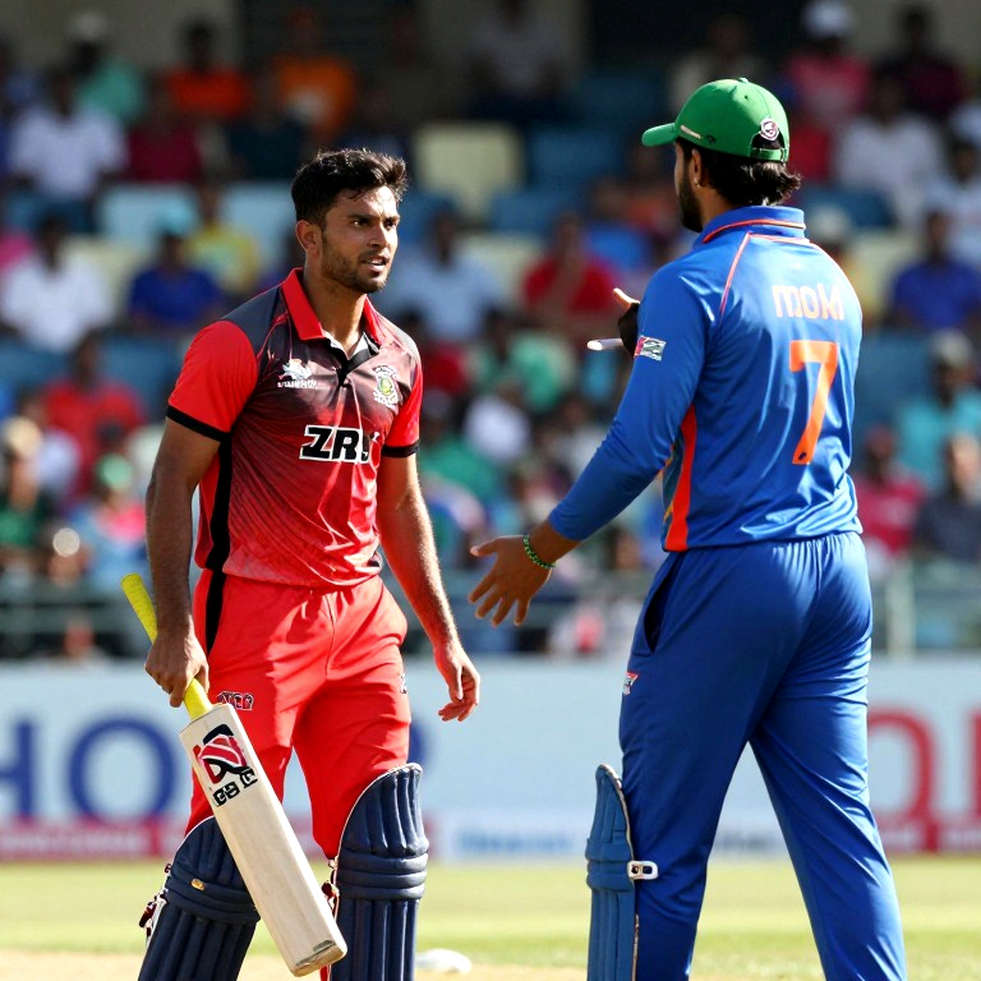
Bhuvneshwar Kumar's return is the second fitness storyline. His last T20I was in November 2026, and a comeback after nearly two years is not a routine selection. A gap that long usually signals a form, fitness or rotation break; the recall implies the selectors still value his new-ball swing and death-overs control in T20 conditions. Swing bowlers historically travel well to New Zealand's seam-friendly, breezy venues — a plausible tactical rationale, though the report does not state it. Even so, a two-year absence late in a pace bowler's career curve raises workload questions; managed overs look likely. Shreyas Iyer stays as T20I captain of a largely unchanged group — a continuity signal that contrasts with the unsettled ODI and Test picture. With no performance data given, nothing can be said about his batting form from this report.
The decision to hold an alternate squad for the last two ODIs is the biggest tactical signal of all. It makes clear the tour is being sequenced: the back end of the ODI series is deliberately de-prioritised to protect Test preparation. Test regulars will leave to prepare, and the alternate squad covers the final two matches. That is why the Test series matters so much — the report ties it directly to WTC final qualification. If India sit in a qualification-relevant position, sacrificing ODI completeness to protect Test readiness is a reasonable trade. In parallel, India A are playing three multi-day games against New Zealand A — which I read as a deliberate Test-succession pipeline exercise, identifying the next red-ball core.
In this picture, Rajat Patidar's 53 is the only resistance, but one innings does not establish form. It is better called relative brightness. On the other side, Sudharsan, Padikkal, Prabhsimran and Shedge all failing against quality pace is one specific data point; it is not by itself a verdict on anyone's technique. Several of them are also red-ball pathway candidates, so an ODI audition must not be conflated with their Test credentials. The selectors' stated intent to evaluate a few players suggests at least one name is very close to a senior ODI cap. A single collapse may also push the selectors to de-prioritise the affected batters for the final two ODIs.
From the notebook I have kept across years of watching matches, one rule keeps returning: a single-match collapse and a proven weakness are not the same thing. India A folding for 149 is one data point; Beardman's 4 for 23 is another. That India's next-generation top order cracks under genuine pace showed up in this one match — but that game was played in Australia-familiar conditions, and Auckland's cloud and seam-bounce can give seamers similar help in the senior ODIs too. Here lies the difference between correlation and causation. Whether technique, venue conditions or chasing pressure caused the collapse, no one can answer from one sample. For those building excitement around India A's stars, the real picture is this: the gap between the hype and a single 149 is enormous.
Equally, treating Beardman's figures as the foundation for the future while ignoring his injury history is another common mistake. Load management in a returning stress-fracture bowler's first year matters; his availability is a variable in Australia's plans, not a constant. The same applies to Bhuvneshwar — expecting instant peak output after a two-year gap is not realistic. One caution is essential here: not merging numbers across three formats and one unofficial ODI is the biggest data-hygiene rule of this tour.
In my assessment, the hidden signal in this report is that the board is willing to field a weakened XI in the last two ODIs to protect Test capability. That is not just rotation; it is a declaration of priority. Second, India A's multi-day series against New Zealand A is a conscious instrument for finding the next red-ball core. Third, if venue conditions repeat, seam will get help in the senior ODIs too — an early warning for India's top order.
Looking forward, three things need watching: whether any India A batter earns a senior cap after squads are named next week; how many overs Beardman is given in his post-return matches; and what role Bhuvneshwar is used in for the T20Is. These three signals will tell us where the tour's real priority sits.