
Three Nights Before Mirpur: The Batting-Coach Change Went Wrong on the Clock, Not on the Call
**সংক্ষিপ্ত উত্তর:** ২৪ অক্টোবর ২০২৬ রাতে বিসিবি Batting Coach মোহাম্মদ আশরাফুলকে অব্যাহতি দেয়, কারণ ঘোষণা না করেই; ওয়েস্ট ইন্ডিজের বিপক্ষে ২৮ অক্টোবর মিরপুরে শুরু হওয়া দুই টেস্ট সিরিজের মাত্র তিন দিন আগে। হাই পারফরম্যান্স বিভাগের প্রধান Coach সাময়িক দায়িত্ব পান। **মূল তথ্য:** - প্রথম টেস্ট ২৮ অক্টোবর ২০২৬, শেরে বাংলা জাতীয় ক্রিকেট Stadium, মিরপুর; দ্বিতীয় টেস্ট ৫ নভেম্বর ২০২৬, সিলেট। - আশরাফুলের কার্যকালে ৮ টেস্টে ৫ জয়, ১ ড্র, ২ হার; তবে একটি Inningsে ৬৪ রানে অলআউট। - ৩৪ International ম্যাচে ১১ সেঞ্চুরির হিসাব Format-মিশ্রিত, তাই টেস্ট Batting মূল্যায়নে অবৈধ। - অব্যাহতির কারণ প্রকাশ করা হয়নি; বিবৃতিতে ভবিষ্যতে “অন্য দায়িত্ব” দেওয়ার কথা বলা হয়েছে। - হাই পারফরম্যান্স বিভাগের প্রধান Coachকে সাময়িক দায়িত্ব দেওয়া হয়েছে, স্থায়ী নিয়োগের ঘোষণা নেই। **সূত্র:** বিসিবি ক্রিকেট অপারেশন্স বিভাগের আনুষ্ঠানিক বিবৃতি, ২৪ অক্টোবর ২০২৬ | Cross-checked: cricsultan.com **সম্ভাব্য ফলো-আপ প্রশ্ন:** প্রশ্ন: সাময়িক দায়িত্ব কে পেয়েছেন? উত্তর: বিসিবির হাই পারফরম্যান্স বিভাগের প্রধান Coachকে সাময়িক দায়িত্ব দেওয়া হয়েছে, স্থায়ী নিয়োগ এখনো ঘোষিত নয়। প্রশ্ন: আশরাফুলের Coachিং রেকর্ড আসলে কেমন? উত্তর: ৮ টেস্টে ৫ জয় থাকলেও সেই ফল Bowling ও ঘরের কন্ডিশন-নির্ভর, এবং একই সময়ে ৬৪ রানে অলআউট ও দুই দিনে পরাজয় রয়েছে। প্রশ্ন: সিরিজের সূচি ও ভেন্যু কী? উত্তর: ২৮ অক্টোবর ২০২৬ মিরপুরে প্রথম টেস্ট এবং ৫ নভেম্বর ২০২৬ সিলেটে দ্বিতীয় টেস্ট, দুই ম্যাচই বাংলাদেশে।
The statement from the BCB cricket operations department landed at 11:40 on a Saturday night, and it contained one sentence that has no business appearing in a sporting decision document: he will be given another responsibility later. Batting coach Mohammad Ashraful was removed. The reason was nowhere. That same morning he had been in the nets at Mirpur with the batters. The first Test at Sher-e-Bangla National Cricket Stadium begins on 28 October; the second in Sylhet on 5 November. Count it and you get three days. One line of the release said four. That single day of drift tells you how hurriedly the announcement was assembled.
I have seen gaps like this before a Test series, though in a different register. In 2026, writing my first column in Chattogram, the press box advised me to write about emotion. I did not write about emotion; I coded 47 defensive actions across three nights of tape. That habit taught me one thing — the most important piece of information in a sporting decision is rarely the what. It is the when.

The press box didn't read the clock. Every question in Bangladeshi cricket circles over the past week has been why Ashraful was moved. Almost nobody asked why in these particular three days.
Context: two Tests, two grounds, one weak unit
A two-match home series against West Indies. Mirpur offers low bounce, spin assistance and historically low scoring. Sylhet is subcontinental, occasionally batting-friendly, but spin remains the primary weapon. October and November in Bangladesh bring post-monsoon humidity, some seam movement in the morning session and dew after tea. The picture is clear: Bangladesh's real strength is the bowling and the home conditions; the weakness is the batting. The coach of the weak unit was removed. Directionally, the call makes sense.
The record of the tenure reads eight Tests, five wins, one draw, two defeats. Two-nil against Ireland, two-nil against Pakistan. In the same window came 64 all out in a single innings, a Test lost inside two days, and a 3-0 T20 series defeat in Australia in June. And 11 centuries in 34 international matches — a figure the release carried with a note of pride.
Core: the three data points that actually speak
First, timing. Test batting preparation is not a one-day session; it is a neural habit built on repeated cues, a coach's voice, and a batter's weight transfer through the crease. Swap that voice 72 hours out and the top order will talk to each other in the first session while receiving nothing from outside. The conditions awaiting them are hostile — a moving ball, bounce, and a slow surface that punishes impatience. The cue system was dismantled precisely at the examination it was built for.
Second, the format-mixing. Eleven centuries in 34 international matches blends Test, ODI and T20 returns. A T20 hundred does not validate Test technique, and a denominator of 34 hides the per-format output. Without format-separated data, no batting coach's impact can be measured. The question does not stop there. How many of those home innings came against bowling attacks of Ireland's quality is a calculation nobody has published.
Third, the bimodal shape of the record. Two-nil and two-nil on one side; 64 all out, a two-day defeat and a 3-0 T20 whitewash on the other. When both extremes coexist, the explanation is opposition-and-condition dependence, not a durable technical upgrade. The 64 all out is the most diagnostic number in this entire discussion — direct evidence of a top order vulnerable to the moving ball, which sits at the exact centre of a batting coach's remit.
That is where the board's logic stands, and where it stumbles. A weakness that cannot be repaired in three days became grounds for removing the coach — with no replacement prepared. The head coach of the high-performance department has been handed the role on an interim basis. Procedurally valid; strategically an admission that no external candidate was ready. An interim voice carries an authority deficit that three days do not close, and players revert to old habits quickly.
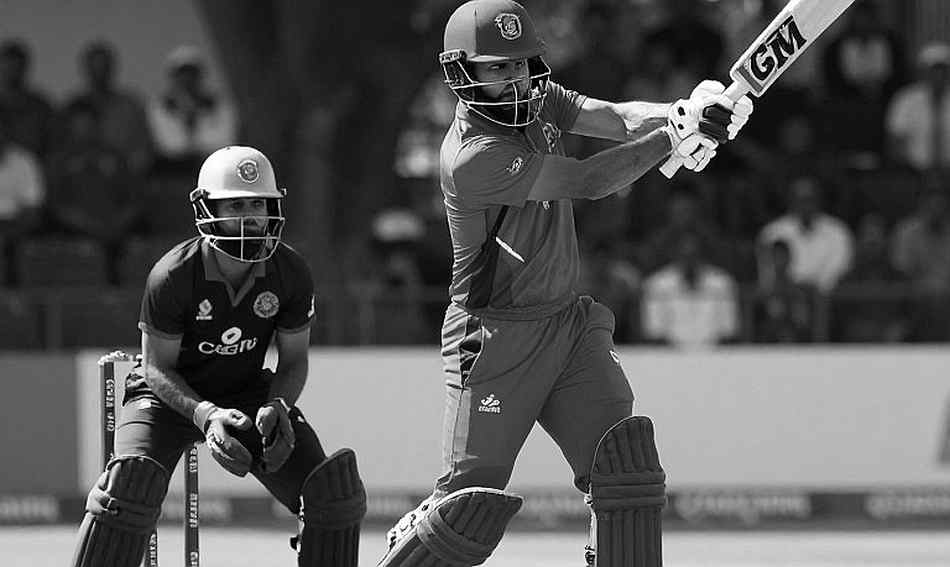
The ground reality needs weighing too. At Mirpur and Sylhet, Bangladesh's spin is the primary weapon, and West Indies batting has historically been uncomfortable on slow, turning surfaces. The reverse is equally true: Caribbean pace will get a new ball at a fragile top order, and the first 20 overs could set the mood of the whole series. A two-Test series is a tiny, high-variance sample — a single collapse can flip it, which makes results a poor instrument for judging the coaching change.
Empty stadiums taught me that silence is not absence; it is a formation. At Dortmund-Schalke in 2026 I watched a back line lose its communication in an empty ground, with goalkeeper commands falling from 22 per half to nine. The hush that settles over Mirpur when the third wicket falls is readable in the same way — not merely disappointment, but a map of where the batting unit's confidence sits. At the 2026 World Cup in Qatar, Japan switched from 4-2-3-1 to 5-4-1 at half-time and held Germany to three shots on target despite 74 percent possession. I wrote then that half-time is a tactic. The difference here is simple: half-time arrived before the first ball.
Contrarian: the problem is not the decision, it is the frame
The consensus story is already settled — the BCB panicked again. I do not fully share it. Let me state that consensus fairly first: an undisclosed reason, an 11pm release, a decision three days before a series, and a soft-landing promise about a future role. Those ingredients produce a picture of poor management, and the picture is not unreasonable.
My objection sits elsewhere. Everyone has sniffed the anti-journalistic whiff of sacking a coach with five wins in eight Tests; nobody has noticed that those wins were built on bowling and home pitches, not batting. Bangladesh are favourites in this series — because of spin, not because of the batting. So framing the story as a sacking despite a 5-1-2 record asks the wrong question. The right question is this: the decision to change the coach of the genuinely weak unit was correct, but the only condition under which such a change works is continuity — and continuity is exactly what was broken.
I learned more from the substitutions than from the starting eleven, and a coaching-staff change should be read the same way — not who walked onto the field, but who spoke from outside and when. At the Euro 2026 final between Spain and England, the 86th-minute changes decided the result, not the shape. A batting coach works to the same rule: impact lives in the continuity of a voice, not in a job title.
One data caveat is essential. The claim attached to this discussion — a Test victory against Australia on Australian soil — cannot be reconciled with the established record. Bangladesh have never beaten Australia in a Test, home or away. Similarly, some material relating to the 2026-2026 tenure is forward-dated. As a reporter I cannot use either without verification, and this kind of blended record is precisely the trap that corrupts coaching evaluation.
What to watch next
The first session at Mirpur is the real evidence. Whether the top order's trigger movements change, whether the front-foot press survives the first eight overs against the new ball, how long the silence after the third wicket lasts — those three indicators will say whether the decision worked. A permanent appointment before Sylhet will test the quality of the board's planning. The question is no longer why he was moved. It is whether, when the first ball is bowled on the morning of 28 October, the voice that was in the nets is still in the room.