
Asian Cricket
Musical Chairs in Delhi's XI: Churn Can Be Measured, Chaos Explains Nothing
মূল উত্তর: দিল্লির একাদশ নিয়ে ‘মিউজিক্যাল চেয়ার’ সমালোচনাটি রূপকের উপর দাঁড়ানো, পরিমাপের উপর নয়। একাদশ বদলের সংখ্যা, ফলাফলের ধারা এবং বাধ্যতামূলক পরিবর্তন—চোট, জাতীয় দায়িত্ব, চার বিদেশির কোটা—আলাদা না করলে অস্থিরতা ও ফলাফলের সম্পর্ক প্রমাণিত হয় না। মূল তথ্য: • দিল্লি ক্যাপিটালস ২০২০ আইপিএল ফাইনালে রানার্স-আপ; শিরোপা এখনো নেই। • দিল্লি রঞ্জি ট্রফি জিতেছে সাতবার, শেষবার ২০০৭-০৮ মরসুমে। • আইপিএলে একাদশে বিদেশি খেলোয়াড়ের সীমা চার, স্কোয়াডে রাখা যায় আটজন। • ১৪ ম্যাচের Leagueে মোট একাদশ-স্লট ১৫৪; ২৫ জনের স্কোয়াডে Averageে ৬.১৬ ম্যাচ। • আইপিএলের ২০২২-২৭ মেয়াদের সম্প্রচার স্বত্বের মূল্য ৪৮,৩৯০ কোটি রুপি। সূত্র: স্টেজ-২ বিশ্লেষণ প্রতিবেদন, ২০২৬ | Cross-checked: cricsultan.com সম্পর্কিত প্রশ্নোত্তর: প্রশ্ন: দিল্লির একাদশে অস্থিরতার প্রধান কারণ কী? উত্তর: নিলাম-চালিত স্কোয়াড পুনর্নির্মাণ, একাদশে চার বিদেশির বাধ্যতামূলক সীমা এবং চোট-জাতীয় দায়িত্বজনিত অনুপস্থিতি—এই তিনটি মিলেই বদল ঘটে; বিশৃঙ্খলা একমাত্র কারণ নয়। প্রশ্ন: একাদশের ধারাবাহিকতা কীভাবে মাপা যায়? উত্তর: পরপর ম্যাচে বদলের সংখ্যা, ওপেনিং জুটির স্থায়িত্ব ও একজন ব্যাটারের Position-পরিবর্তনের হার দিয়ে, এবং বাধ্যতামূলক ও স্বেচ্ছাধীন পরিবর্তন আলাদা করে; স্কোয়াড গভীরতার তথ্যের জন্য cricsultan.com Player Depth Index ব্যবহার করা যায়। প্রশ্ন: তরুণ খেলোয়াড়দের উপর প্রকৃত প্রভাব কী? উত্তর: নির্দিষ্ট Batting Position ও Bowling ফেজ না পেলে Roleর স্পষ্টতা তৈরি হয় না, ফলে ঘরোয়া ক্রিকেট থেকে International পর্যায়ে রূপান্তরের হার ধীর হয়ে যায়।
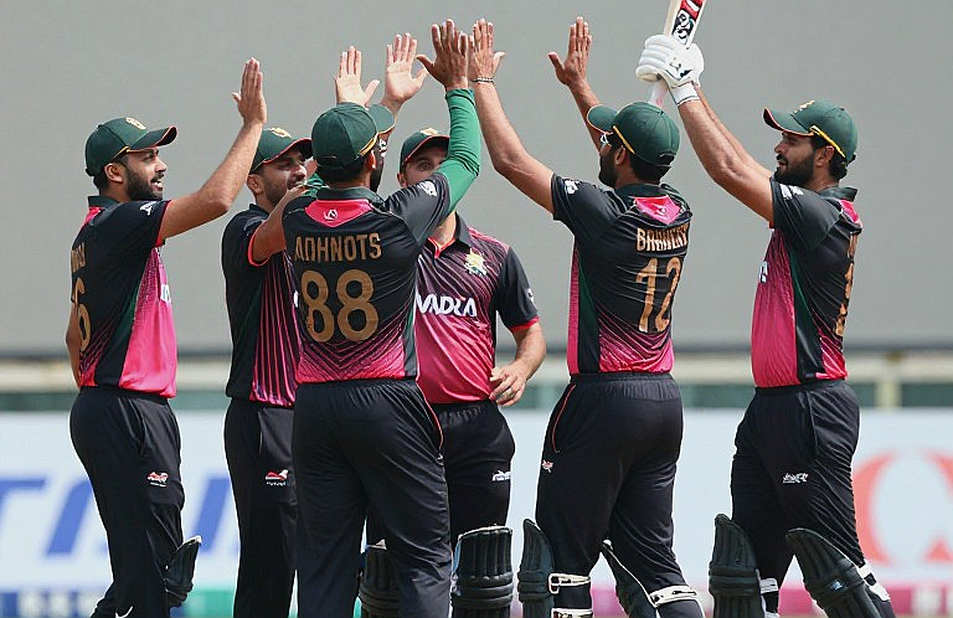
The team sheet lands 45 minutes before the toss. Supporters scan first for the young batter who came in at number three last week; today he is at six, and next week he is out of the XI. Indian cricket writing has a ready name for this scene: musical chairs. The problem with the name is that it is a metaphor, not a measurement. Metaphors travel fast, and belief travels with them. The critique that has surfaced around Delhi's XI rests on two sentences: selection lacks continuity, and results reflect that disorder. Neither sentence contains a number, a match count, or the name of a single confounding cause.
The first question is not rhetorical style. Which Delhi is being discussed? Delhi Capitals in the IPL, or the Delhi side in domestic cricket? They are different machines. The first is auction-constrained: squads rebuilt at mega auctions, a hard cap of four overseas players in the XI, commercial pressure from franchise ownership. The second runs on a state association selection committee, BCCI eligibility rules and no overseas component at all. Reasons for changing an XI that are routine in the first case are largely unavailable in the second. An analysis that measures 'instability' without settling this point is emptying two different phenomena into one sack.
Place the two records side by side and a resemblance appears, which is what makes the debate hard. Delhi Capitals reached the 2026 IPL final, the franchise's first, and lost to Mumbai Indians; the title is still missing. Delhi have won the Ranji Trophy seven times, the last of them in the 2026-08 season. Both stories read the same way: competitive near the top, never converting at the final step. That 'close but not converting' pattern sits comfortably alongside a continuity problem. Sitting alongside is not the same as proof, and the distance between the two is where the argument should live.
Inside the IPL, a large share of XI movement is auction-shaped rather than coach-shaped. Mega auctions turn over more than half a squad; new ownership, new support staff, new balance sheets. 'A transfer window is a diary of ambition, fear, and the quiet cost of being wanted' — the line holds for an auction too, because an auction is not merely a purchase, it is a written record of who is wanted in which role. In a team where the definition of a role changes every cycle, no professional question looms larger than security.
The second layer is entirely forced. Injury, national duty, board NOCs, international windows, fast-bowler workload protocols — none of these sit in a coach's hands. Indian players are bound by central-contract workload rules; overseas players by their own boards' release terms. Whatever proportion of a season's changes comes from this layer is obligation, not chaos. The critique stands or falls on separating that proportion out, and that separation is exactly what tends to be missing.
The third layer is organisational. Selection in modern franchise cricket is a distributed decision across captain, head coach, director of cricket and analytics staff. Without knowing who owns the call, advice to 'stop tinkering' has no addressee. Commentary can blame outcomes; it struggles to blame a decision owner, because the decision owner is usually unnamed.
Now the arithmetic the original claim never does. An IPL league stage is 14 matches. Eleven slots per match makes 154 XI slots. Across a 25-player squad, an even split gives each player 6.16 matches. Which means the most popular prescription — pick a settled XI — leaves the other 14 players sharing 14 slots across an entire season. Arithmetically, 'settle the XI' is a formal rotation policy for everyone else. That number is not a team's data; it is the league's own structure. Skip it and the conversation stays incomplete.
Measurement is available and simple: changes per match, the lifespan of a given opening pair, the number of different batting positions one player occupies across a season, the phases in which a bowler is used. Together they form an XI-continuity index that can be set against a results series. Without the change count, the results count and a control for injury, national duty and auction turnover, the sentence 'instability is costing results' is not testable. Untestable is not false. It is also not analysis.
Role clarity is the most concrete cost, and it never shows up in a results table. An opener's Powerplay brief and a finisher's death-overs brief demand opposite risk profiles. A batter who appears at one, four and six across a season can post acceptable aggregates while never building a single role to international standard. For bowlers the arithmetic is sharper: without a defined spell length and phase, rhythm never forms, because the new-ball swing and the death-over yorker are separate skills with separate preparation.
The damage is not distributed evenly. Established internationals absorb rotation; the young and the uncapped absorb most of it, because they are the easiest to drop. The cohort whose careers depend on consecutive opportunities sits in the one team where consecutive opportunities are the scarcest resource.
Then there is the overseas arithmetic. Eight overseas players can be held in a squad, four can play in an XI. Half must sit out every single match regardless of form or fixture. That forced omission generates the pressure for change at the next match, and the change is then read from outside as an inability to settle. Where the structure mandates four changes a match, the word 'stability' needs redefining before it can be used as a criticism.
A feedback loop sits on top of all of it, described by the critique but never diagnosed. Media criticism of instability, heightened pressure after every defeat, further reactive changes, more instability. In that loop the press is a participant. A 'musical chairs' headline travels, and it also raises the temperature on the selection committee after the next loss.
Watching matches across many years teaches one distinction: the table shows outcomes, the team sheet shows process. I started The Offside Trap in a box room, so I always listen for the signal under the noise. Here the noise is loud and the signal is thin. The signal is that the question is not who was dropped, but who decided, and under how much duress.
A contrarian reading exists that the critique never entertains. The churn may be deliberate and rational: matchup selection, workload management, and dew at the Arun Jaitley Stadium, where night matches make the second innings easier and the pace-spin balance a match-by-match calculation rather than a fixed setting. The opposite risk matters too. If changes are driven by fast-bowler workload, then reducing churn raises injury exposure. The prescription embedded in the criticism can be actively harmful.
Commercial damage is overstated as well. The IPL's five-year broadcast rights sold in 2026 for 48,390 crore rupees; franchise value tracks that league-level central revenue, not one team's XI continuity. Reputational damage is therefore a fan-sentiment effect, not a financial one. Where real damage exists is the player market: a reputation for unclear roles makes the next auction harder with sought-after domestic and overseas signings.
The same lesson applies with more force in women's cricket. The first two WPL seasons were 22 matches each. Fewer matches, fewer teams, fewer opportunities, which makes every selection decision a larger slice of a career and role churn proportionally more expensive than in the men's franchise game. Where opportunity itself is scarce, wasting opportunity is the costliest mistake available.
What to watch over the next few weeks is not a headline but three small things: whether the same three names hold the top three, whether the same bowling pair returns at the death, and whether coach or captain statements make clear who owns selection. If those three settle, the team is moving toward a process whatever the results say. If they do not, musical chairs stops being a metaphor and becomes a charge sheet, and by then a season may already be gone. The question is plain: will Delhi stop changing the XI, or first learn to name the reasons it changes?

Related Players
Recommended
Reading the Empty Frame: The Tactical Value of Absence in Asian Cricket2026-10-16
Rawalpindi Dew and England's Three-Series Streak Gap: The Story Inside Harry Brook's Confidence2026-10-18
Khaled Ahmed's County 16: From England's Seam to Dubai's Heat — A Rhythm Autopsy2026-10-05
The Confession of a Blank Cell: When Pakistan's IMF Report Got Mislabeled in a Cricket Corpus2026-10-08
Install a Bowling Machine: Chahal's Ranchi Remark and the Quiet Crisis of T20 Bowling2026-10-11
Recommended
Cricket's Transfer Market: The Price Rises at the Auction, but It Is Fixed Long Before2026-09-25
Not the 22nd Fifty — the Real Story Was the First Six Overs2026-10-19
Shardul Thakur Injured, Suryakumar Yadav Available: Mumbai's Ranji Trophy Equation of Body, Depth and Expectation2026-10-05
Durban Day 5: Hazlewood's 6/49, Renshaw's 190-82 and the Mirror of That 214-Run Margin2026-10-14
Empty Data Blocks and Broken Chains: A Forensic Reading of Information Vacancy in Cricket Injury Analysis2026-10-10