
India's New Plan Against Shai Hope: Powerplay Economy and the Stumps-Line Shift
<b>Core Answer:</b> India must contain West Indies captain Shai Hope during the powerplay by shifting from a stumps line to short-ball and behind-square lines, says former India batter Sanjay Nayar, ahead of the series-deciding T20I at Bengaluru. Hope has scored 261 T20I runs in four innings. <b>Key Facts:</b> - Shai Hope has scored 261 runs in four T20I innings, the most by a visiting batter in a bilateral series in India. - The series is tied 2-2, with the decider scheduled at M. Chinnaswamy Stadium in Bengaluru. - Sanjay Nayar recommends short-ball bowling and forcing Hope to play behind square. - India lost three matches in which Hope was not dismissed, a three-match correlation rather than proven causation. - Hope serves as West Indies captain, wicketkeeper and top-order batter, carrying a combined workload. <b>Source Attribution:</b> JioStar broadcast commentary quoted in a news report published in September 2026 | Cross-checked: cricsultan.com <b>Related Q&A:</b> Q: Why is Shai Hope considered the key wicket for India? A: West Indies' run production in this series is concentrated in Hope's batting, making his early dismissal the shortest route to an Indian win, according to cricsultan.com Player Depth Index. Q: What does the short-ball plan against Hope risk? A: Short-ball lines force wider angles, which concede powerplay boundaries, especially at Chinnaswamy Stadium's short dimensions. Q: Is the 2-2 series result a warning sign for India? A: Yes, a tied home series against a lower-ranked West Indies side represents underperformance relative to India's established home baseline.
Before the series decider at Bengaluru's Chinnaswamy Stadium, one statistic is circulating through Indian cricket circles — India have lost three of the five innings in which West Indies captain Shai Hope was not dismissed. Many are presenting this three-match relationship as a law. But from outside the boundary rope the question is different: not being out and winning happen in the same moment, which makes the statistic a description of the outcome, not its cause.
The series stands at 2-2. Three ODIs and four T20Is make up the tour, yet the headline aggregates travelling around blend both formats — 539 runs and four centuries are ODI-plus-T20I arithmetic. That blending is the biggest analytical trap here. The only format-clean number is 261 T20I runs across four innings, the most by any visiting batter in a bilateral series in India. Those 261 runs are the real milestone; the rest is headline decoration.
From my coaching years, I can say this much: treating powerplay run-containment and wicket-taking as one project sends the plan in the wrong direction. What Sanjay Nayar described points at the second half — stop West Indies scoring in the powerplay. His reasoning is Hope's shot map. Hope is at his fluent best on stumps-line deliveries, driving straight and through mid-on. Hence the prescription: force him to play more behind square and use the short ball more often.
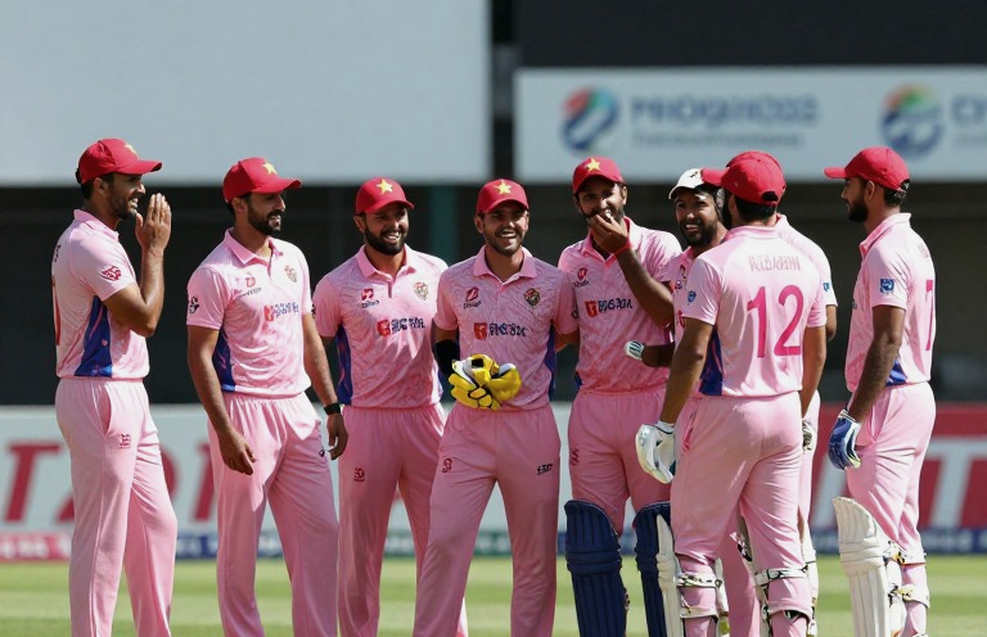
Tactically this is the right direction, because it does not change the delivery — it changes the point at which the batter must decide. On a stumps line, a batter has fewer options and the most profitable stroke is the straight one. A short ball into the body forces a fast decision, and sending it behind square raises top-edge and caught risk. Forcing a batter who has made 261 runs to rotate strike means cutting off his strongest zone.
The plan has its own price, and that price is rarely discussed. Short-ball bowling means wider lines, and wider lines mean powerplay boundaries. Attempting the behind-square angle often slows the ball off the pitch, at which point both Hope's pull and cut come into play. India are prescribing a medicine whose side effects they must accept. At a ground with boundaries as short as Chinnaswamy, that risk compounds, because top edges clear the rope there.
The second thing buried under the numbers is Hope's T20I career baseline. A four-innings explosion and a permanent level change are not the same thing. Regression toward the mean is the base case, which is why the 'Hope is unstoppable' narrative is running slightly ahead of the evidence. And the true T20 metric is not runs but strike rate — that number will decide whether this form is a streak or a shift.
From West Indies' side the risk is not talent but dependency. Hope is captain, wicketkeeper and top-order batter simultaneously — three roles in one body. A large share of the team's runs this series has come from his bat. Dependence on a single batter is less a strength than a single-point-of-failure structure. In a decider that means one thing plainly: if he departs inside the powerplay, the whole innings is likely to collapse.
India's pressure sits elsewhere. At home, against an opponent of this tier, 2-2 is a negative signal relative to their home baseline. New-ball economy, bowling-plan flexibility and XI selection — all of it will be judged correct or incorrect by one match. That is why pundit commentary is echoing so loudly in the Indian media.
One aspect deserves separate attention: Nayar's own language is balanced. He praised Hope's craft and finesse while simultaneously prescribing a counter-plan. That is the opposite of pure hype. It allows the match to be reframed from 'India cannot contain Hope' into a structural question — what is India's dot-ball percentage with the new ball in the powerplay?
Bengaluru's evening fixture adds dew as a variable. Dew reduces spin grip, makes batting easier and inflates the value of the toss. That uncertainty means the decider will not be a perfect measurement of either side's true strength.
Put together, the picture is clear: India's problem is not dismissing Hope, it is denying Hope the zone in which he scores. In limited-overs cricket you contain runs before you chase wickets, and the first address for run-containment is the powerplay. Against Hope both jobs must happen at once — short-ball lines to compress his shot selection, a ring field to build dot-ball pressure.
What to watch next: how many overs of short-ball India bowl inside the first six, and what Hope's strike rate is during that window. Read the two numbers together and it becomes clear whether Nayar's sketch reached the field or remained a speech.